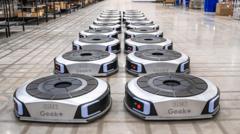
Walk into a sprawling fulfillment warehouse near Birmingham or Manchester right now, and you'll notice something missing. The frantic shouting, the clipboard-wielding floor managers, and the endless miles of human footsteps are gone. Instead, autonomous mobile robots built by firms drawing on Chinese supply chain engineering glide silently in synchronized grids. They haul inventory pods weighing hundreds of kilograms at speeds that make human sorting look archaic.
British retail isn't just adopting automation. It's outsourcing its mechanical backbone to hardware ecosystems developed almost entirely in Shenzhen and Shanghai.
The Economics Driving the Shift
If you run a medium-to-large retail operation in the UK right now, your biggest headaches are labor shortages and soaring wage bills. National insurance hikes, minimum wage adjustments, and chronic staff retention issues have squeezed profit margins to razor-thin levels.
Enter the Chinese robotics pipeline.
Companies like Geek+ and various hardware integration partners have perfected modular warehouse automation. You don't have to rebuild your entire distribution center from scratch anymore. These systems slide into existing British warehouses within weeks. They use vision-based navigation and AI pathfinding to map out legacy buildings that were never designed for tech integration.
British directors aren't buying these systems because they love science fiction aesthetics. They buy them because the return on investment hits within eighteen months.
Beyond the Warehouse Floor
The robotic takeover isn't staying hidden behind loading dock doors. It's bleeding directly into consumer-facing environments across high streets and retail parks.
Grocery giants and convenience chains are deploying autonomous floor-scrubbing and stock-monitoring co-bots across hundreds of local branches. These units map store aisles at night, flag misplaced inventory, and clean spills without human intervention.
Meanwhile, back-end logistics feeding these stores rely on automated guided vehicles and robotic sorting arms. They process parcels at volumes that domestic hardware developers simply can't match on price or delivery speed. When Chinese manufacturing scale meets British commercial desperation, adoption happens overnight.
What Structural Bottlenecks Remain
You can't drop a fleet of foreign-built autonomous units into a British retail ecosystem without hitting friction. The biggest hurdle isn't hardware performance. It's software integration and data sovereignty.
Most legacy retail software running across UK heritage brands dates back to the early 2010s. Connecting these archaic databases to hyper-modern, cloud-connected autonomous fleets requires massive custom middleware.
- API Mismatches: Legacy stock management systems often choke on the real-time telemetry streaming from hundreds of simultaneous bots.
- Maintenance Silos: Relying on proprietary hardware means you depend on specialized technician networks for repairs, creating vulnerability points in your supply chain.
- Regulatory Compliance: British data protection laws and workplace safety standards require rigorous validation for any autonomous machinery operating near human personnel.
Brands that skip the hard work of system integration find their expensive robotic fleets sitting idle because the warehouse management software can't talk to the picker units.
How to Adapt Your Operations
If you manage retail infrastructure or supply chain logistics, clinging to manual processes is a slow death sentence. You need a realistic roadmap to integrate automated systems without breaking your current cash flow.
Start by auditing your inventory bottlenecks. Don't automate everything at once. Pick the single most repetitive, labor-heavy process in your fulfillment chain—usually reverse logistics or basic item sorting—and run a targeted pilot program using scalable Autonomous Mobile Robots (AMRs).
Look closely at software compatibility before signing any hardware contracts. Insist on open APIs that allow your internal engineering teams to pull performance metrics directly from the units. If a robotics provider tries to lock you into a closed ecosystem with zero data visibility, walk away.
The structural transformation of British retail is already locked in motion. The winners won't be the companies that avoid automation, but the ones that manage the hardware transition with clear-eyed operational discipline.