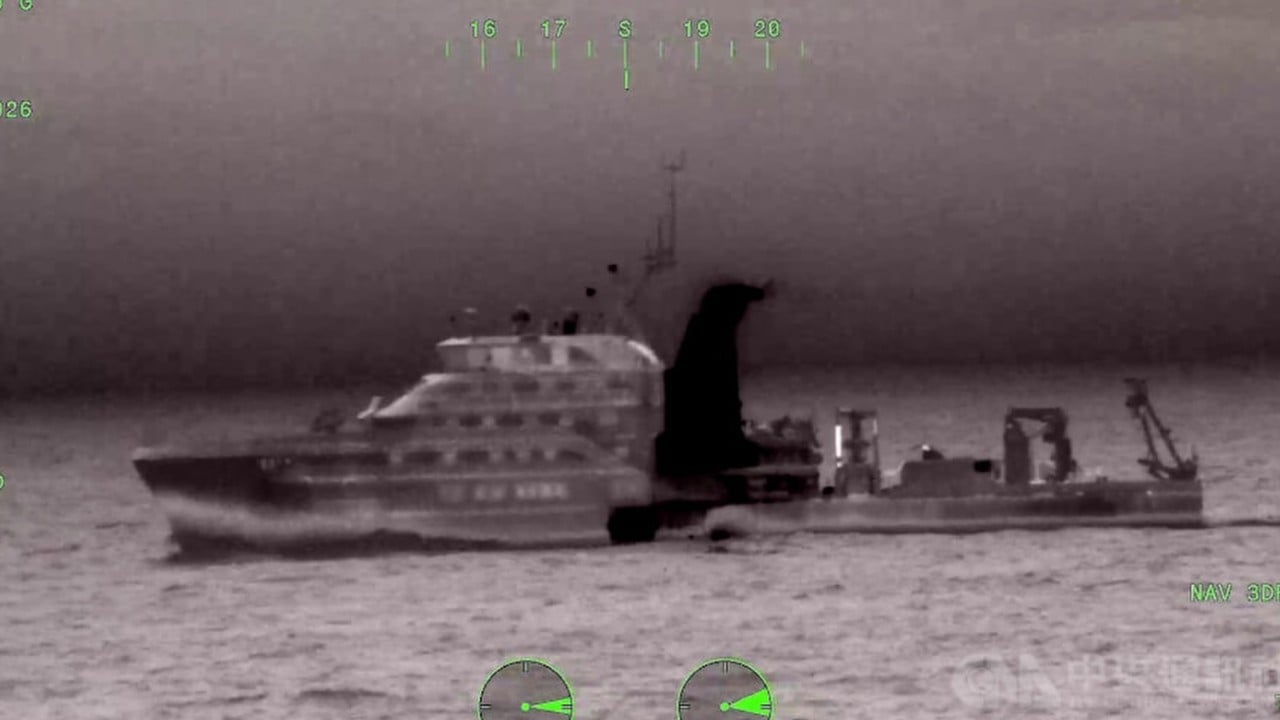
Every time a civilian-hulled vessel with too many antennas drifts anywhere near the Taiwan Strait, the defense commentariat loses its collective mind. Headlines scream about imminent blockades, psychological warfare, and provocative escalations. The lazy consensus among mainstream analysts is simple and hysterical: Beijing is mapping the underwater approaches to Taiwan's primary naval stronghold, Zuooying, preparing for an amphibious invasion down to the bathymetric centimeter.
They are wrong. And their panic reveals a fundamental misunderstanding of how modern maritime bureaucracies actually operate.
I have spent decades watching defense budgets burn on phantom threats. What we are witnessing off the coast of Taiwan is not a bold tactical prelude to amphibious war. It is a routine, deeply unsexy hydrographic data collection run driven by institutional metrics, bureaucratic self-preservation, and civilian agency rivalry.
The Myth of the Tactical Marvel
Let us look past the sensationalism and examine the hardware. The vessels typically flagged in these reports are oceanographic research ships operated by agencies like the Ministry of Natural Resources or the Chinese Academy of Sciences. They are not People's Liberation Army Navy combatants. They do not carry vertical launch systems, anti-ship missiles, or marine assault battalions.
When media outlets characterize these ships as frontline invasion tools, they are committing a category error. Imagine a scenario where a civilian geological survey truck parks outside a military base. Is the driver coordinating an infantry assault? No. They are measuring soil density because their regional mapping grant expires in November and their department needs to justify next year's funding.
Maritime research is governed by the United Nations Convention on the Law of the Sea, but great powers treat legal frameworks as suggestions. Beijing's civilian research fleet conducts continuous sweeps of the Western Pacific, East China Sea, and South China Sea to map salinity, thermal layers, and acoustic profiles. Submarine operations depend heavily on sound velocity profiling. If you want to hide a nuclear-powered attack boat or hunt one, you need massive quantities of oceanographic data.
Here is the nuance the breathless daily news cycle misses: this data collection is continuous, global, and bureaucratic. It happens near Japan, near Guam, near the Philippines, and yes, near Taiwan. Pinpointing one ship near a naval base and treating it as a unique harbinger of war ignores the broader administrative reality. The bureaucracy exists to collect data because collecting data proves usefulness, and usefulness secures budget allocations.
The Bureaucratic Imperative Over Grand Strategy
Defense analysts love to ascribe Machiavellian brilliance to every ripple in the Taiwan Strait. They assume every vessel movement is a calculated node in a grand master plan orchestrated from Beijing.
This is amateur hour. Large authoritarian bureaucracies suffer from the exact same internal dysfunctions as democratic ones, compounded by intense political paranoia. Civilian science agencies in Beijing are constantly fighting for resources against the military-industrial complex. To prove their worth to the Party leadership, these research institutes must demonstrate that their work directly contributes to national security priorities.
What better way to secure funding than to dispatch a survey ship into contested, high-visibility waters? The scientists get their data, the institute head gets a favorable performance review, and Beijing projects a persistent maritime presence without crossing the threshold of kinetic war.
It is administrative compliance disguised as a crisis.
When these ships loiter outside territorial waters, they are often operating in the contiguous zone or the exclusive economic zone, testing the legal nerve of regional coast guards and naval patrols. But treating every hydrographic pass as an imminent invasion countdown is analytical laziness. It misdiagnoses the disease. You cannot counter institutional bureaucratic momentum with military deterrence alone, because the ship's captain isn't waiting for an order from an assault commander; they are following a five-year scientific survey mandate.
The Cost of False Alarms
Hyperventilating over research vessels carries a real cost. Every time mainstream media treats a civilian survey ship like an aircraft carrier strike group, we degrade our own early warning credibility.
If you cry wolf over a hydrographic survey vessel mapping the continental shelf, what word do you use when the actual amphibious landing fleet marshals in the ports of Fujian? We exhaust our strategic vocabulary on routine administrative noise.
Worse, this panic plays directly into Beijing's gray-zone playbook. The entire point of gray-zone tactics is to normalize presence, push the baseline of acceptable behavior outward, and exhaust the adversary through constant vigilance fatigue. When Taiwan and its partners scramble assets, issue furious diplomatic protests, and rewrite intelligence assessments for every civilian research ship, they are doing half the work for the adversary. They are voluntarily exhausting their own operational readiness cycles over a bunch of oceanographers measuring water temperature and current velocity.
What Real Escalation Looks Like
If you want to know when the situation has genuinely shifted from bureaucratic posturing to actual preparation for conflict, stop looking at civilian research vessels. Look at logistics.
Real military preparation leaves heavy, unambiguous footprints. It looks like the mass requisitioning of civilian roll-on, roll-off ferries for military transport. It looks like the systematic clearing of civilian maritime traffic across entire provincial sectors. It looks like blood plasma stockpiles moving to frontline military hospitals, commercial fuel reserves being seized, and communications blackouts across critical command nodes.
A civilian research ship drifting near Zuooying to check salinity levels is not that. It is background radiation.
Stop treating every floating science lab like a prelude to D-Day. Understand the administrative incentives driving the patrols, recognize the gray-zone fatigue trap, and save your panic for when the logistics actually break cover.