Ancient history isn't just about local pride anymore. It's becoming a global team sport.
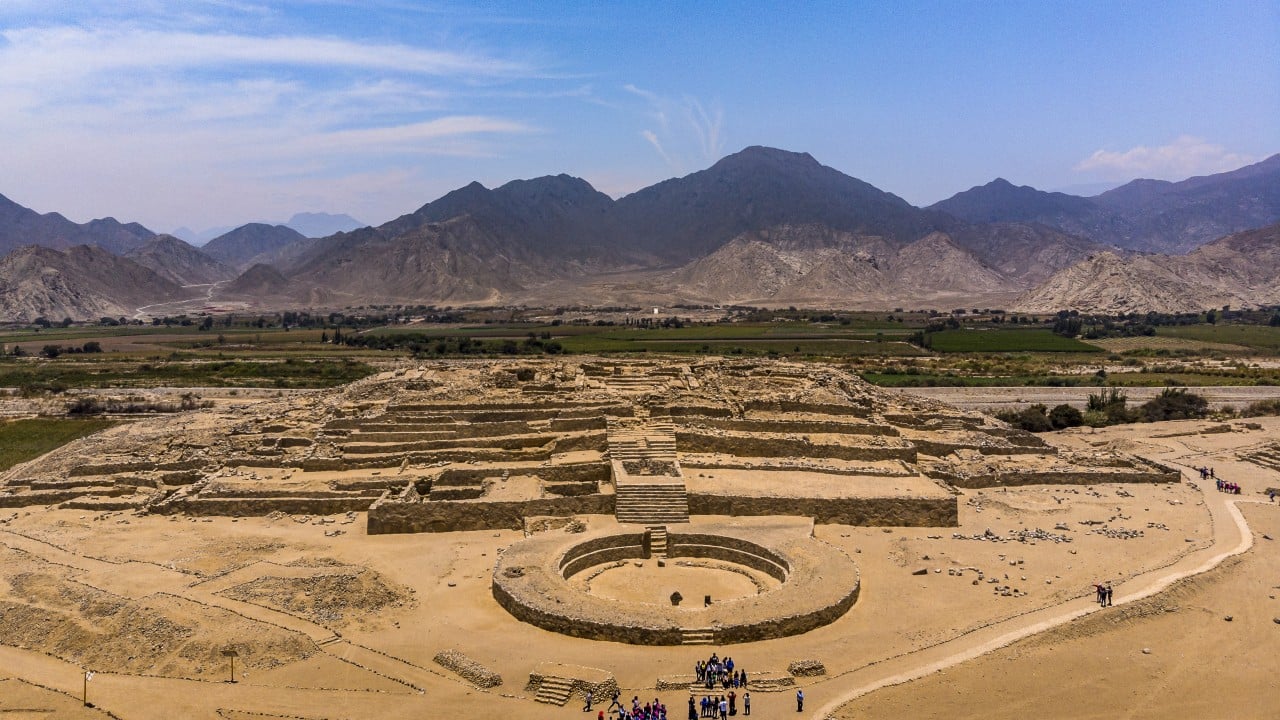
Chinese archaeologists are packing their gear for their very first joint expedition in South America. They aren't heading down for a casual tour. They're targeting the ancient Caral civilization in Peru, a complex society that blossomed along the northern coast long before the Incas ever built a stone road.
If you think this is just a routine academic handshake, you're missing the bigger picture. This partnership bridges two massive cradles of human civilization separated by an entire ocean.
The Weight of the Caral Civilization
Let's get straight to the timeline. Caral dates roughly from 3000 B.C. to 1800 B.C. That makes it the oldest known civilization in the Americas.
While ancient Egyptians were busy raising early stone blocks for the pyramids, people along the arid Peruvian coast were constructing massive sunken plazas, pyramid mounds, and intricate community networks without metal tools or written scripts. They mastered agriculture, irrigation, and maritime trade long before conventional textbooks taught us advanced societies could form in such harsh coastal environments.
The agreement, signed by the Institute of Archaeology of the Chinese Academy of Social Sciences, the Caral Archaeological Zone of Peru's Ministry of Culture, and the National University of San Marcos, changes how international digs operate. It moves past quick-hit artifact gathering. Both sides want deep, multi-year scientific integration.
Why China and Peru Are Teaming Up Now
You might wonder why Chinese institutions are traveling halfway across the globe to look at Peruvian ruins. It comes down to comparative archaeology.
China has its own deep ancient history rooted along the Yellow River and Yangtze valleys. Scholars from Beijing bring decades of heavy institutional experience in high-tech archaeology, remote sensing, artifact preservation, and environmental tracking. Peruvian institutions, led by experts who have spent lifetimes protecting fragile coastal sites from looting and urban sprawl, provide unmatched local insight.
This isn't a new relationship born yesterday. Academic ties stretch back over half a century. Back in 1973, Xia Nai, then director of the Institute of Archaeology under the Chinese Academy of Social Sciences, led a delegation to Peru that included stops at Machu Picchu. A reciprocal visit happened the following year. Decades of museum exchanges and academic papers laid the groundwork for what's happening right now.
What the Joint Dig Will Actually Do
Real archaeology isn't Indiana Jones. It's slow, tedious, and driven by hard science.
The new agreement outlines concrete tasks:
- Comprehensive field surveys and targeted excavations across Caral sites.
- Advanced scientific and technological analysis of organic materials, soils, and climate markers.
- Modern heritage conservation to keep fragile earthen and stone structures from crumbling under modern tourism pressures.
- Joint training programs for young Peruvian and Chinese archaeological professionals.
By pooling resources, the teams aim to extract first-hand data on how early American civilizations managed resources, climate shifts, and social stratification.
Looking at Early Societies Through a Wider Lens
History often gets written in regional silos. Western institutions dominated South American studies for generations, while Asian institutions focused inward or across neighboring Asian sectors.
By stepping onto Peruvian soil, Chinese researchers gain direct data on early American social complexity. This allows global historians to compare how societies on opposite sides of the Pacific Rim solved identical survival problems—like water management, social hierarchy, and urban planning—independently.
Keep an eye on this project over the next few years. As field seasons ramp up, expect new data that could reshape our understanding of how civilization first sparked in the Western Hemisphere.