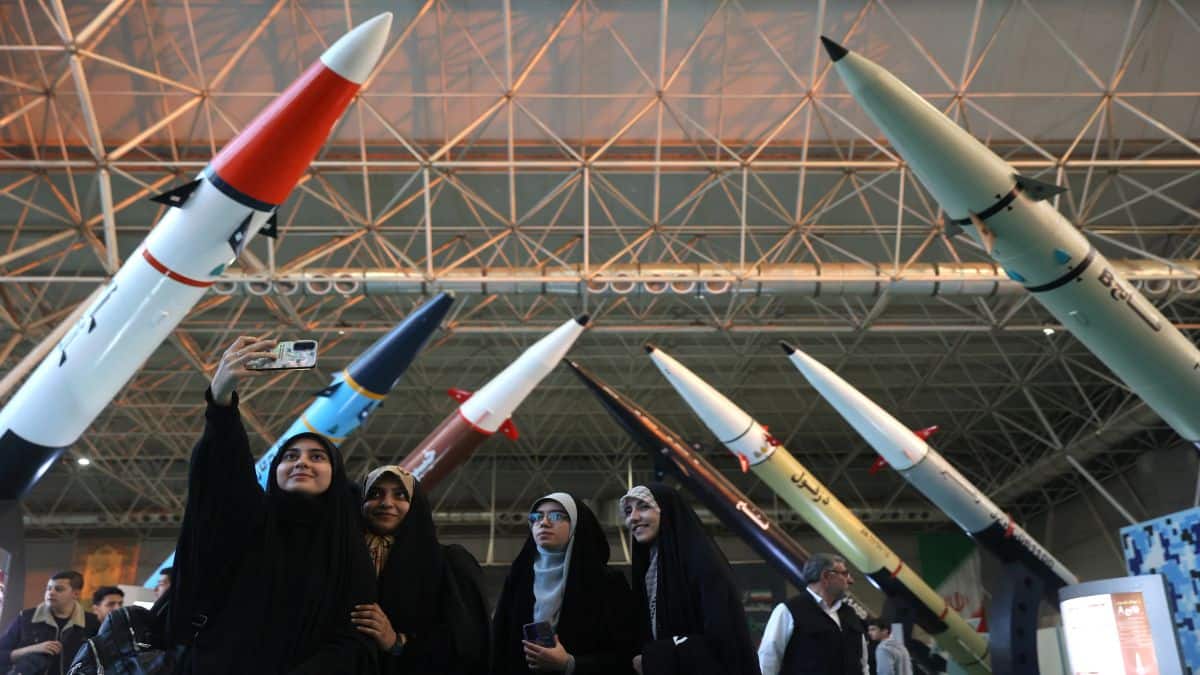
The Persian Gulf is about to get a lot more crowded and a lot more dangerous. While Washington debates the next round of air strikes, Tehran is reportedly quietly closing a massive deal with Beijing for some of the most advanced anti-ship cruise missiles on the planet. This isn't just another arms trade. It's a fundamental shift in how power works in the Middle East. If you've been following the tension in the region, you know that Iran already has a formidable drone and ballistic missile program. But these Chinese-made YJ series missiles are different. They're built for one specific purpose—sinking large, expensive Western warships.
The timing here isn't a coincidence. As the US military ramps up its presence and prepares for potential "retaliatory measures" against Iranian-backed groups, Tehran is looking for a strategic shield. They don't need a massive navy to win. They just need to make the cost of entry too high for the US. By bringing in Chinese tech, they're basically telling the Pentagon that the old rules of engagement are dead.
The Hardware That Should Keep Generals Awake
We aren't talking about old Soviet era junk. The reports point toward variants of the YJ-18 and potentially the YJ-12. These are supersonic killers. The YJ-12, for example, is often called the "carrier killer" for a reason. It flies at speeds up to Mach 3. When a missile is moving that fast, the reaction time for a ship's defense system—like the Aegis Combat System—drops to almost nothing.
Imagine a missile skimming just above the waves, hidden by the Earth's curvature, until it's practically on top of its target. By the time the radar picks it up, the crew has seconds to react. It’s terrifying. Iran already uses the C-802 (another Chinese design) but these newer models are generational leaps forward. They have better range, better electronic counter-measures, and significantly more punch.
China has spent decades perfecting the art of "area denial." They've built their entire military strategy around keeping the US Navy away from their coast. Now, they're exporting that exact same playbook to Iran. This means the narrow Strait of Hormuz, where about 20% of the world's oil passes through, could become a complete "no-go" zone for anything flying a Western flag.
Why Beijing Is Playing With Fire
You might wonder why China would risk its relationship with the West by arming Iran so heavily right now. It's actually pretty simple. Beijing wants two things: cheap oil and a distracted United States. Every hour the US spends worrying about the Persian Gulf is an hour it isn't focusing on the South China Sea or Taiwan.
For China, Iran is a useful "force multiplier." By providing the tech, China lets Iran do the dirty work of challenging American hegemony without firing a single shot themselves. Plus, Iran pays for these weapons with oil that China desperately needs to fuel its economy. It's a transaction that works perfectly for both sides, even if it sets the rest of the world on edge.
There's also the reality of the 25-year cooperation agreement signed between Tehran and Beijing a few years back. That deal wasn't just about building roads or 5G networks. It was a strategic marriage. We're seeing the military offspring of that marriage right now.
The Reality of US Strike Capabilities
The US hasn't been sitting idle. The talk of looms and strikes isn't just empty rhetoric. The Pentagon has been repositioning assets, including carrier strike groups and B-52 bombers. But here's the catch: the more advanced Iran's defenses become, the more the US has to rely on long-range standoff weapons.
If Iran gets these Chinese missiles integrated into their coastal defense batteries, a "limited strike" becomes much more difficult. You can't just sail a destroyer close to the coast to take out a drone factory. You have to account for the fact that that destroyer might get hit by a Mach 3 missile it never saw coming. This forces the US to use more expensive, stealthier assets like B-21 Raiders or F-35s, which escalates the cost and the risk of the entire operation.
Most people get this wrong—they think a conflict with Iran would look like the 1991 Gulf War. It won't. Iran has spent 30 years studying how the US fights. They know they can't win a traditional dogfight. So they’ve invested in "asymmetric" warfare. Missiles, mines, and swarming boats. Adding advanced Chinese guidance systems to that mix is like giving a street fighter a laser-sighted sniper rifle.
The Missile Tech Gap
| Feature | Older C-802 Models | Newer YJ-18/12 Variants |
|---|---|---|
| Speed | Subsonic (Mach 0.9) | Supersonic (Mach 3.0+) |
| Range | ~120 km | 400+ km |
| Guidance | Basic Radar | Multi-mode / Satellite |
| Threat Level | Manageable | Extremely High |
Choking the Global Economy
If this deal goes through and these missiles are deployed along the Iranian coastline, the global economy is the real hostage. It's not just about military ships. Every commercial tanker passing through the Gulf would be at the mercy of Iranian missile operators.
Insurance rates for shipping would skyrocket overnight. We saw a preview of this with the Houthi attacks in the Red Sea. Now, take that chaos and multiply it by ten. Iran has much better equipment and a much more organized military structure than the Houthi rebels. If they decide to close the Strait of Hormuz using these new Chinese toys, oil prices won't just go up—they'll double.
Basically, China is giving Iran the keys to the world's gas station. It’s a brilliant, if ruthless, move. It keeps the US pinned down in the Middle East while China continues its slow-motion expansion elsewhere.
What This Means for Regional Allies
Israel and Saudi Arabia are watching this with genuine alarm. For the Saudis, who have been trying to pivot away from constant conflict to build their "Vision 2030" economy, this is a nightmare. They know their desalination plants and oil terminals are within range of these systems.
Israel sees this as another layer of the "ring of fire" Iran is building around them. While the world focuses on Gaza or Lebanon, the arrival of advanced anti-ship tech in the Gulf makes any maritime support for Israel much more complicated. It’s a multi-front chess game, and right now, Tehran is making some very aggressive moves.
Don't expect the US to just watch this happen. You'll likely see an increase in cyber operations aimed at disrupting the delivery or the software integration of these missiles. We might also see more aggressive "interdictions" at sea to stop the parts from reaching Iranian ports. But let’s be honest: China and Iran share a land border via transit through Central Asian states if they really want to move things quietly.
The era of uncontested US naval dominance in the Persian Gulf is effectively over. We're entering a period of "contested waters" where even a superpower has to think twice before sending its best ships into the fray. This missile deal is the final nail in the coffin of the old security arrangement.
Keep an eye on the official statements from the State Department over the next month. If they start talking about "unprecedented maritime threats," you know the missiles have arrived. The best thing you can do is understand that this isn't just about a few rockets. It's about who owns the most important trade routes on Earth. Check the latest maritime security advisories from the International Maritime Organization (IMO) if you want to see how the industry is already reacting to the shifting threat levels in the region.