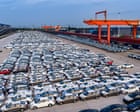
China just did something no other country has ever managed. In June 2026, its monthly vehicle exports blew past one million units for the first time in history.
Think about that number. 1,037,000 cars shipped out in just 30 days. Meanwhile, you can read related events here: The Invisible Tax on Your Morning Commute.
If you think this is just another minor data point in a generic economic report, you are missing the bigger picture. This milestone isn't just a win for Chinese automakers like BYD and Chery. It is a massive wake-up call for the entire global automotive industry, from Detroit to Wolfsburg. While local showrooms in Shanghai and Beijing are quiet, the global market is getting flooded with Chinese vehicles.
The math behind this surge shows a massive shift in how global trade operates, and the old-guard automotive giants are scrambling to react. To understand the bigger picture, check out the detailed article by The Economist.
The Brutal Numbers Behind the Million Vehicle Month
Let's look at the actual data from the China Association of Automobile Manufacturers (CAAM). That 1.037 million figure represents a staggering 75.1% jump compared to June of last year.
Even the industry insiders didn't see this coming. Early this year, CAAM predicted a modest 4.3% growth in exports for the full year, targeting around 7.4 million units. Instead, China exported 5.096 million vehicles in the first six months of the year alone. They are already nearly 69% of the way to their full-year target, and we just wrapped up the first half.
The real story isn't just how many cars are leaving the ports, but what kind of cars they are.
New Energy Vehicles (NEVs)—which include pure electrics and plug-in hybrids—made up over half of the June exports at 523,000 units. That is a 160% year-on-year explosion. For the first time, every second car shipped out of China runs on a battery.
The underlying cause of this surge is a massive supply-and-demand mismatch at home. China's domestic car market is taking a serious beating right now, with local sales suffering double-digit declines. Domestic demand is deeply suppressed. Because Chinese consumers aren't buying, factories have massive overcapacity. They have to send these cars somewhere, so they are shipping them overseas.
Why Global Legacy Auto Brands Are Panicking
This isn't a problem for the future. It is happening right now, and the consequences are brutal for traditional legacy manufacturers.
Look at Europe. Analysts from the Mercator Institute for China Studies (Merics) revealed that China ran a mind-boggling €900 million-a-day goods surplus with the EU in the first half of this year. Exports to the EU jumped 12.7%, largely driven by hybrid and electric models that managed to navigate around older tariff structures.
The pressure on European legacy brands is becoming unsustainable. Volkswagen is currently planning to slash its massive 670,000-person global workforce by up to 100,000 employees as part of a radical corporate restructuring. When the biggest carmaker in Europe talks about the most comprehensive realignment in its corporate history, you know the ground is shifting.
Chinese manufacturers aren't just winning on price anymore. They are winning on technology.
By building a completely integrated NEV supply chain, Chinese brands have locked down the production of batteries, electric motors, and electronic control systems. They can put advanced 800V fast-charging setups and intelligent software suites into mass-market vehicles at prices Western brands can't touch. Legacy giants spent decades perfecting the internal combustion engine, but they dragged their feet on electrification, leaving a massive gap that Chinese brands are aggressively filling.
Where the Waves of Cars Are Actually Landing
The US and the EU are building high trade walls, but the export wave is simply flowing elsewhere. While Western regulators argue over anti-subsidy probes and carbon tariffs, Chinese brands are quietly dominant in three major growth regions:
- ASEAN: Markets like Vietnam and Thailand are seeing explosive growth. Vehicle demand for Chinese imports jumped 35% in Vietnam and 15% in Thailand in the early months of this year.
- The Middle East: High-spec, software-heavy electric and hybrid SUVs are finding massive appeal in affluent Middle Eastern markets looking for tech-forward vehicles.
- Russia: Following the exit of Western automakers, Chinese brands stepped into the vacuum. Demand rose another 10% this year, cementing their position as the dominant player in that market.
Individual companies are putting up numbers that look like typos. Chery exported over 191,000 vehicles in June alone, breaking its own export record for the fourth month in a row. BYD shipped 175,000 cars abroad last month, a 95% jump from last year. Nearly 43% of everything BYD builds is now sold outside of China. Geely cleared the 100,000-unit export mark in a single month for the first time.
What This Means for Global Trade Strategy
If you are a corporate strategist, supply chain manager, or investor, you need to throw out your old playbook. The ratio of China's annual exports to its total manufacturing sales recently hit 24%. For a massive economy, that is an unprecedented level of export reliance. It is what economists are calling China Shock 2.0.
The immediate impact is going to be fierce regulatory blowback. Expect to see rapid escalations in anti-subsidy investigations and local-content requirements. Trade friction will only get hotter from here.
If you are operating in the automotive or manufacturing sectors, your next steps require a total reassessment of your competitive positioning:
- Audit your tech timeline: If your product roadmap relies on software or battery tech that is two years away, you are already obsolete. Chinese competitors are deploying features at a tech-company pace, not a traditional automotive pace.
- Diversify your regional focus: Stop looking only at US and EU markets for growth. The real battle for volume is happening in developing economies across Southeast Asia, Latin America, and the Middle East.
- Re-evaluate supply chain dependencies: China's export machine isn't just cars. It is also semiconductors, rare earths, and green energy hardware. When trade tensions spike, access to these raw materials and components will become weaponized. You need alternative sourcing pipelines locked down immediately.