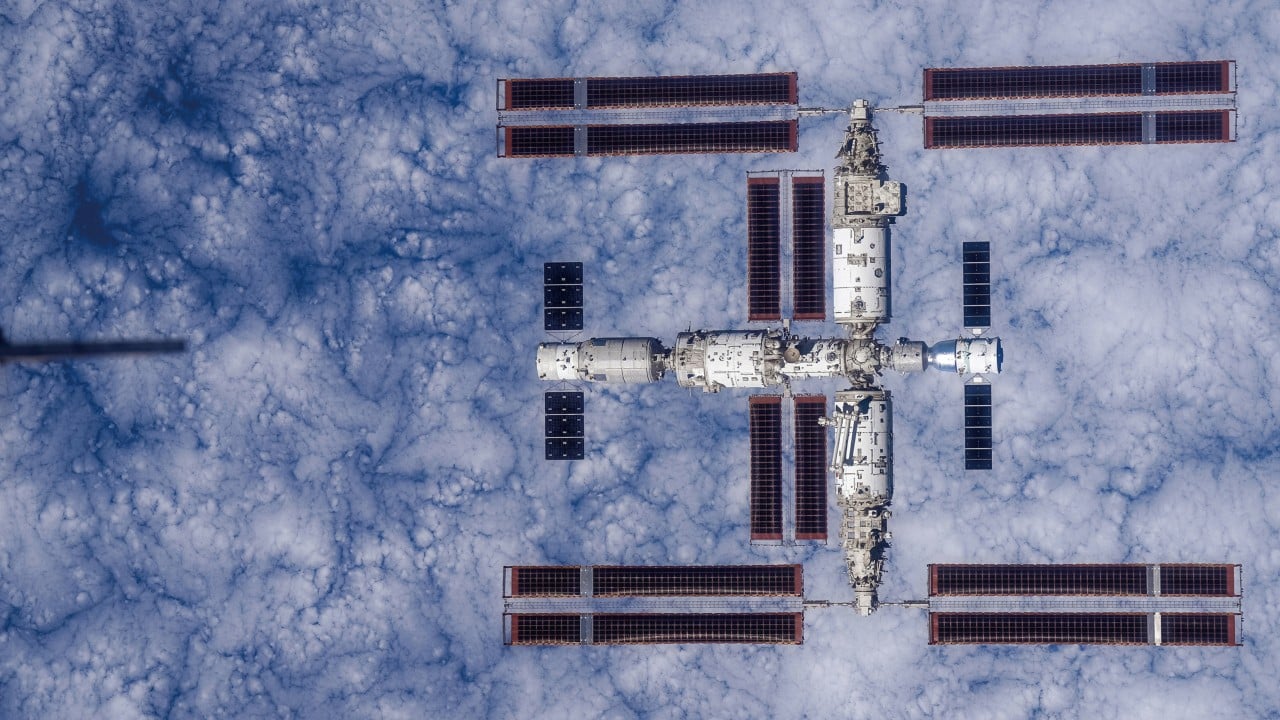
While the West argues over budgets and de-orbiting timelines, China is busy measuring for new curtains. It’s not just a rumor anymore. The China Academy of Space Technology (CAST) recently confirmed that the Tiangong space station is slated to double in size. We’re looking at a jump from three modules to six.
This isn't just about more legroom for taikonauts. It’s a massive strategic play. As NASA prepares to dump the International Space Station (ISS) into the Pacific Ocean around 2030, China is positioning Tiangong as the only game in town. If you’re a country with space ambitions and no station of your own, you’ll soon have to learn Mandarin or rely on a handful of unproven private startups.
The End of the ISS Era
The ISS has been our orbital home for over two decades. It’s a masterpiece of international cooperation, but let’s be honest—it’s getting old. It’s leaky, expensive, and the political glue holding it together is drying up. NASA wants out. They’re planning to transition to "commercial destinations," which is basically code for renting space from companies like Axiom or Blue Origin.
But there’s a catch. Those private stations don't fully exist yet. China, meanwhile, has a fully functional, "new car smell" station right now. By doubling Tiangong’s size, they aren't just matching the ISS; they’re creating a direct alternative that will be at its peak exactly when the ISS is being dragged through the atmosphere to its fiery death.
What a Six Module Tiangong Actually Looks Like
Right now, Tiangong is T-shaped. It consists of the Tianhe core module and two lab modules, Wentian and Mengtian. It’s about 40% the mass of the ISS. Small, but efficient.
The expansion changes the math. China plans to add three more modules, turning that "T" into a more complex, multi-hub cross. This expansion allows for:
- Permanent six-person crews: Currently, they only host six people during handovers. Soon, that will be the standard.
- International Guest Wings: China is already inviting other nations to send astronauts. While the European Space Agency (ESA) backed out recently due to "political" reasons, many other nations are lining up.
- The Xuntian Telescope: This is China’s answer to Hubble. It’s a bus-sized telescope that will fly in the same orbit as Tiangong, allowing it to dock for easy maintenance and upgrades.
Why the Expansion Matters More Than You Think
Most people focus on the hardware. I think the real story is the software and the diplomacy. China’s station uses a unified design framework. Unlike the ISS, where different modules have different "brains" (Russian vs. American segments), Tiangong is integrated. Everything from the power systems to the life support is built to work together from day one.
They’re also testing a low-cost cargo transportation system. Space is expensive because of the "freight" costs. If China can make it cheaper to send supplies to Tiangong than it is to send them to a private US station, the global scientific community will follow the money.
The 2030 Deadline
NASA is under pressure. Congress recently told them to "get moving" on private replacements. They don't want a "space station gap" like the "shuttle gap" we had years ago. But building a space station is hard. Just ask Boeing.
China doesn't have these bureaucratic hurdles. They have a 15-year roadmap and the funding to hit it. By 2030, China expects to be a "major space power," coinciding perfectly with their goal of landing humans on the moon. Tiangong will serve as the orbital hub for all of it.
What You Should Watch For
Don't expect this to happen overnight. Here's what's actually on the calendar:
- Xuntian Launch (2026-2027): This is the first big test of the "co-orbital" strategy.
- Module Four Arrival: Watch for the launch of the second "core-like" module that will act as the new hub for the expansion.
- Commercial Partnerships: China is already opening Tiangong to commercial payloads. If you're a tech firm, keep an eye on their "Request for Proposals"—it might be your cheapest way into orbit.
The era of American dominance in Low Earth Orbit is ending. It’s not necessarily a bad thing for science, but it’s a massive shift in how the world operates above the clouds.
Stop thinking of Tiangong as a "mini-ISS." It’s a growing, modular powerhouse that’s designed to outlast and outmaneuver anything we have in the sky right now. If you want to see where the next decade of space research is happening, look east.
China's Space Station & Lunar Exploration What's Next in 2026
This video provides a direct update on China's specific space station goals and manned missions scheduled for 2026.