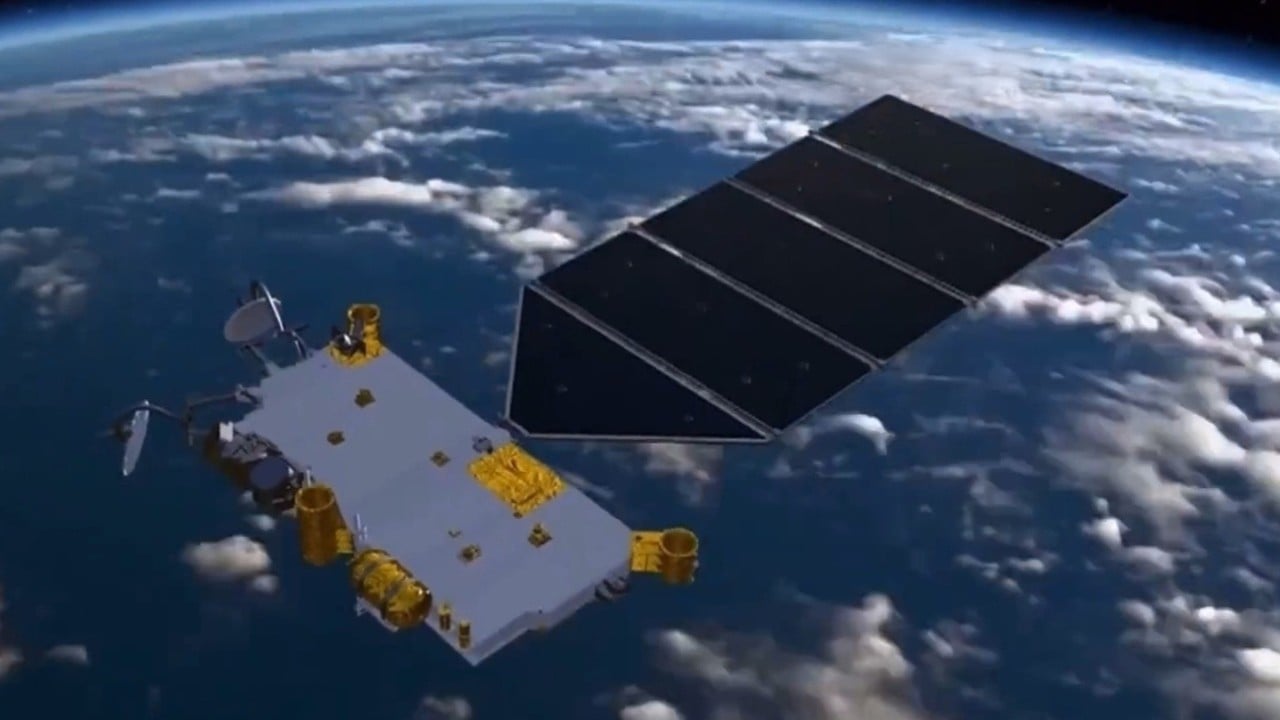
Low Earth orbit is getting crowded. For years, the commercial satellite conversation centered on SpaceX and its aggressive deployment schedule, ignoring the methodical state-backed machinery turning behind closed doors in Shanghai. SpaceSail is accelerating its orbital ambitions following a fresh capital injection, targeting thousands of active nodes to stake a permanent claim in the sky. Beijing wants an alternative to Western-controlled networks, and funding is no longer an obstacle.
The State Backing Behind The Constellation
Commercial enterprises usually answer to venture capitalists demanding rapid monetization or quarterly returns. SpaceSail operates under a different set of rules. Born out of the Shanghai Space Bureau ecosystem, the enterprise benefits from direct municipal backing, policy-driven procurement, and guaranteed access to heavy-lift launch vehicles.
Western analysts often mistake this state support for bureaucratic inefficiency. That assumption is a tactical error.
When capital comes from government treasuries rather than traditional debt markets, projects survive market downturns that would otherwise bankrupt a private startup. SpaceSail secured massive financial backing because low Earth orbit broadband represents critical national infrastructure for Beijing.
- State-backed capitalization: Funding rounds draw heavily from state investment funds and municipal technology pools rather than risk-averse private equity.
- Launch vehicle integration: Access to Long March rockets bypasses the commercial backlog that plagues independent Western operators.
- Spectrum allocation: The International Telecommunication Union faces mounting pressure as filing applications from Chinese entities surge, securing vital orbital slots.
Money solves manufacturing bottlenecks. By subsidizing high-volume production facilities in the Yangtze River Delta, SpaceSail drives down the unit cost of each satellite payload. Traditional aerospace manufacturing relies on bespoke assembly lines. This operation relies on modular batch manufacturing, mimicking automotive supply chains to achieve high sortie rates.
The Geopolitical Fracture Of Low Earth Orbit
Space is no longer a neutral scientific commons. The weaponization of commercial infrastructure during recent terrestrial conflicts proved that space assets serve as the ultimate high ground for command, control, and intelligence. Starlink demonstrated battlefield resilience in Ukraine, shocking military planners worldwide. Beijing watched closely. The primary driver behind SpaceSail is not consumer broadband revenue in remote valleys. It is sovereign communications security.
If a nation relies entirely on a network owned by a foreign billionaire or allied governments, its economic and military communications remain vulnerable to geofencing, regulatory pressure, or outright service termination. SpaceSail provides an indigenous insurance policy.
- Sovereign routing: Domestic traffic stays within state-approved gateways, minimizing exposure to foreign surveillance.
- Military-civil fusion: Dual-use architecture ensures rapid transition to encrypted tactical channels during regional contingencies.
- Diplomatic leverage: Offering low-cost terminal access to developing nations builds strategic alliances across the Global South.
Building the hardware is only half the battle. Ground infrastructure, gateway stations, and phased-array antenna manufacturing dictate whether a constellation actually delivers bandwidth to end users. SpaceSail is aggressively courting partners in Southeast Asia, Africa, and South America, regions historically underserved by traditional Western telecommunications monopolies.
Manufacturing Scale Versus Launch Bottlenecks
Physics remains an unyielding master. Launch cadence dictates constellation size, and even with robust state support, lifting thousands of satellites into orbit requires immense rocket capacity. SpaceX achieved dominance by perfecting reusable first-stage boosters, lowering the cost per kilogram to orbit past any historical benchmark.
SpaceSail relies heavily on expendable or semi-reusable launch architecture depending on the vehicle variant.
To bridge this gap, engineers are prioritizing miniaturization and high-density packing inside rocket fairings. Deploying thirty satellites from a single dispenser maximises efficiency per flight. Yet, questions remain regarding propulsion reliability and space debris mitigation over the operational lifetime of the constellation.
[Production Line] ---> [Fairing Integration] ---> [Long March Lift] ---> [Orbital Slot]
       |                       |                        |                     |
  Batch Assembly         Modular Packing          State Logistics       Slot Securing
Debris management poses an existential threat to all low Earth orbit operators. Crowding thousands of additional nodes into congested orbital planes increases collision risks exponentially. While Western regulators enforce strict de-orbiting protocols and passivation requirements, enforcement across diverse international jurisdictions remains inconsistent. If SpaceSail experiences high failure rates among its early batches, dead hulls will linger as high-speed hazards for decades, threatening every other asset in orbit.
The Commercial Reality Behind The State Ambition
Beyond geopolitics lies the brute force of market economics. Can a state-supported constellation compete commercially against entrenched Western providers outside of protected domestic markets?
Pricing power matters. SpaceSail can afford to subsidize terminal hardware and subscription fees for enterprise clients in developing markets, undercutting competitors where margins matter most. Telecommunication authorities in emerging economies welcome alternative suppliers to avoid technological monopoly pricing.
- Terminal cost reduction: Manufacturing inexpensive phased-array antennas remains the holy grail of satellite broadband.
- Enterprise contracts: Focus on maritime, aviation, and resource extraction sectors where high-bandwidth connectivity commands premium rates.
- Regulatory friction: Western markets will likely erect strict cybersecurity barriers, limiting SpaceSail adoption in North America and Western Europe.
Isolation works both ways. By locking out Western markets through regulatory mandates, governments in North America and Europe forfeit influence over standard-setting for next-generation orbital protocols. Meanwhile, vast swathes of the developing world integrate Chinese-built ground stations and terminal hardware into their critical infrastructure.
The orbital race is not won by the loudest voice on social media or the flashiest marketing campaign. It belongs to the entity that can sustain capital expenditure through multiple market cycles, manufacture hardware at scale, and secure regulatory footholds in contested regions before competitors lock down the spectrum. SpaceSail has the funding, the backing, and the operational momentum. The traditional monopoly on low Earth orbit is fracturing, and the consequences will reverberate for generations.


