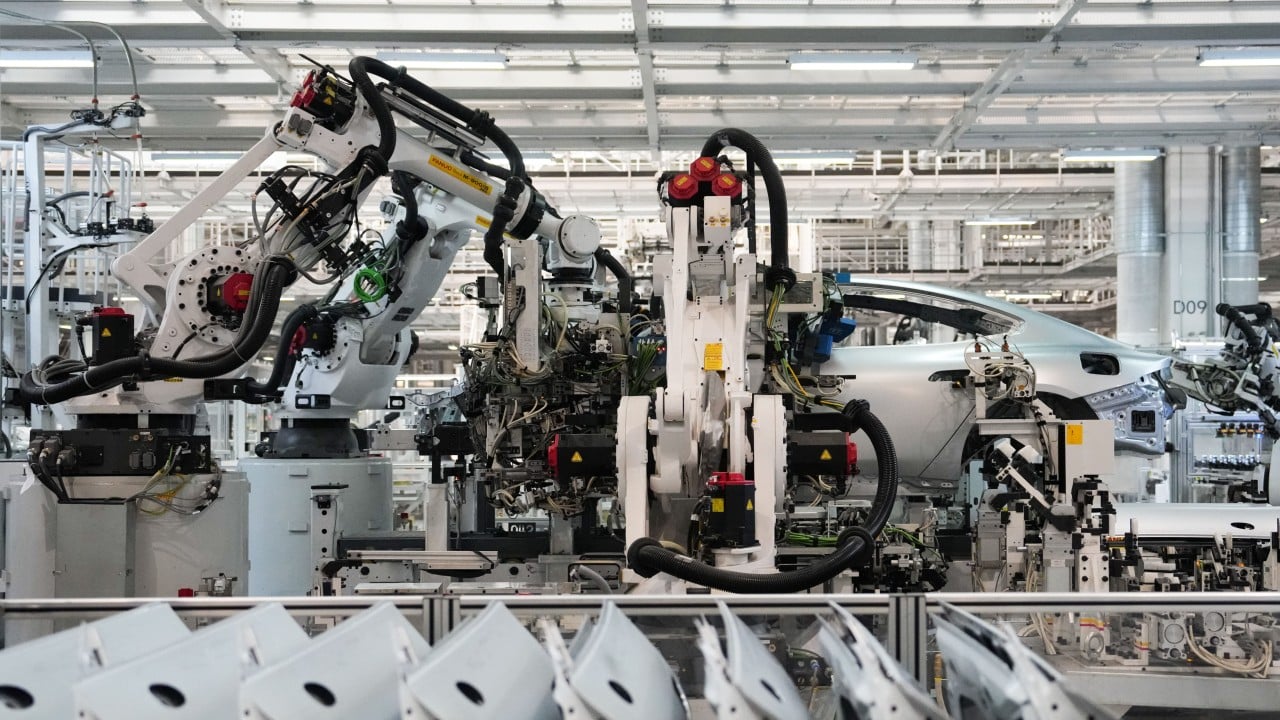
For decades, the standard playbook for global trade was simple. Western brands designed products, and Chinese factories built them. That arrangement is dead. China now commands roughly 28 percent of global manufacturing output, but the true shift isn't about the sheer volume of goods leaving its ports. The real story is that China is packing up its industrial ecosystem and exporting the factory itself.
If you look closely at automotive plants in Southeast Asia, battery facilities in Europe, or assembly lines in Latin America, you'll spot the blueprint. Chinese firms aren't just selling completed commodities anymore. They are selling entire industrial supply chains, complete tooling, local management structures, and hyper-efficient logistical networks.
The Mechanics of Industrial Exportation
Why are Chinese manufacturers moving physical operations abroad rather than just shipping boxes overseas? Protectionism plays a massive role, but it's only part of the equation. Tariffs and trade restrictions from Washington and Brussels have made direct exporting a risky bet.
Instead of fighting the walls, industrial titans are jumping over them. Take the electric vehicle sector as a prime example. Companies like BYD don't just export cars; they bring the component ecosystem with them. Traditional Western automakers outsource up to 75 percent of their parts, creating fragmented supply lines that buckle under pressure. Chinese firms maintain vertical integration, controlling everything from raw material processing to the microchips on the dashboard. When they build a facility overseas, they replicate that tight cluster.
This model changes what it means to industrialize. Developing nations used to spend decades trying to build local manufacturing capacity from scratch. Now, a country can plug straight into a pre-packaged Chinese industrial cluster.
What the Data Actually Shows
The numbers behind this shift reveal an economy caught between domestic overcapacity and international expansion. China finished recent years with historic trade surpluses, hitting massive milestones north of one trillion dollars. Domestic consumption inside China has remained sluggish, plagued by property sector fallout and cautious household spending.
Factories churn out more goods than the local market can comfortably absorb. To prevent brutal price wars at home, industrial firms look outward. But instead of just pushing those goods across borders—which triggers immediate anti-dumping tariffs—they are setting up shop abroad.
You can see this in the changing nature of foreign direct investment. Chinese manufacturing investment abroad has shifted away from simple resource extraction toward advanced assembly, machinery, and green tech infrastructure. They are exporting the institutional know-how that makes production cheap and fast.
The Catch for Host Countries
Inviting these industrial ecosystems sounds like a win for local economies looking for jobs and tech transfer. Governments from Jakarta to Budapest are rolling out the red carpet. Yet, local supply chains often get bypassed.
When a fully integrated industrial cluster drops into a new country, it frequently imports its own tier-two and tier-three suppliers. Local component makers struggle to compete with the speed and scale of the incoming ecosystem. Host nations get the final assembly plant, but the high-value components and intellectual property remain tied back to the source.
Western competitors face an even tougher dilemma. Trying to decouple from Chinese manufacturing while matching the price point of a vertically integrated factory system is nearly impossible in the short term. Throwing up tariffs buys time, but it doesn't build a better assembly line.
Navigating the New Industrial Order
If you run a business or formulate policy today, you have to stop thinking about China as a cheap workshop and start viewing it as an exportable standard of industrial efficiency.
Start by auditing your supply chain dependencies. If your tier-one supplier relies on sub-components that ultimately trace back to these replicated industrial clusters, you don't have a diversified supply chain. You have a single point of failure wrapped in a different geographic label.
Focus heavily on process innovation rather than just product design. The Western advantage used to lie in invention, assuming manufacturing could be handled anywhere. In an era where the entire factory blueprint is mobile, execution and speed of integration matter more than a patent on paper.
The global economy is splitting into regional manufacturing hubs modeled after the most efficient template available. Ignoring how those templates operate leaves you competing against a ghost that moves faster than your regulatory frameworks can track.