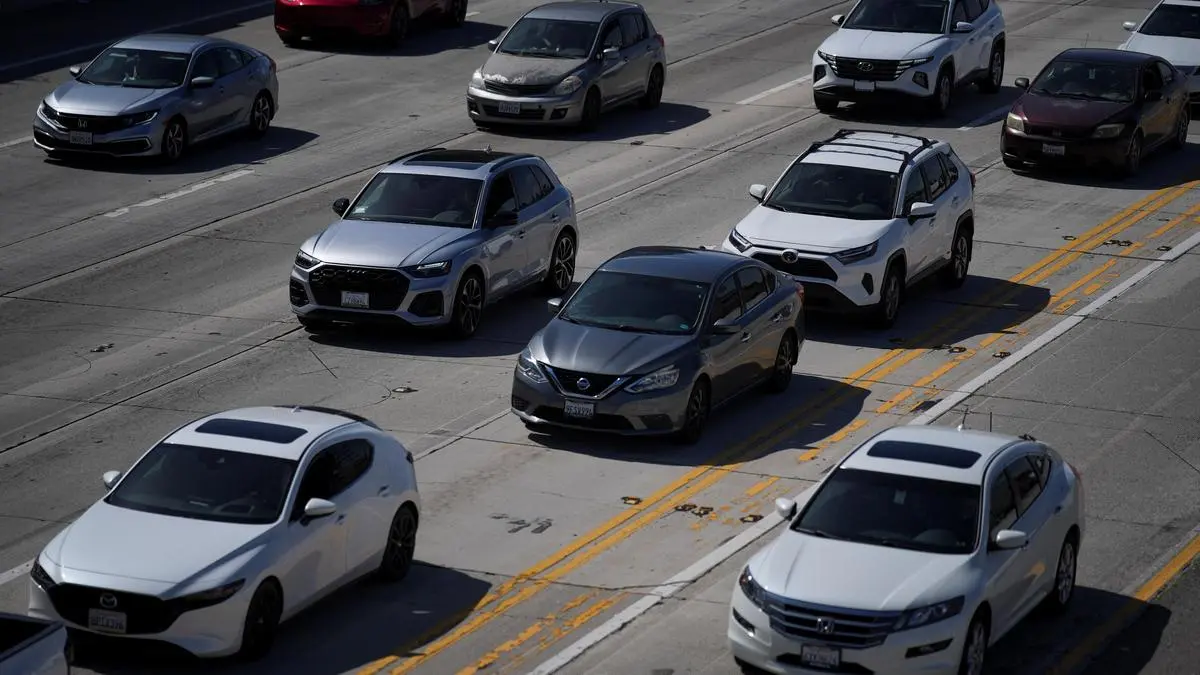
The American dream of an affordable new car is dying a noisy, public death. If you've walked onto a dealer lot lately, you know the vibe. It's all $50,000 SUVs and trucks that cost as much as a starter home in the Midwest. Now, foreign carmakers are threatening to pull the few budget-friendly models left if the U.S. doesn't play ball on trade. According to a recent Wall Street Journal report, manufacturers like Hyundai, Kia, and Nissan are basically holding their entry-level lineups hostage. They're telling Washington that without a favorable trade deal, the $20,000 sedan is officially extinct.
This isn't just corporate whining. It’s a calculated response to a protectionist pivot in American policy. For decades, we relied on a globalized supply chain to keep the "cheap car" alive. Now, the rules are changing. New tariffs and local-sourcing requirements make it nearly impossible to turn a profit on a car that costs less than the average American’s annual rent. If you want a cheap car, you're increasingly stuck with the used market, which is its own circle of hell.
The Trade Deal Standoff and Your Wallet
The core of the problem sits with the Inflation Reduction Act and the lingering ghost of the USMCA. The U.S. government wants everything built here. Batteries, steel, assembly—the whole works. That sounds great for jobs, but it's a disaster for the bottom line of a sub-compact car. Most of these entry-level models are built in Mexico, South Korea, or Japan. When the U.S. tosses up trade barriers or denies tax credits to foreign-made vehicles, those manufacturers face a grim choice. They can either eat the cost and lose money on every sale, or they can walk away.
They're choosing to walk away. Honestly, can you blame them? Automakers aren't charities. If a Kia Rio or a Nissan Versa doesn't make a profit, it doesn't get a spot on the boat. We're seeing a shift where "foreign" brands are focusing exclusively on their high-margin giants—the Tellurides and the Pathfinders of the world. They'll keep the big stuff because the profit margins can absorb a few trade hiccups. The small stuff? It's just not worth the headache.
Why the $20000 Car is a Mathematical Nightmare
Let’s look at the numbers because they’re brutal. To sell a car for $22,000, the manufacturing cost has to stay incredibly low. We’re talking thin margins. When you add a potential 10% or 25% tariff because of a stalled trade deal, that margin evaporates instantly. Actually, it goes negative.
- Raw materials prices have spiked globally.
- Shipping a car from Asia or even trucking it from Central Mexico isn't cheap anymore.
- Advanced safety tech is now mandatory, not optional.
Every backup camera, lane-keep assist sensor, and airbag costs money. You can’t build a "stripper" model like you could in the 1990s. The floor for what a car must have to be legal is much higher now. When you pile trade wars on top of that, the budget car becomes a unicorn. We're seeing brands like Mitsubishi and even Toyota reconsidering how many "cheap" options they can actually afford to offer American drivers.
The Death of Brand Loyalty for Young Drivers
This isn't just about this year's sales. It's a long-term disaster for the brands themselves. Traditionally, the cheap car was the gateway drug. You bought a Honda Fit in your 20s, liked it, and bought a CR-V in your 30s. If these companies pull their entry-level models, they lose the chance to hook buyers early.
Gen Z and younger Millennials are already being priced out of the new car market entirely. If the only "affordable" option is a seven-year-old used car with 80,000 miles, that buyer has zero relationship with the manufacturer. They’re just trying to survive. Foreign carmakers know this, but they’re also staring at a quarterly earnings report that says "stop selling cheap cars." It’s a standoff between long-term brand health and immediate survival in a hostile trade environment.
The Hidden Costs of Protectionism
Washington thinks it's winning by forcing companies to build in the U.S. But the reality is more complicated. Not every car can be built in Tennessee or Ohio. The infrastructure for small, low-margin vehicles just isn't there. By effectively taxing these foreign imports out of existence, the government is forcing Americans into more debt.
When the cheapest new car on the lot is $30,000, people take out 84-month loans. That’s seven years of payments on a depreciating asset. We're essentially seeing a "poverty tax" on mobility. If you can't afford the luxury SUV, you don't get a new car at all. You get a used car with no warranty and high maintenance costs. That’s the trade-off no one in D.C. wants to talk about.
What Happens if the Trade Deal Fails
If these trade negotiations go south, expect a mass exodus. We’ve already seen Chevy kill the Spark and Ford abandon sedans entirely. If the foreign players follow suit, the "cheap car" category will be a ghost town. You’ll see a market dominated by massive, expensive, electrified bricks.
The irony is that the people who need cheap cars the most—commuters, students, service workers—are the ones being ignored. The WSJ report highlights that carmakers are specifically pointing to this demographic as the casualty of the trade war. They’re using them as leverage. "Give us the deal we want, or the poor kids don't get a car." It’s cold. It’s calculated. It’s also how global business works in 2026.
Don't Wait for Prices to Drop
If you're holding out for the return of the $18,000 new car, stop. It’s not happening. Even if a trade deal is struck tomorrow, the inflationary pressures and the shift toward EVs mean the floor has permanently moved. The "cheap" car of the future will likely be a base-model EV that still touches $30,000 before incentives.
If you actually find a new car under $23,000 on a lot today, buy it. Seriously. Those vehicles are becoming collector's items not because they're fancy, but because they're the last of a species. Check the VIN. See where it was built. If it came from a country currently in the U.S. crosshairs, that model might not exist next year. Secure your financing now and stop looking for a better deal that isn't coming. The era of the disposable, affordable commuter car is ending, and the trade war is just the final nail in the coffin.