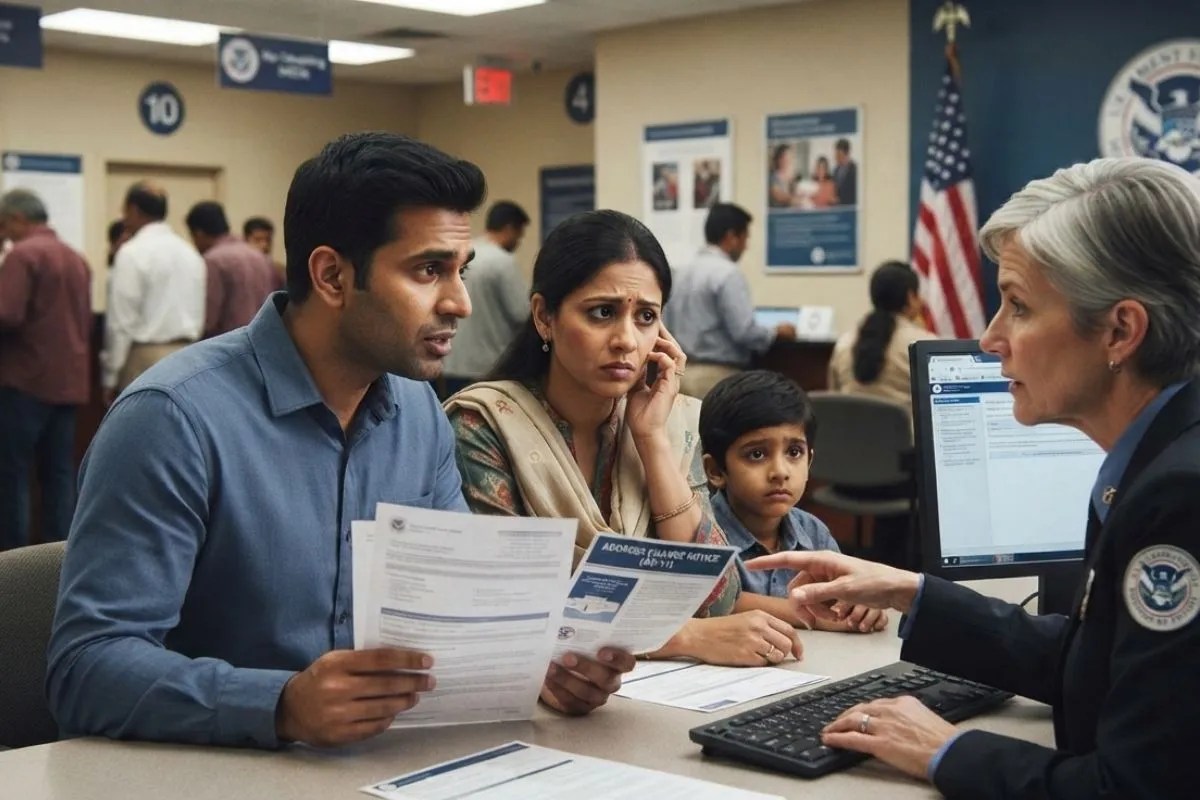
The desk lamp in the suburban apartment throws
The Century Long Wait for Tomorrow
news
category: news
The envelope arrived on a Tuesday. It always arrives on a Tuesday, heavy with the bureaucratic weight of a government office three thousand miles away. Inside, a single sheet of paper explained that a dream had been deferred for another decade. Not denied. Just postponed. Pushed back into a hazy future that looks less like a destination and more like a mathematical impossibility.
Consider Rajesh.
He is not a statistic. He is a software architect who remembers the smell of dust on the windows of his first apartment in Bangalore, before he packed his entire life into two suitcases and a single cardboard box. That was fifteen years ago. Since then, his daughter has learned to drive on American asphalt, his son has grown accustomed to American football idioms, and his own hair has turned the color of winter salt. He followed every rule. He paid his taxes. He filed his paperwork on time, every time, renewing his H-1B visa through cycles of political turbulence, economic crashes, and shifting administrative tides.
Yet, when he looks at the visa bulletin, he sees a number that defies human lifespan: a wait time stretching toward one hundred and seventy-nine years.
Math. Cruel, unfeeling arithmetic.
The United States employment-based green card system is broken. It is not broken in the abstract, academic sense that economists debate on Sunday morning talk shows. It is broken in the visceral way a bridge is broken when you are halfway across it and the cables begin to snap. Under the current country-cap system, individuals born in high-emission nations like India face a backlog so staggering that survival itself becomes a race against mortality.
When the Trump administration signaled fresh tightening of immigration policies, the news cycles treated it as a game of chess. Move a bishop. Protect a rook. But for the people living inside the system, the shifts felt less like strategic maneuvers and more like sudden drops in an elevator. New scrutiny on visa renewals. Heightened evidentiary burdens for extensions. Every stamp in the passport became a tightrope walk.
Think about what an employment-based visa actually means. It means living your life in three-year increments.
Imagine buying a house, planting an oak tree in the front yard, and knowing that a sudden policy shift, a corporate layoff, or a bureaucratic delay could force you to pack your children into a car and leave the only home they remember within sixty days. That is not stability. That is an extended audition.
The backlog exists because of a relic from a different century: the per-country limit. Established decades ago to ensure geographic diversity, the system allocates no more than seven percent of employment-based green cards to natives of any single country. When applied to a nation of 1.4 billion people producing a massive share of the world's engineering and medical talent, the math implodes. Demand outstrips supply by an order of magnitude. The queue stretches out into infinity.
And so, people adapt. Or they break.
Some colleagues of Rajesh have given up. They packed their accumulated decades of American contributions and moved north to Canada, or back home to Bangalore and Hyderabad, where booming tech hubs welcomed them with open arms and zero visa anxiety. They left behind homes sold at a loss and friendships forged over midnight debugging sessions. They left because dignity requires a horizon you can actually reach.
Others stay. They accept the endless limbo because their children cannot spell their ancestral language and consider America the only home they have ever known. They wait because hope, however irrational, is a stubborn thing.
The policy debates in Washington often center on security, economics, and national interest. They talk about protecting domestic workers or streamlining administrative efficiency. But they rarely talk about the human cost of administrative paralysis. They rarely look at the family sitting around a dinner table, whispering about whether they should enroll in a local college or save the tuition money for a hypothetical flight back across the ocean.
The system treats human lives like files in a filing cabinet, waiting for a clerk who will never clear the drawer.
When a nation makes its legal immigrants feel like permanent suspects rather than future citizens, something essential shifts in the culture. The talent still comes, drawn by the gravity of world-class universities and innovative enterprises. But the loyalty frays. The emotional investment cools into transactional endurance. You cannot ask people to give their best years to a country that views their presence as a temporary convenience.
The numbers will continue to fluctuate. Administrations will change. New memos will drop from federal agencies, altering definitions of specialty occupation and tightening the screws on administrative processing. Lawyers will parse every sentence for hidden traps.
But the core crisis remains untouched by policy tweaks.
Until the structural architecture of employment-based immigration is rebuilt to match the realities of the modern global economy, the century-long wait will remain. It stands as a monument to administrative inertia.
Rajesh will check the visa bulletin next month. The numbers will move forward by a few weeks, perhaps months, while the calendar moves by years. He will close his laptop, turn off the desk lamp, and go help his daughter with her algebra homework, living in a country that loves his work, but cannot find a place for his future.


