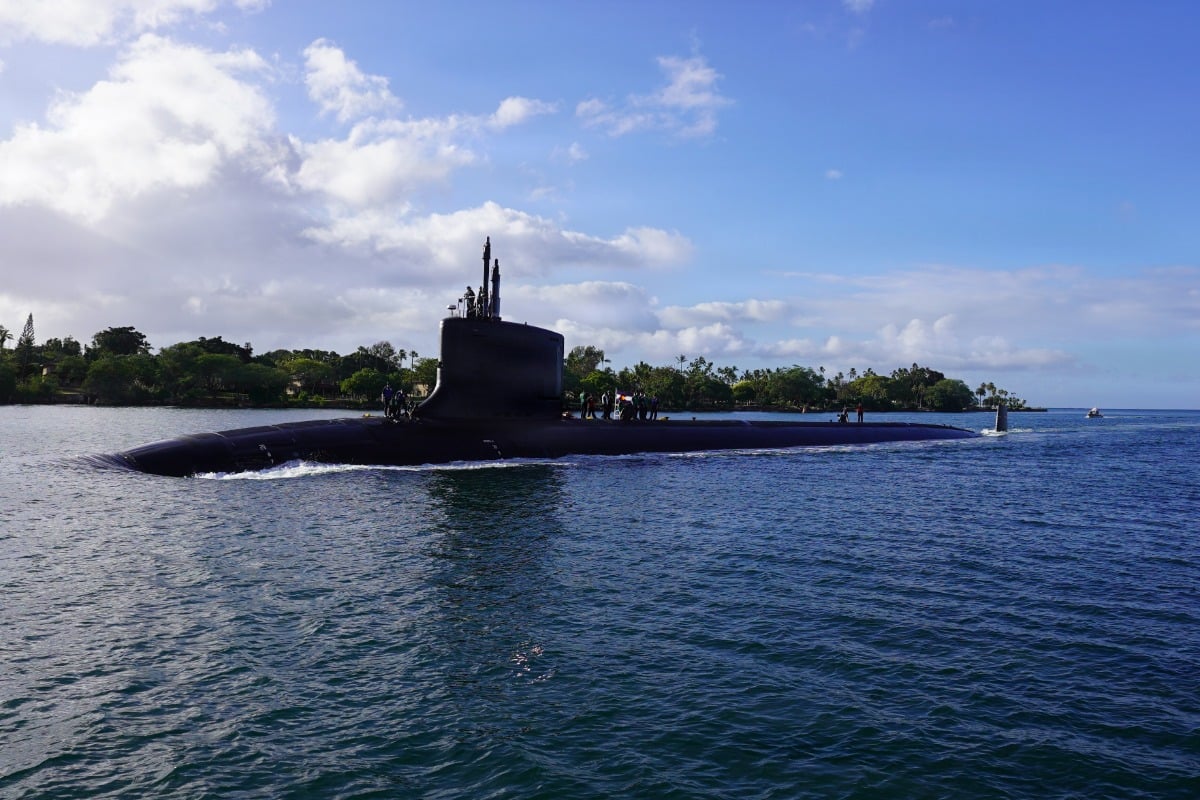
The defense establishment is currently patting itself on the back because the Virginia-class fast-attack submarine USS Colorado (SSN 788) completed its scheduled maintenance availability ahead of schedule. The press releases read like a triumph of modern industrial planning. They want you to believe that shaving a few weeks off a drydock stint is a sign of a revitalized naval shipyard infrastructure.
It is not. It is a dangerous distraction from a systemic failure. You might also find this similar story insightful: Maritime Interdiction Mechanics: A Structural Analysis of the USS Michael Murphy Rescue Operations in the Arabian Sea.
Celebrating a single submarine leaving a shipyard early is like cheering because one flight took off on time while the rest of the airline’s fleet is grounded on the tarmac. The cheerleaders are focusing on the exception to ignore the rule. The reality of naval maintenance is a bottleneck so severe that it threatens the very foundation of maritime deterrence.
We need to stop looking at isolated scheduling wins and start looking at the structural rot in how the Navy maintains its fleet. As highlighted in detailed coverage by USA Today, the implications are notable.
The Illusion of Efficiency
The standard narrative surrounding the USS Colorado focuses entirely on the timeline. Shipyard workers put in extra hours, supply chains aligned perfectly, and the boat returned to the fleet ready for deployment. It sounds efficient.
But efficiency in a vacuum is meaningless. Naval Sea Systems Command (NAVSEA) regularly wrestles with a massive backlog of maintenance across the public shipyards—Norfolk, Portsmouth, Puget Sound, and Pearl Harbor. When one hull gets prioritized and pushed out the door early, it rarely happens because of a sudden spike in systemic productivity. It happens because resources were cannibalized from other projects.
I have watched defense contractors and naval planners play this shell game for two decades. To get Boat A out ahead of schedule to score a public relations victory, you divert skilled welders, specialized technicians, and critical spare parts from Boat B and Boat C. The "early" delivery of one asset almost always guarantees the delayed delivery of two others.
The media reports the triumph of Boat A. The compounding delays of Boats B and C are buried in obscure budget hearings months later.
The True State of the Submarine Fleet
To understand why the celebration of the USS Colorado is misplaced, look at the aggregate data, not the outliers.
- Nearly 40% of the U.S. Navy's attack submarine fleet is currently sidelined, either undergoing maintenance or waiting for a spot in a shipyard.
- The Congressional Budget Office (CBO) has repeatedly warned that public shipyards lack the capacity to keep up with the Virginia-class maintenance schedule.
- Submarines like the USS Boise have spent years sitting idle, waiting for maintenance availability to even begin.
When nearly forty percent of your primary underwater deterrence force is stuck in port, celebrating one boat that finished its check-up early is a joke. It indicates an environment where the baseline expectation has sunk so low that doing the job adequately is treated as a historic achievement.
The Virginia-class Maintenance Trap
The Navy transitioned from the older Los Angeles-class submarines to the Virginia-class with the promise that these newer hulls would be easier and cheaper to maintain. The opposite has proven true.
The Virginia-class submarines are incredibly complex machines, packed with advanced stealth technology, modular weapon systems, and fly-by-wire controls. This complexity means that maintenance cannot be rushed without sacrificing safety or operational capability.
The Parts Cannibalization Crisis
Because the industrial base supplying the Navy has shrunk drastically since the end of the Cold War, spare parts for Virginia-class submarines are chronically scarce. Shipyards frequently engage in "cannibalization"—robbing parts from a submarine early in its maintenance cycle to install them on a submarine that needs to deploy immediately.
Imagine a scenario where a technician removes a vital valve from a submarine that just arrived in the yard to put it on the USS Colorado so it can hit its early departure date. The USS Colorado looks great on paper. But the first submarine is now missing a part that may take nine months to re-order from a specialized vendor. The timeline for that second submarine has just expanded exponentially.
This is not a theoretical problem. Government Accountability Office (GAO) reports have highlighted that parts cannibalization on attack submarines has skyrocketed over the past decade. It is a desperate, short-term tactic that creates a long-term logistical nightmare.
Dismantling the Public Shipyard Delusion
People often ask: "If the shipyards are backed up, why doesn't the Navy just build more drydocks or hire more workers?"
This question assumes that the problem is purely financial or administrative. It ignores the structural reality of the American labor market and industrial base. You cannot simply post a job listing and hire five hundred nuclear-qualified welders. It takes years to train these individuals, and the retention rate at public shipyards is notoriously low due to grueling hours and rigid bureaucratic structures.
Furthermore, the physical infrastructure of the shipyards is ancient. Many of the drydocks currently servicing the world's most advanced nuclear submarines were originally built during the presidency of Theodore Roosevelt. The Shipyard Infrastructure Optimization Program (SIOP) is a multi-billion-dollar effort to modernize these facilities, but it is decades away from completion and already over budget.
Relying on public shipyards to suddenly become agile tech-hubs capable of turning around fleets ahead of schedule is a fantasy.
The Unconventional Solution: Commercial Integration and Deficit Acceptance
If the Navy wants to fix its readiness crisis, it must stop trying to optimize a broken system and instead fundamentally alter how it approaches maintenance. This requires two radical steps that the current leadership resists.
1. Force True Commercial Competition
The Navy relies almost exclusively on public shipyards for nuclear maintenance, with General Dynamics Electric Boat and Huntington Ingalls Industries Newport News Shipbuilding handling the overflow and new construction. This creates a cozy triopoly with zero real incentive to innovate or cut costs.
The Navy must aggressively certify private, non-traditional shipyards to handle non-nuclear maintenance tasks on nuclear-powered hulls. Strip away the bureaucratic layers that prevent smaller, commercial repair yards from bidding on Navy contracts. If a private yard can clean a hull, repair a ballast tank, or overhaul a non-nuclear auxiliary system faster and cheaper than a public shipyard, give them the contract. This frees up the highly specialized public shipyard workforce to focus strictly on the nuclear reactor and advanced sonar suites.
2. Accept the Fleet Size Deficit
The Navy needs to stop pretending it can maintain a 355-ship fleet with its current infrastructure. The obsession with hull counts leads to extending the lifespans of aging ships that require massive, unpredictable maintenance overhauls.
The contrarian move is to permanently retire older, high-maintenance assets early. Shrink the active fleet to a size that the existing shipyard infrastructure can actually support with a 100% predictability rate. A smaller fleet of completely operational, fully maintained submarines is vastly superior to a larger fleet where one-third of the boats are rusting at a pier waiting for a spare part.
The Real Cost of False Victories
When defense officials and media outlets hype the early return of the USS Colorado, they perpetuate a dangerous myth: that the system is working. It gives lawmakers an excuse to avoid making the hard, structural choices required to fix the defense industrial base. It allows them to fund flashy new ship construction while starving the unglamorous accounts that pay for spare parts, drydock gates, and shipyard worker salaries.
The USS Colorado being back in the water is good for the crew of that specific boat. But for the national security of the United States, it is a data point stripped of its context, used to cover up a systemic failure that continues to degrade the nation's strategic advantage beneath the waves.
Stop looking at the one boat that escaped the shipyard early. Start looking at the dozens that cannot get in.