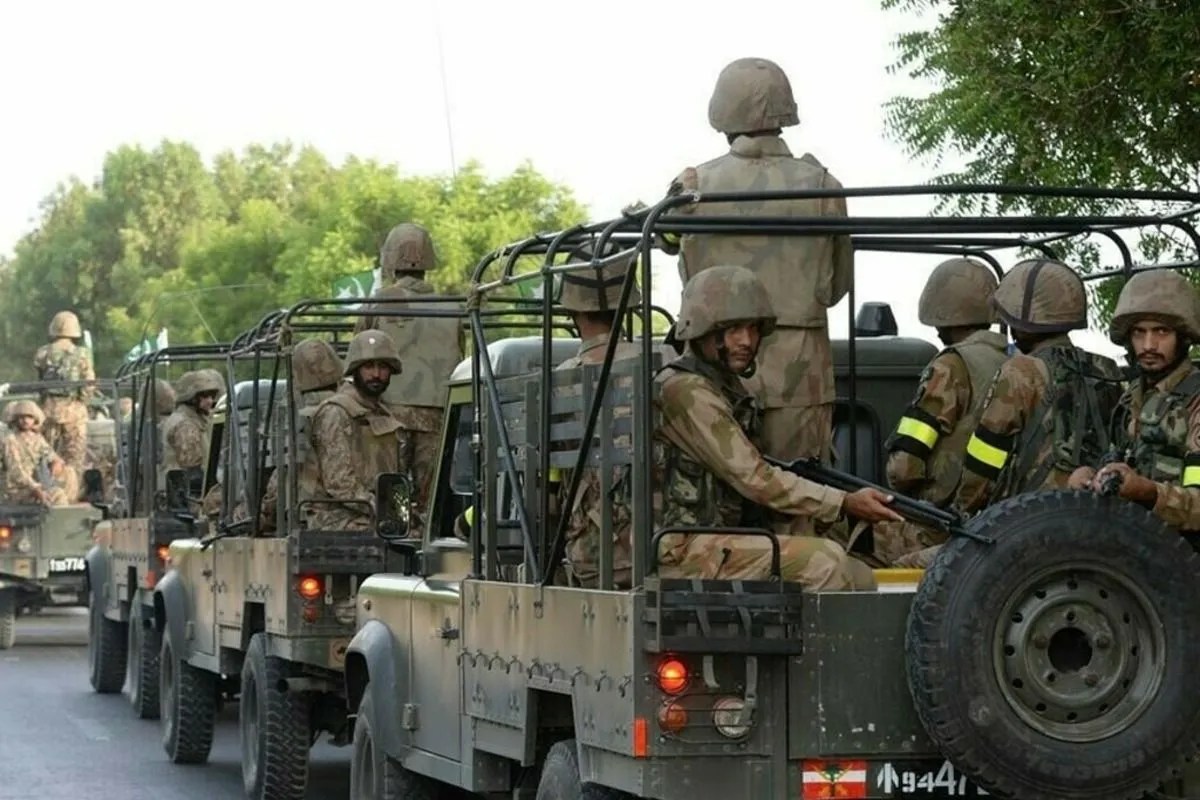
Another day, another official press release celebrating a dozen-plus combatants neutralized along the rugged western frontier. The media machine spins the standard narrative of vigilance and decisive border management. Stop treating tactical body counts as strategic victories. Counting thirty-six-hour skirmishes and recovered caches as milestones in national security is equivalent to bailing out the ocean with a teaspoon while the hull is splitting wide open.
The conventional coverage of operations involving groups like the Tehrik-e-Taliban Pakistan, or what state ISPR briefings label under specific security terminology, suffers from a profound lack of analytical depth. Observers look at the dead bodies tallied in North Waziristan and mistake the symptom for the disease. Every time an infiltration wave is smashed at the Durand Line, the underlying structural failure remains entirely intact.
The Arithmetic Of A Broken Border Model
Imagine a commercial enterprise that measures its success strictly by how many shoplifters its security guards tackle at the front door, while the back wall of the warehouse is permanently dismantled. That is the exact reality of counter-terrorism operations in Khyber Pakhtunkhwa.
The lazy consensus holds that kinetic force applied at the border solves cross-border militant mobility. It does not. The topography of the region dictates that thousands of square miles of porous terrain cannot be sealed by reactive ambushes and intelligence-based sweeps alone. When fifteen combatants are eliminated in a localized engagement, the structural pipeline recruiting, training, and dispatching these men across the Afghan frontier remains completely uninterrupted.
State media outlets love to frame these skirmishes as turning points. They are not turning points; they are recurrent overhead costs of a failed regional policy. The strategic misalignment stems from treating a political and ideological insurgency as a simple law enforcement problem that can be solved by higher casualty ratios.
Why Tactical Wins Mask Strategic Bleeding
Look closely at the data coming out of long-term counter-insurgency campaigns in South Asia. Security forces absorb relentless attrition through asymmetric strikes, remote-controlled devices, and outpost raids, while insurgent networks regenerate through local grievances and external sanctuaries.
When the Inter-Services Public Relations issues statements praising the patience and precision of troops during multi-day engagements, they omit the uncomfortable truth: the enemy chooses the tempo. Insurgents do not need to win territorial battles; they simply need to sustain a low-cost, high-friction campaign that drains state resources, rattles foreign investment, and paralyzes economic corridors.
- The Fallacy of Containment: Reactive border closures punish local civilian commerce while failing to stop determined, ideologically driven units who know every goat path across the mountains.
- The Regeneration Loop: Killing fifteen fighters does little when the socio-economic conditions and regional safe havens that produced them are left to fester.
- The Metrics Trap: Bureaucracies optimize for what gets measured. If the metric is monthly militant body counts, institutions will manufacture conditions that generate those counts, mistaking activity for progress.
Redefining The Real Security Question
The public is fed a steady diet of heroic defense narratives because facing the alternative requires admitting policy failure at the highest levels of governance. Asking whether the army successfully repelled an infiltration wave is the wrong question entirely. The correct question is why the state finds itself fighting the exact same demographic of insurgents in the exact same valleys decade after decade.
Until policymakers pivot away from pyrrhic tactical victories and address the diplomatic paralysis plaguing bilateral relations with neighboring regimes, these body counts will remain nothing more than tragic milestones on an endless treadmill.
Stop cheering for the skirmish. Start demanding a strategy that ends the war.