Everyone loves the spectacle of a giant steel rocket falling out of the sky and getting snatched out of mid-air by a pair of massive mechanical chopsticks. It looks like science fiction brought to life. It makes for incredible social media clips. It plays directly into the lazy consensus that flashy hardware stunts equal permanent industry dominance.
Here is the dirty secret the aerospace fanboys refuse to admit. Catching a heavy-lift orbital rocket on land using mechanical arms is an unnecessary engineering vanity project that introduces existential safety risks, catastrophic failure points, and massive regulatory bottlenecks.
Let us look past the pyrotechnics. I have watched legacy aerospace companies and ambitious startups alike burn billions of dollars chasing structural aesthetics while ignoring brutal flight dynamics. The obsession with terrestrial catch towers is a distraction from the real objective: achieving rapid, airline-style reusability over operational convenience.
The Physics of a Terrestrial Precision Catch
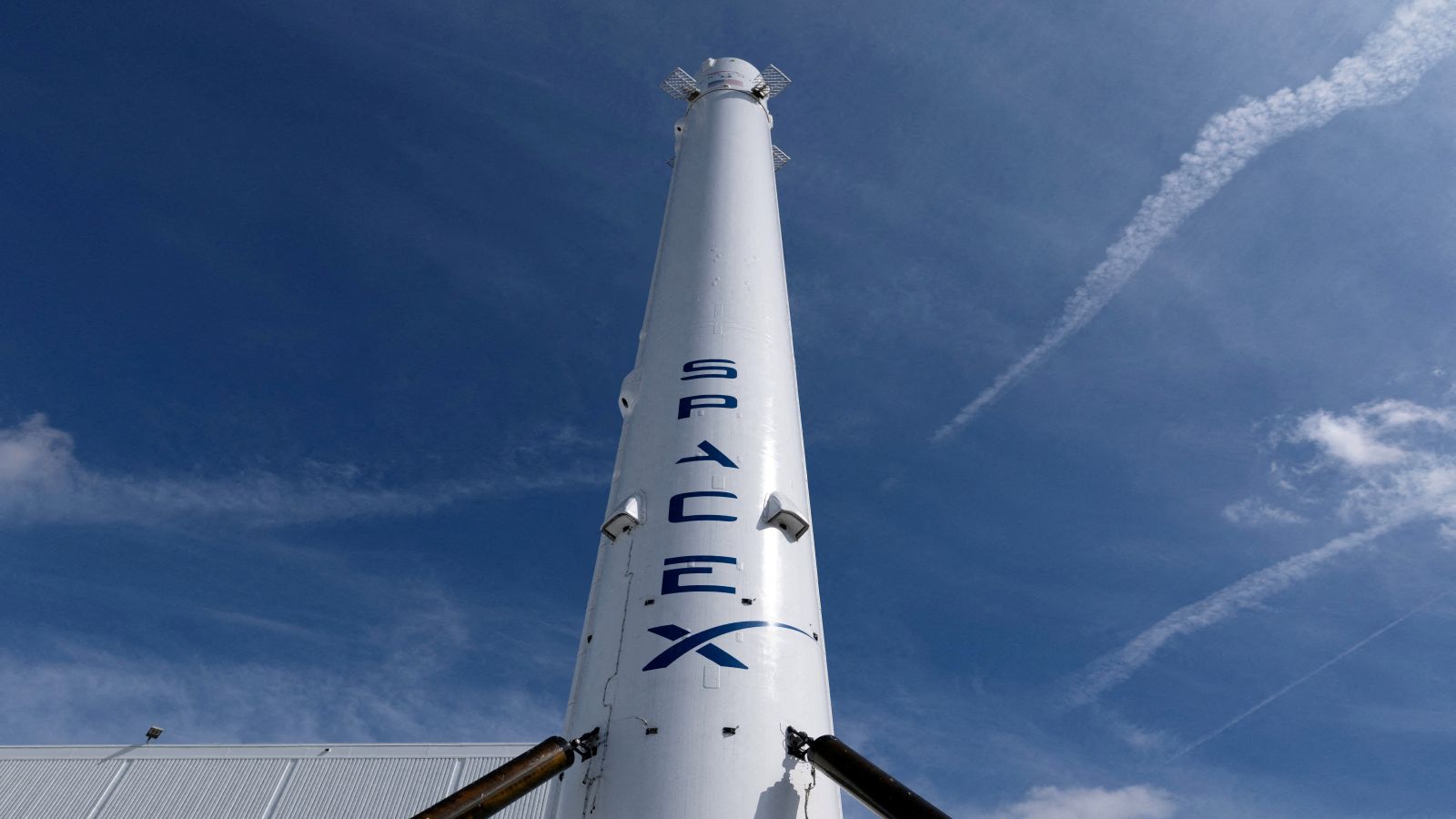
To understand why landing a rocket back at the launch site is a flawed premise, you have to look at the kinetic energy involved. Starship is not a Falcon 9. It is a massive stainless-steel vehicle designed to carry a hundred metric tons to orbit.
When a Super Heavy booster or a Starship upper stage returns, it undergoes a supersonic retrograde burn. It sheds immense velocity, transitions from a controlled belly-flop skydive, and flips vertical at the absolute last second. The margin for error is measured in fractions of a second and single-digit meters.
The lazy consensus says: "If you catch it on the launch mount, you save weight by eliminating landing legs."
That argument crumbles under basic systems engineering scrutiny. To eliminate landing legs on the vehicle, you shift all shock absorption, load distribution, and stabilization mechanics onto a multi-story steel tower fixed to the ground. You do not eliminate the weight penalty; you simply move it from the flying vehicle to the ground infrastructure.
Worse, you couple the landing event directly to your launch pad. If a ship misses the chopsticks by two meters due to a sudden gust of wind or an unmodeled atmospheric density anomaly, you do not just lose a vehicle. You vaporize your entire launch infrastructure.
Think about commercial aviation. Imagine if commercial airliners did not land on wide, dispersed concrete runways spread across thousands of acres, but instead had to be caught out of the sky by a giant pair of mechanical tongs attached directly to the main terminal building. One botched landing takes out the entire airport, grounding every subsequent flight indefinitely.
The Regulatory Nightmare No One Mentions
SpaceX operates in Texas under an environmental and regulatory microscope, but the broader industry is watching closely. Every test flight requires navigating complex federal and state airspace closures, environmental impact statements, and local municipality friction.
Terrestrial catch towers require explosive safety clear zones that dwarf traditional vertical landing pads. When you perform high-energy propulsive landings over populated landmasses or near sensitive coastal ecosystems, the overpressure waves, acoustic rattling, and risks of stray shrapnel create a regulatory nightmare.
The Federal Aviation Administration and local stakeholders tolerate these risks during an aggressive research and development phase because of the sheer velocity of iteration. But operational cadence requires predictability. You cannot scale to twenty launches a week if a single miscalculated wind shear threatens to flatten your entire propellant tank farm and integration tower.
Ocean platforms solved this problem decades ago. Offshore oil rigs converted into autonomous spaceports decouple launch and landing operations from populated landmasses entirely. They offer infinite room for error. If a booster goes sideways during a landing burn on an ocean barge, it sinks into the ocean instead of taking out a multi-billion-dollar ground production facility.
The industry pretends that catching rockets on land is a triumph of efficiency. It is actually a symptom of geographical constraint.
The Landing Leg Fallacy
Let us dismantle the primary justification for the tower catch: the mass savings of skipping landing legs.
Engineers will tell you that every pound of dead weight on a rocket reduces payload capacity to orbit exponentially. This is true. Landing legs are heavy, awkward, and thermally vulnerable during atmospheric reentry.
However, modern materials science offers carbon composites, high-temperature alloys, and deployable geometries that minimize this mass penalty. More importantly, landing legs provide passive safety isolation. A vehicle with robust, deployable legs can land on a rough concrete pad, a dirt flat, or a reinforced steel plate with high compliance.
The mechanical arm catch system replaces a distributed, lightweight structural absorption system on the vehicle with a centralized, hyper-complex kinetic energy transfer interface. The pins, load-bearing rails, and hydraulic actuators on the tower have to withstand asymmetric wind loads, thermal expansion from recent flight, and extreme dynamic shock loading.
When you make your ground infrastructure the landing gear, you couple your single point of failure directly to your launch cadence. If a hydraulic seal blows on the tower chopsticks, you cannot launch or land anything until it is completely overhauled. You trade vehicle complexity for infrastructure fragility.
The Economic Reality of Rapid Reuse
Reusability is the holy grail because it slashes the marginal cost of mass to orbit. But cost per flight is not just about fuel and refurbishment hours; it is about asset utilization.
If your launch vehicle requires a custom multi-million-dollar tower catch system to turn around, you are bottlenecked by the throughput of that single geographic point. True airline-style reusability means a vehicle can land anywhere with a certified flat surface, refuel, and take off again.
If Starship must return to the exact coordinates of its birth to be caught by giant steel claws, it is not a global transport system. It is a tethered vertical ferry with extra steps.
The real breakthrough in orbital class rocketry will not come from building bigger cranes to catch falling tubes of steel. It will come from mastering precision guidance navigation and control systems that allow lightweight, highly compliant landing architectures to set down softly anywhere on Earth or Mars without needing a custom-engineered catcher's mitt.
Stop confusing theatrical engineering with structural evolution. The future belongs to decentralized, autonomous landing systems that do not require a safety net bolted to the ground.