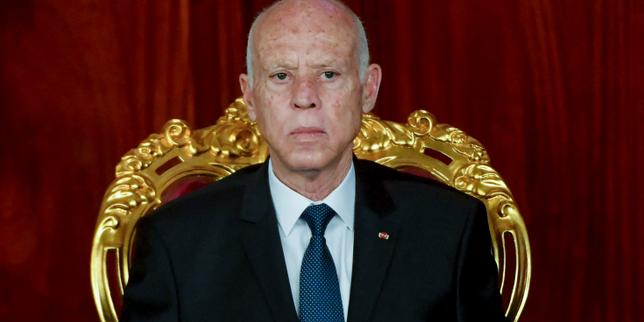
Writing from cell number 406532 in Mornaguia prison isn't exactly how Mourad Zeghidi imagined spending his 2020s. The French-Tunisian journalist, a familiar face who once managed sports coverage for Canal+ in Africa, recently smuggled his voice out of those concrete walls. He sent an open letter straight to Tunisian President Kais Saied. He didn't beg. He pointed out a glaring contradiction.
If you've been watching Tunisia slide down the global press freedom indexes, you know this isn't just about one man. It's about a system that shifts its legal goalposts whenever a critic gets too close to finishing their sentence. Zeghidi was supposed to walk free in January 2025. Instead, he's looking at years behind bars because the state found a new way to keep him locked up. Meanwhile, you can explore similar stories here: The Real Reason Japan and India Are Forging a Desperate Energy Pact.
The Legal Trapdoor of Decree 54
Let's look at how Zeghidi ended up in Mornaguia in the first place. In May 2024, authorities arrested him alongside fellow commentator Borhen Bsaies. Their crime? Speaking on the radio and posting on Facebook. Under Decree 54—a piece of legislation passed in 2022 ostensibly to fight cybercrime—any political analysis that irritates the palace can be deemed "fake news".
Zeghidi told the court he wasn't an opponent or a supporter of Saied. He was just doing his job. The court didn't care. They handed him a one-year sentence, which got knocked down to eight months on appeal. To explore the bigger picture, we recommend the excellent analysis by BBC News.
Then came the twist. Just as his release date approached in late 2024, the state suddenly dropped a new set of charges: tax evasion and money laundering.
By January 2026, the Tunis Court of Appeal slapped him with an extra three and a half years. It's a classic strategy. When the political charges expire, you find a financial one.
Holding Saied to His Own Words
Zeghidi’s open letter targets Saied's signature policy: penal reconciliation. The president has repeatedly stated that anyone who settles their financial disputes with the state should "leave the darkness of prison". Saied claims he wants to recover every millimeter of public money without unnecessarily harming citizens.
Zeghidi took him at his word. In his letter, the journalist revealed that he reached a formal settlement with the Ministry of Finances, paying every single millime demanded of him. His family made massive sacrifices to clear the bill. Furthermore, investigations involving the Central Bank and Interpol turned up zero hidden assets or suspicious foreign transactions. The funds in question were simply his legitimate professional earnings from a three-year stint working in Qatar, where he earned $4,500 a month.
If the money is paid and the state suffered no financial harm, why is he still sitting in a 20-square-meter cell?
"I have settled all the amounts claimed," Zeghidi wrote from prison. He called for the same rules to apply to everyone. If penal reconciliation is real, staying behind bars makes no legal sense.
A Grim Reality for Tunisian Media
This isn't an isolated judicial error. The National Tunisian Journalists Syndicate notes that dozens of media professionals have faced prosecution under Saied’s regime. The message from the top is loud and clear: comply or get replaced. Reporters Sans Frontières now ranks Tunisia 129th in the world for press freedom, a catastrophic drop of 56 places since Saied's 2021 power grab.
Zeghidi even staged an 11-day hunger strike to protest the blatant judicial harassment. His family and lawyers keep fighting, bringing his case before international observers from France and the European Union. Yet, the local courts keep slamming the door.
What Happens Next
If you are tracking the state of civil liberties in North Africa, watch how the presidency responds to this letter. Zeghidi's legal team is pushing for a conditional release or a review by the court of cassation.
Pay the fine, stay in jail anyway. That's the precedent Tunisia sets if Zeghidi remains locked up. It exposes the penal reconciliation system as a political filter rather than a financial recovery tool. For local journalists still trying to report the truth, the price of a critical broadcast just keeps getting higher.