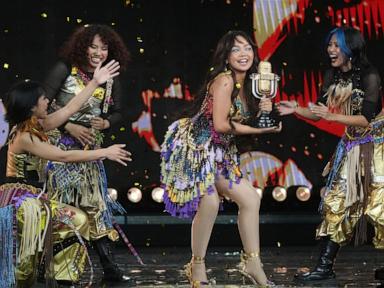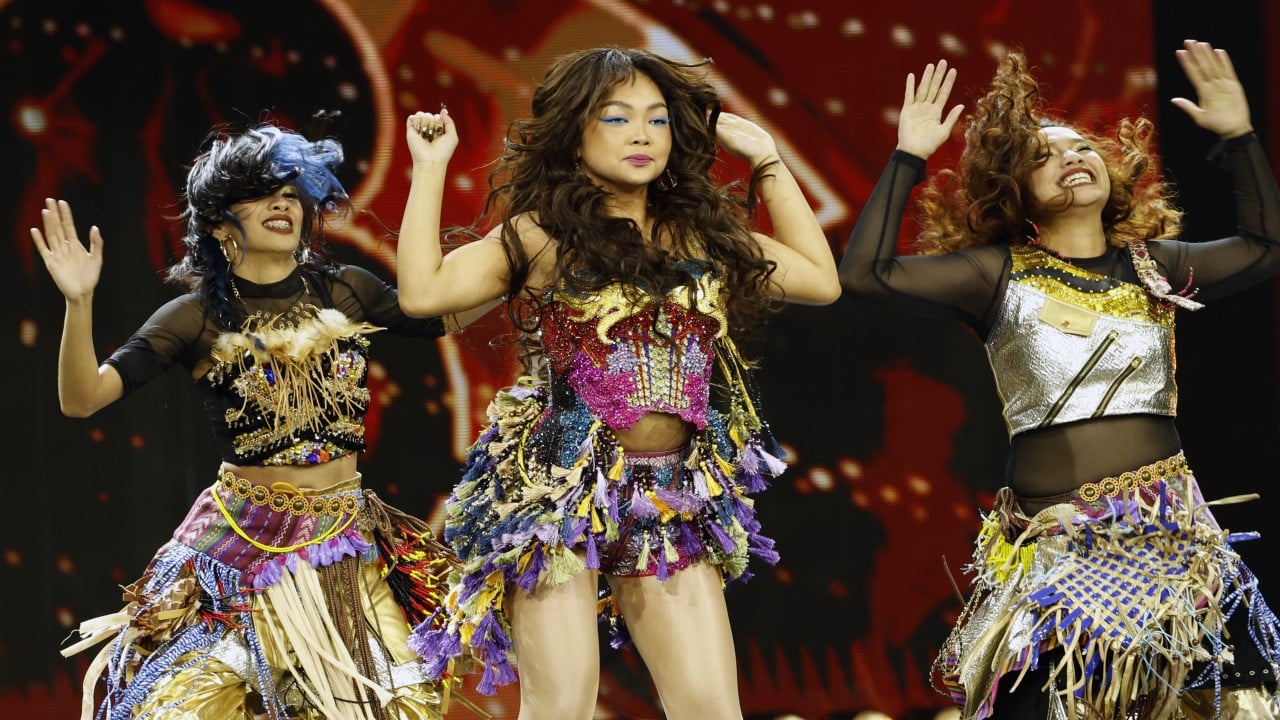
When 19-year-old Carmelle Collado walked off the stage at One Bangkok Forum on November 14, 2026, she didn't just win a singing contest. She claimed the very first trophy in Eurovision Asia history. Singing "Sobra-Sobra," a Tagalog track whose title translates to "Too Much," Carmelle blended traditional Filipino instrumentation with rapid-fire rap and full-throttle pop choreography. She didn't sneak through on a technicality or a narrow margin either. She swept both sides of the scoreboard—earning 93 points from the national juries and 118 points from the global public vote to finish with 211 points ahead of ten rival acts.
Honestly, anyone who follows Philippine music knows this wasn't a fluke. Carmelle has been building toward a big television stage for years. She came up out of Camarines Sur, caught national eyes on The Voice Kids back in 2019 as part of Bamboo's team, and won the School Showdown edition of Tawag ng Tanghalan in January 2025 with an Aretha Franklin medley that landed her Star Music and Star Magic deals. Put that kind of contest stamina together with a song written by Nica del Rosario and Mat Olavides—a pair of songwriters who know how to write hooks that hit hard in a live room—and the result makes total sense.
How Carmelle Swept Bangkok Without Playing It Safe
Most debut international contests reward safe ballads or polished middle-of-the-road pop. Carmelle went the other way. "Sobra-Sobra" leans into unapologetic confidence and female empowerment, pairing traditional Filipino sounds with sharp rhythmic shifts and staging that honored iconic Filipino women on the backdrop screens.
What stood out to me watching the fallout from that night was how cleanly her act bridged two worlds. Many international pop exports smooth out local textures until the song sounds like it could come from anywhere. Carmelle kept the Tagalog punch, kept the traditional instrumental color, and still made the crowd move. When you top both jury experts and viewers across 183 countries and territories, you're not relying on a single niche. You're holding attention from the first bar to the final pose.
The rest of the top five showed just how varied the musical palette was in Bangkok:
- Thailand (MANG x DAOU – "Aroma"): The assembled host-country duo brought musical-theater polish and romantic pop energy to finish second.
- Vietnam (Tóc Tiên – "EM TIÊN"): A veteran star with over two decades at home opened the night surrounded by lotus-leaf dancers and took third.
- Malaysia (Aina Abdul – "Bluest Sky"): Delivered big-voiced vocal drama to land fourth.
- Laos (Thinla – "BAE"): Turned an upbeat dance track into a crowd favorite and placed fifth despite on-stage technical trouble.
Other finalists—including acts from Bhutan, South Korea, Mongolia, Nepal, Cambodia, and Bangladesh—gave the night real range. Bangladesh's Beatmosphere came in as a nine-piece a cappella and beatbox group and had to adapt when a six-performer stage limit trimmed their lineup on stage. Bhutan's Nyendra performed in a gho against Himalayan mountain visuals, while Mongolia's Beck stepped out in a reinterpreted deel. Even the entrance parade—putting all eleven acts in tuk-tuks waving national flags—felt deliberately tied to Bangkok rather than copied wholesale from Europe.
What Debut Night Got Right and Where the Cracks Showed
Credit where it's due: bringing Eurovision Asia to life after years of shelved plans and delays since 2017 is a major milestone for the European Broadcasting Union and partner Voxovation. Hosting the show in Bangkok with Woody Milintachinda and Cindy Bishop at the mic, and having 2026 Eurovision winner DARA from Bulgaria hand over the trophy, gave the broadcast real cross-continental weight. Plus, Carmelle's win locks in a guest appearance at Eurovision 2027 in Burgas, Bulgaria next May, which gives the Asian edition an immediate bridge to Europe's main stage.
Still, a first night rarely goes without bumps, and pretending otherwise doesn't help the format grow:
- Streaming glitches: Viewers catching the grand final online ran into freezing feeds during the first half of the broadcast. For a contest that leans heavily on global digital reach and worldwide public voting, stream stability isn't a minor detail.
- Soft ticket sales: Reports leading into the show pointed to slow ticket sales in Bangkok. Building a live arena habit in a new host market takes time, local marketing, and strong word of mouth.
- Broadcast friction and cultural rules: Organisers publicly criticized the removal of LGBT+ footage in Malaysia's broadcast, showing how quickly cultural censorship rules collide with Eurovision's usual television norms when the contest expands into new regions.
- Stage rules vs. group acts: Capping performers at six per act forced an immediate compromise on a larger vocal group like Beatmosphere. That's a practical production constraint, though it can pinch acts built around big ensembles.
Executive producer Assaf Blecher noted that 16 or 17 territories have already shown interest for next year—including China, Hong Kong, and Taiwan—while a 2027 host city hasn't been locked in yet. Expansion is exciting, yet scaling from eleven acts to sixteen or seventeen will test audio cues, pacing, and broadcast coordination even harder.
Why This Win Matters Beyond One Trophy
In the Philippines, Carmelle's triumph didn't stay confined to entertainment feeds. Negros Occidental 3rd District Representative Javier Benitez raised her win during a House of Representatives plenary session on November 25, using the moment to push for stronger backing for the country's creative industries.
That tracks with a bigger pattern in Asian pop. Global spotlight often clusters around a narrow set of export models, leaving powerhouse vocal and songwriting scenes underrated until a major international stage puts them front and center. Carmelle won with a song written by Filipino creators, sung in Tagalog, backed by traditional elements alongside modern pop and rap. That proves an act doesn't have to sand off its identity to win an international audience.
If you want to follow where this goes next, start by watching Carmelle's full grand final performance of "Sobra-Sobra" alongside the top-five entries from Thailand, Vietnam, Malaysia, and Laos to hear how differently each country approached the stage. Next, keep an eye on official EBU and Eurovision Asia announcements for the 2027 host city and participating broadcaster list, and mark May 2027 on your calendar if you want to see Carmelle take her momentum to Burgas, Bulgaria.