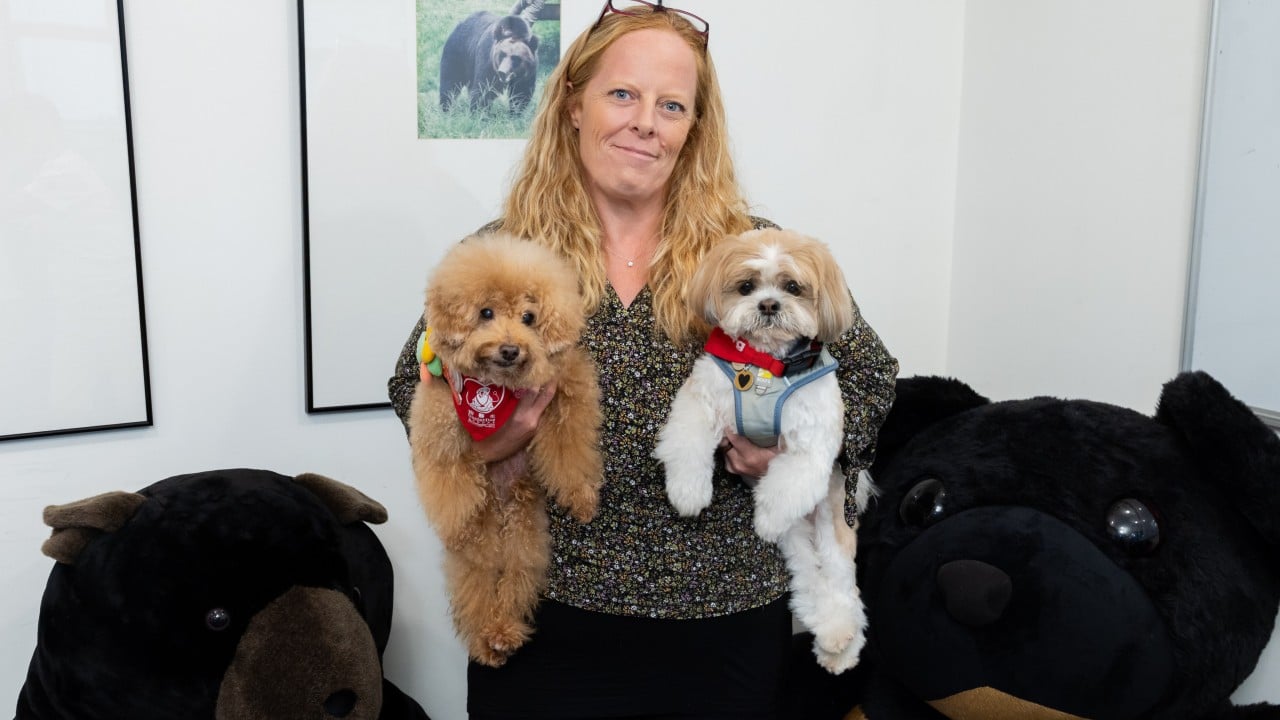
The institutional scaling ceiling of animal-assisted therapy (AAT) manifests clearly in Hong Kong, where specialized animal-assisted programs face operational depletion with waitlists stretching until February 2027. This constraint is not merely a localized scheduling bottleneck; it is a structural stress test revealing the inherent supply-side inelasticity of non-human clinical resources. When demand for specialized psychological interventions outpaces the physiological and operational capacity of working therapy animals, service delivery models break down. Understanding this phenomenon requires dissecting the economic, biological, and systemic drivers that govern animal-assisted care capacity.
The Supply Inelasticity of Living Interventions
Traditional clinical modalities scale through human capital leverage. A licensed psychologist can increase caseloads by optimizing scheduling density, utilizing digital tools, or pivoting to group frameworks. Animal-assisted interventions reject this linear scalability due to biological constraints.
A certified therapy animal operates under strict physiological and psychological thresholds. A canine or feline practitioner cannot work past fatigue limits, stress accumulation points, or mandatory rest cycles without compromising animal welfare and clinical efficacy.
[Demand Curve: Exponential Growth]
       vs.
[Supply Curve: Rigid Biological Ceiling] = Chronic Waitlist Accumulation
This dynamic creates a fixed capacity ceiling. When a program in Hong Kong reports complete resource depletion months in advance, it exposes the failure of the market to expand supply. Training a qualified therapy animal requires an extended pipeline involving temperament screening, socialization, specialized obedience conditioning, and handler certification. This pipeline cannot be accelerated by capital injection alone, because animal maturation and behavioral stabilization operate on biological timelines.
The Economic Mechanics of Resource Allocation
The market for animal-assisted interventions operates under severe supply scarcity, dictating specific economic trade-offs for healthcare administrators and clinical directors.
Opportunity Cost of Utilization
Every operational hour a therapy animal spends in a clinical session represents a fixed asset deployment. Unlike digital software or medical equipment, living assets require continuous maintenance—veterinary care, nutritional management, housing, and behavioral maintenance—regardless of utilization rates. When demand surges, programs cannot deploy fractional units of an animal. They must allocate the entire organism to a specific client demographic, excluding others entirely.
Geographic and Institutional Concentration
Scarcity forces centralization. Programs concentrate in urban centers or well-funded institutions capable of absorbing the overhead costs of animal maintenance and liability insurance. This creates structural inequity, starving rural or underfunded public health sectors of specialized intervention vectors while urban queues extend for years.
Operational Bottlenecks in Program Scaling
Scaling an AAT program involves multiple distinct friction points that impede throughput.
- Handler Dependency: A therapy animal cannot function autonomously. The clinical output is a product of the handler-animal dyad. Finding clinicians who possess both advanced therapeutic credentials and professional animal handling expertise creates a severe talent bottleneck.
- Regulatory and Liability Frameworks: Institutional deployment requires rigorous risk mitigation protocols. Infection control in clinical environments, allergen management, and liability coverage for animal behavior in high-stress psychological settings introduce bureaucratic friction that slows organizational expansion.
- Screening Attrition Rates: The dropout rate during animal training is exceptionally high. Only a fraction of candidate animals possess the environmental stability, low startle thresholds, and high stress tolerance required for clinical environments. High attrition inflates the cost per operational unit and restricts total fleet size.
Systemic Failure Modes of Chronic Backlogs
When waitlists extend past twelve to twenty-four months, the clinical utility of the intervention degrades. Chronic backlogs alter the triage function of healthcare systems.
Patients presenting with acute trauma, developmental disorders, or severe anxiety find themselves managed through delayed intervention protocols. By the time an animal-assisted slot opens, the clinical profile of the patient may have shifted from preventative or rehabilitative management to acute crisis intervention, where AAT is often contraindicated or insufficient as a primary modality.
Furthermore, long-term backlogs incentivize informal, unregulated substitutions. When institutional programs are unavailable, consumers turn to unverified providers lacking standardized behavioral credentials or veterinary health clearances, introducing safety risks to vulnerable client populations.
Strategic Restructuring for Resource Optimization
To mitigate the structural fragility exposed by capacity exhaustion, organizations must decouple the benefits of human-animal interaction from the physical presence of the animal where possible, or restructure deployment models to maximize clinical throughput.
- Cohort-Based Interventions: Shift from exclusive one-on-one individual therapy sessions to structured group formats where a single animal-handler dyad can service multiple clinical subjects simultaneously, increasing client-to-hour ratios without increasing animal stress loads.
- Hybrid Modalities: Integrate asynchronous digital preparation modules and post-session reinforcement frameworks to compress the total clinical contact time required per patient, thereby increasing systemic turnover.
- Decentralized Breeding and Early-Stage Pipelines: Establish regional breeding and socialization consortia dedicated exclusively to supplying standardized candidate animals to clinical networks, reducing the lead time required to onboard new operational units.
The exhaustion of animal-assisted therapy resources is a predictable outcome of scaling a biological intervention within a demand-heavy healthcare market. Solving this crunch requires recognizing that therapy animals are finite, high-maintenance biological infrastructure, not scalable software. Systemic resilience depends on treating them as such through rigorous asset management, operational efficiency, and strict fidelity to biological limitations.