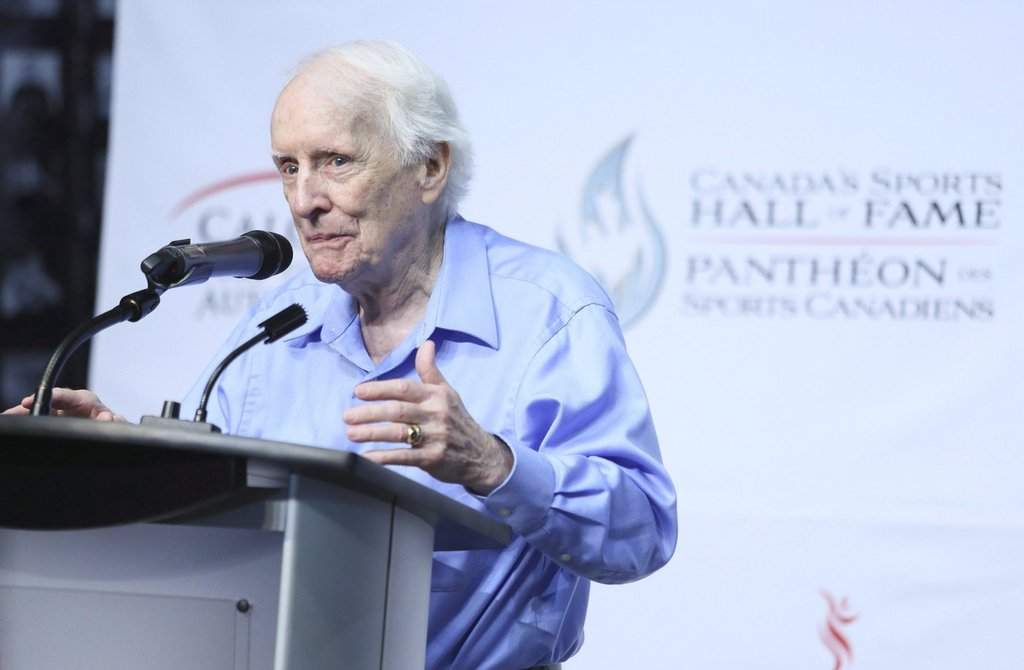
Dr. Frank Hayden, the Canadian sports scientist whose radical 1960s research proved that individuals with intellectual disabilities could achieve high levels of physical fitness, died on May 16, 2026, at the age of 96. His rigorous clinical findings directly challenged the medical orthodoxy of the mid-twentieth century, which falsely attributed low physical capacity to intellectual impairment. By proving that a sedentary lifestyle, rather than biological destiny, caused this deficit, Hayden supplied the scientific blueprint that Eunice Kennedy Shriver used to launch the global Special Olympics movement in 1968.
The legacy of Frank Hayden matters because it fundamentally altered the intersection of medicine, sociology, and athletics. Before his work at the University of Toronto, the prevailing societal consensus was to institutionalize or shelter individuals with developmental delays. Physical exertion was viewed as pointless, or even dangerous. Hayden upended this dynamic by applying empirical data to a human rights issue.
The Flawed Medical Orthodoxy of the 1960s
Medical professionals in the early 1960s operated under a sweeping, untested assumption. They observed that children with intellectual disabilities possessed roughly half the cardiovascular endurance and muscular strength of their non-disabled peers. Society concluded that this was an immutable symptom of their genetic or neurological conditions.
Hayden suspected a simpler, systemic flaw. The children were unfit because nobody let them play.
Exclusionary school policies, protective parents, and institutional protocols kept these children entirely sedentary. To isolate the variables, Hayden gathered a test group of students from Toronto's Beverley School. He subjected them to a structured, intensive physical conditioning program, tracking variables like heart rate recovery, oxygen uptake, and motor skill acquisition.
The results shattered the existing academic consensus. Given instruction and opportunity, the children acquired complex motor skills, built muscle mass, and drastically improved their cardiovascular health. The deficit was entirely artificial.
Hayden published his findings and practical lesson plans in a 1964 book. It was a niche academic text that defied expectations by selling 50,000 copies. The data proved that human biology responded to training regardless of cognitive capacity.
The Washington Connection and the Soldier Field Turning Point
Despite the commercial success of his book, Hayden faced immediate resistance within Canada. He partnered with Toronto broadcast pioneer and philanthropist Harry "Red" Foster to pitch a national sports tournament for children with intellectual disabilities. Canadian sports bodies and corporate donors turned them down, viewing the concept as a liability.
The breakthrough came from across the border.
Eunice Kennedy Shriver, sister of President John F. Kennedy, was running summer camps for children with special needs at her Maryland estate. She read Hayden’s research and recognized the institutional authority her efforts lacked. In 1965, she called Hayden to Washington, hiring him as the Director of Physical Education and Recreation for the Joseph P. Kennedy Jr. Foundation.
This partnership transformed a regional charity initiative into a formalized sports framework. Hayden served as the General Director for the inaugural Special Olympics Games, held on July 20, 1968, at Soldier Field in Chicago.
The event drew athletes from 25 American states. To ensure international representation, Hayden utilized his Canadian connections. He arranged for a floor hockey team from Toronto’s Beverley School to travel to Chicago, accompanied by Toronto Maple Leafs captain George Armstrong. The success of that single weekend forced the sports world to acknowledge a brand-new demographic of competitive athletes.
Building the Institutional Framework
Hayden understood that an occasional track meet would not solve a chronic public health crisis. After the Chicago games, he focused on international expansion and legal sustainability. He helped legally incorporate Special Olympics Inc. and systematically lobbied school boards, sports federations, and governments to establish permanent local chapters.
He returned to academia in 1975, serving as the director of the School of Physical Education and Athletics at McMaster University until 1988. From this position, he continued to publish papers on adaptive kinetics, ensuring that the movement remained anchored in scientific reality rather than sentimentality.
The movement Hayden helped spark now encompasses nearly four million athletes across more than 170 countries. His homeland eventually recognized the magnitude of his work, elevating him to a Companion of the Order of Canada in 2022 and inducting him into Canada's Sports Hall of Fame and Canada's Walk of Fame.
Hayden rejected the idea that his work was rooted in charity or pity. He consistently maintained that his goal was not to discover elite athletic prodigies, but to give marginalized individuals the basic physical health required to navigate the world with autonomy.
He proved that when the human body is systematically denied an opportunity, its subsequent decline is a failure of society, not a failure of the individual.