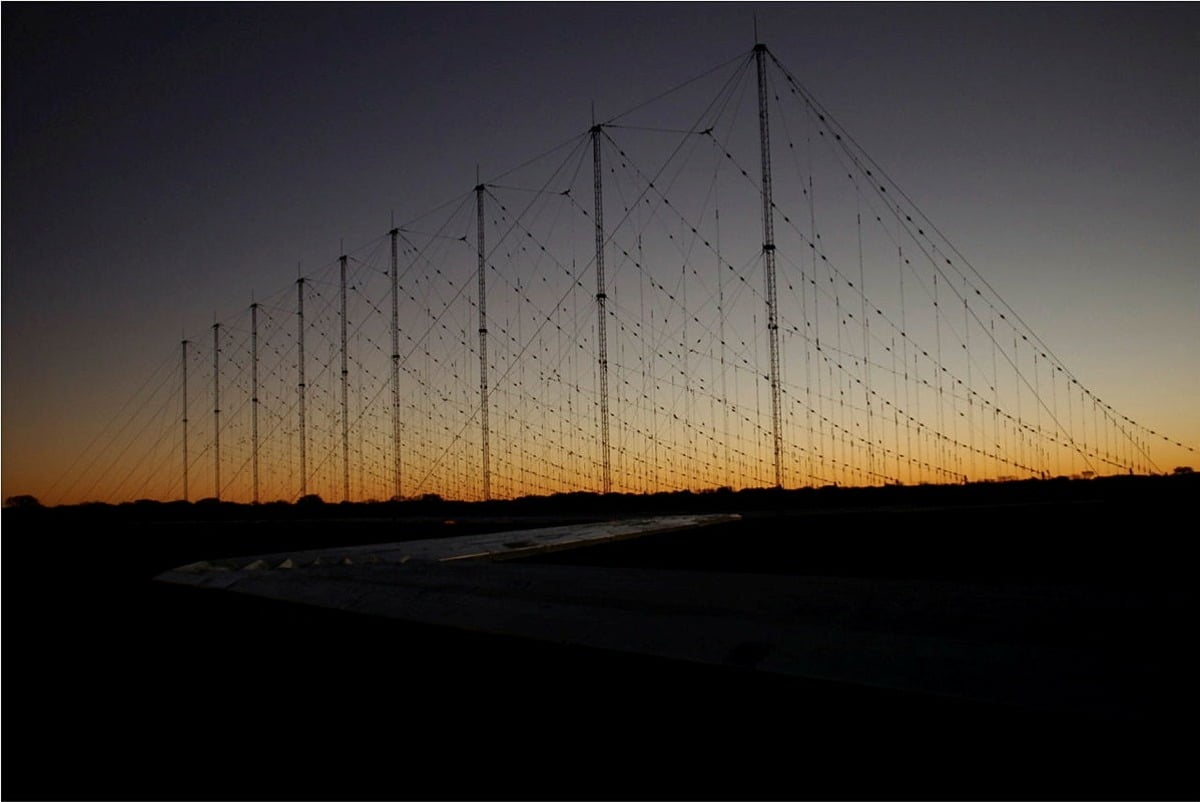
Canada just signed a massive 2.5 billion dollar defense deal with Australia to buy a highly advanced radar system for the Arctic. Most people looking at this headline assume it is just another standard piece of military spending, a routine upgrade for North American Aerospace Defense Command (NORAD). They are wrong. This agreement represents a fundamental shift in how middle powers are handling their own security when relying entirely on Washington feels increasingly risky.
The deal, signed in Canberra by Australian Defense Minister Richard Marles and Canadian Secretary of State for Defense Procurement Stephen Fuhr, is officially the largest defense export agreement in Australias history. Canada is buying the technology behind the Jindalee Operational Radar Network (JORN). By bouncing high-frequency radio waves off the ionosphere, this system effectively looks over the horizon, bypassing the physical curvature of the earth to spot targets up to 3000 kilometers away.
For Canada, placing this tech in the Kawartha Lakes region of southern Ontario to scan the Far North is a direct reaction to an increasingly vulnerable Arctic. For Australia, it proves they can build and sell world-class military tech. But the real story is the geopolitical friction happening beneath the surface.
Stepping out of Washingtons shadow
For generations, Canadian defense policy was simple: let the United States handle the heavy lifting. The massive US military umbrella meant Ottawa could underfund its own military while remaining secure. That era is officially over.
With shifting political dynamics in Washington, US allies are quietly diversifying their security portfolios. Canadian officials openly admitted during the signing ceremony that while the relationship with the Americans will not change, the global environment demands a different approach. Buying an Australian system rather than an American one is a deliberate statement. It shows a desire for independence within the Five Eyes intelligence alliance.
The Arctic is no longer a frozen buffer zone; it is an active theater of geopolitical competition. Melting ice sheets are opening new shipping lanes, and northern airspace is increasingly exposed to long-range missile threats and low-flying drones. By investing 2.5 billion dollars into an Arctic Over-the-Horizon Radar system (A-OTHR), Canada is trying to secure its northern flank on its own terms.
The mechanics of looking over the horizon
Conventional radar systems operate on a strict line-of-sight basis. If an object dips below the horizon, the radar cannot see it. In the vast, empty expanse of the Arctic, that limitation is a massive security liability.
The Australian JORN technology solves this by using high-frequency signals that bounce off the Earth's upper atmosphere. Think of it like shining a flashlight at a mirror on the ceiling to illuminate an object hidden behind a wall.
- The Reach: The system can track airborne and maritime targets up to 3000 kilometers away.
- The Footprint: The actual transmitting and receiving stations will sit in southern Ontario, but the electronic eye will scan deep into the Arctic Circle.
- The Timeline: The network is slated to be fully operational by 2029.
Australia has run this system along its own northern coastline for 40 years. It is mature, tested, and highly effective at tracking everything from unauthorized vessels to aircraft. Because the system is foreign-made, Canada also negotiated a comprehensive industrial benefits package, forcing BAE Systems Australia to reinvest heavily back into the Canadian domestic defense sector.
What this means for future alliance building
This deal is not a one-off transaction. It is the beginning of a deeper defense alignment between two Commonwealth nations that face remarkably similar geographic challenges—huge landmasses, small populations, and massive coastlines to police.
Marles and Fuhr confirmed that both countries are actively working toward a status of forces agreement. This legal framework will eventually allow their respective militaries to operate seamlessly inside each other's borders for training and joint exercises.
Furthermore, Canada is already looking at Australias other homegrown military hardware. Ottawa has expressed explicit interest in the MQ-28A Ghost Bat, an autonomous, locally designed combat drone built by Boeing Australia. The Australian government has poured more than 2.3 billion dollars into the Ghost Bat project since 2019, creating the first locally manufactured combat aircraft in 50 years. With a production facility currently going up in Queensland, Canada might easily become the next major customer.
If you are tracking defense stocks or geopolitical shifts, stop looking exclusively at the major defense primes in the United States. Watch the supply chains forming between middle powers like Australia and Canada. If you are an aerospace or tech supplier based in Canada, start positioning your firm immediately to pitch for the domestic industrial benefit contracts that BAE Systems must hand out as part of this 2.5 billion dollar mandate.