A massive chemical tank in Perris, California recently pushed an entire community to the brink of disaster. It forced the evacuation of over 40,000 residents. Officials closed major transit arteries like Interstate 215. This wasn't just a routine local emergency. It was a stark reminder of the volatile infrastructure quietly sitting in America’s backyards.
When a commercial chemical tank overheats and threatens to explode, the response cannot be casual. Local authorities had to draw a massive 2-mile evacuation zone around the facility. Why? Because the chemical involved, styrene monomer, is notoriously unpredictable when it gets too hot.
If you think this is an isolated incident, you are mistaken. Across the country, industrial hubs sit dangerously close to residential neighborhoods. The Perris incident gives us a rare, unfiltered look into the terrifying physics of chemical runaway reactions and the massive logistical nightmare of sudden urban evacuations.
What Actually Happens Inside a Runaway Chemical Tank
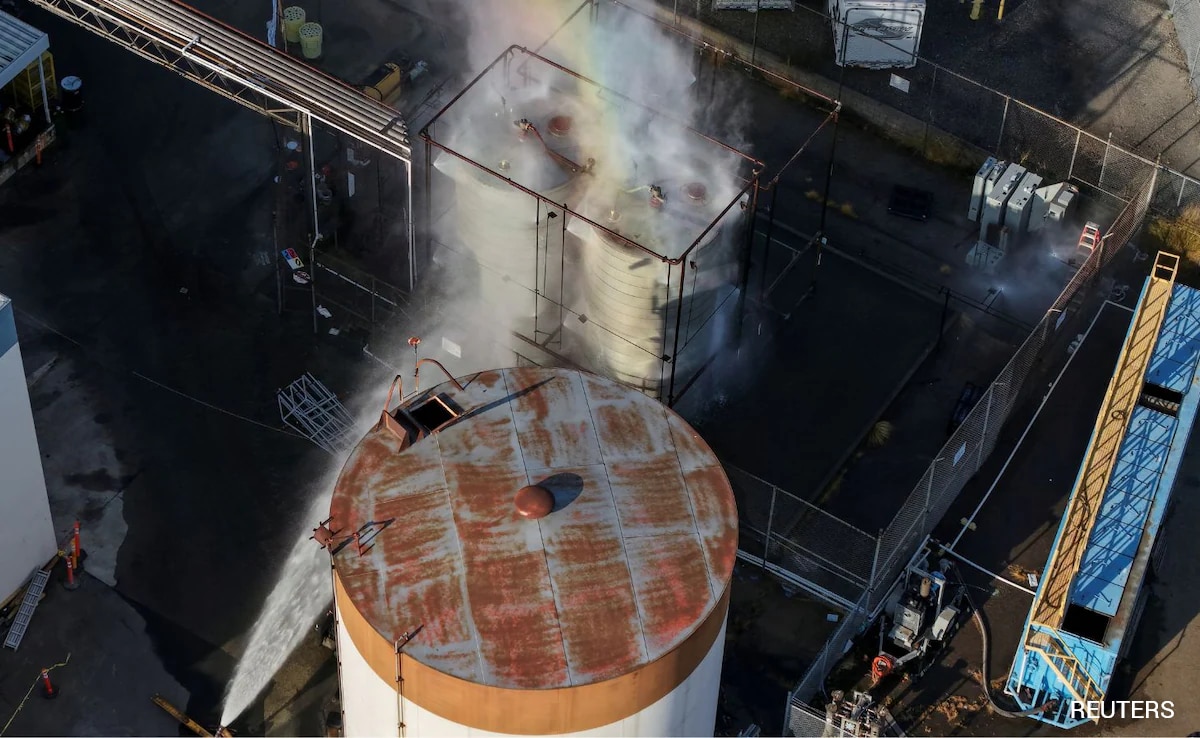
The trouble started at a facility operated by Harcros Chemicals. A storage tank holding approximately 138,000 pounds of styrene monomer began to experience a rapid temperature spike. In the chemical industry, this is known as a runaway polymerization reaction.
Styrene is normally kept cool. Inhibitors are added to prevent the molecules from bonding with each other. If the temperature climbs too high, those inhibitors fail. The molecules start linking up fast. This process generates its own heat. More heat means a faster reaction. It becomes a vicious, self-sustaining loop.
The temperature inside the Perris tank skyrocketed to over 300 degrees Fahrenheit. That is well past the boiling point of styrene. The immediate danger wasn't just a fire. It was a catastrophic overpressurization. The tank can literally rip apart like a bomb, launching shrapnel and spewing toxic gas across a massive area.
Firefighters couldn't just walk up and pour water on it. The risk of an immediate blast was too high. Instead, emergency crews had to use specialized drones equipped with infrared cameras. They watched the thermal footprint from a safe distance, waiting for the internal frenzy to burn itself out.
The Logistics of Moving 40,000 People Overnight
Evacuating tens of thousands of people with almost zero notice is chaos. Riverside County officials had to act fast. They drew a perimeter that encompassed thousands of homes, schools, and local businesses.
Imagine getting a knock on your door or a blaring cell phone alert telling you to leave immediately. You don't have time to pack. You just grab your keys and run. For the residents of Perris, this meant flooding local roads while emergency vehicles rushed in the opposite direction.
Shelters filled up quickly. Local high schools turned into makeshift camps. The Red Cross scrambled to provide food, water, and basic medical supplies.
The economic cost of these shutdowns is staggering. Closing a major corridor like Interstate 215 halts regional supply chains. Trucks carrying goods across Southern California sat stranded. Businesses within the evacuation zone lost days of revenue. It proves that a single industrial failure has massive ripple effects across the entire state economy.
Why Zoning Laws Are Failing Modern Neighborhoods
The Perris crisis highlights a much deeper, systemic problem. Residential neighborhoods are expanding right up to the property lines of hazardous chemical facilities. This is a failure of long-term urban planning.
Decades ago, these industrial plants were built in isolated areas. Land was cheap. Towns grew. Housing developers built sprawling subdivisions closer and closer to these facilities to meet intense housing demands. Now, you have families sleeping mere blocks away from thousands of gallons of explosive chemicals.
We need stricter buffer zones. Municipalities must stop approving residential permits right next to heavy industrial zones. It is a dangerous gamble, and the residents are the ones paying the price with their safety.
Toxic Realities and Long Term Health Effects
Styrene isn't just explosive. It's highly toxic. According to the Environmental Protection Agency, acute exposure to styrene vapors causes severe central nervous system effects. We are talking about headaches, fatigue, dizziness, and intense respiratory irritation.
Long-term exposure is even worse. The International Agency for Research on Cancer classifies styrene as a probable human carcinogen. When a tank vents these gases into the air during a crisis to prevent an explosion, the surrounding community inhales that pollution.
Air monitoring teams from the South Coast Air Quality Management District deployed across Perris to track the plume. Even if a tank doesn't physically blow up, the invisible chemical release can leave a lasting toxic legacy on the local population.
How to Prepare Your Family for an Industrial Hazard Emergency
You cannot rely solely on city officials to save you when things go sideways. If you live within a few miles of an industrial zone, you need a personal contingency plan.
First, sign up for your county's localized emergency alert system. Do not rely on social media for updates. Official channels give you accurate evacuation routes.
Second, pack a dedicated "go-bag" for every member of your family. Include essential medications, copies of vital documents, cash, and basic toiletries. Keep this bag by the door or in your vehicle.
Third, map out multiple exit routes from your neighborhood. If a major highway like Interstate 215 shuts down, you must know the secondary surface streets to escape the danger zone efficiently.
Take these steps today. Don't wait for the sirens to start wailing.