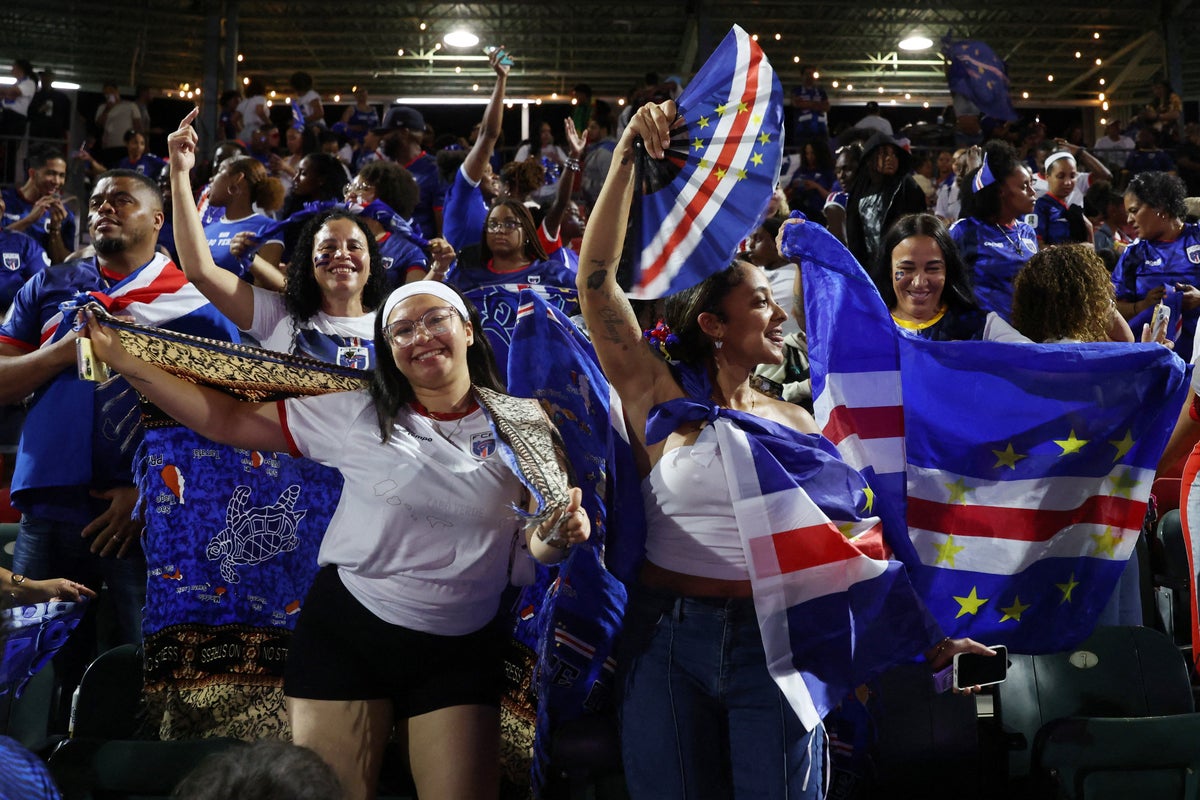
Preemptive municipal curfews represent a high-intervention, low-fluidity risk management strategy. When deployed by municipal governments ahead of high-stakes sporting events within dense diaspora enclaves—such as a Massachusetts city managing public spaces during a Cape Verde international match—these measures attempt to alter the cost-benefit calculus of public assembly. Instead of reacting to civil disruption, the administrative mechanism shifts the legal baseline of the urban environment before an inflection point occurs. This analytical framework deconstructs the operational variables, crowd dynamics, and structural trade-offs inherent in using executive municipal powers to suppress spatial volatility.
The Three Pillars of Municipal Crowd Risk
Evaluating the necessity and efficacy of an urban curfew requires isolating the variables that convert peaceful cultural celebration into localized civil friction. Municipalities face a compounding risk equation driven by three distinct pillars.
Event Significance and Emotional Velocity
The velocity of crowd formation correlates directly with the historical and structural weight of the sporting event. Regular-season matches generate predictable, manageable foot traffic. Conversely, tournament elimination matches or World Cup fixtures act as geopolitical amplifiers for diaspora populations. The match serves as a focal point for collective identity, compressing weeks of cultural anticipation into a ninety-minute window. This compression elevates emotional volatility, lowering the threshold for spontaneous, uncoordinated mass gatherings.
Demographic Density and Diaspora Corridors
The spatial distribution of a specific demographic within a city dictates the geographical focus of law enforcement. In municipalities with highly concentrated diaspora corridors, public celebrations do not distribute evenly across the urban grid. Instead, they funnel into specific commercial districts, parks, or thoroughfares that hold historic cultural capital. This high localized density creates spatial bottlenecks, rendering standard traffic flow and emergency vehicle access non-functional without intervention.
Urban Topology and Environmental Vulnerability
The physical infrastructure of the target municipality defines its structural vulnerability. Narrow two-lane corridors, dense commercial zoning with ground-floor glass facades, and a lack of open civic plazas increase the risk profile. When thousands of individuals occupy an infrastructure system designed for vehicular transit or low-intensity pedestrian commerce, the physical environment itself becomes a hazard.
The Operational Cost Function of Preemptive Intervention
Imposing a curfew is not a frictionless administrative action. It introduces substantial economic, legal, and operational costs that a municipality must weigh against the statistical probability of property damage or personal injury.
Total Operational Cost = Economic Friction + Resource Allocation Shift + Trust Erosion
Economic Friction and Commercial Suppression
A blanket or district-specific curfew forces the immediate closure of hospitality, retail, and nighttime economy sectors. For small businesses operating on thin margins within diaspora neighborhoods, losing a peak-revenue evening generates immediate financial duress. The municipality effectively socializes the cost of public safety by forcing private commercial entities to absorb the losses of forfeited economic activity.
Law Enforcement Resource Allocation Shifts
Enforcing a curfew requires a total reallocation of municipal police personnel from distributed community policing to concentrated tactical containment. This creates an operational vulnerability in outlying sectors of the city. The enforcement mechanism relies on visible deterrence and static checkpoints, which drains overtime budgets and accelerates officer fatigue. If the crowd resists the curfew, the municipality is forced into an escalation loop, transitioning from administrative containment to active dispersal.
Erosion of Long-Term Community Trust
Preemptive legal restrictions can be interpreted by the targeted demographic as a form of state-sanctioned profiling or institutional distrust. When an administration signals that a cultural milestone is viewed primarily as a threat to public order, it fractures the communication channels between community leaders and city hall. The long-term cost is an increase in civil alienation, which degrades the efficacy of future community-oriented policing initiatives.
Dispersal Mechanics and Spatial Displacement
A common failure mode in municipal risk planning is the assumption that a curfew eliminates the desire for assembly. In practice, restrictive measures frequently trigger spatial displacement rather than behavioral compliance.
The imposition of a clear temporal limit forces a crowd to choose between three operational paths:
- Sub-Surface Migration: The assembly shifts from public rights-of-way into unmonitored private residences, commercial backrooms, or industrial zones. This moves the risk profile from a visible, mitigable street environment into enclosed spaces where emergency access is severely compromised.
- Geographical Friction Export: If one municipality enforces a strict curfew, the crowd frequently migrates across municipal borders into neighboring townships that lack equivalent legal restrictions. This exports the security externality to adjacent jurisdictions that may be unprepared for the sudden influx of vehicle and pedestrian traffic.
- Active Retaliation: The curfew itself becomes the primary source of friction. The original catalyst for celebration recedes, and the operational objective of the crowd shifts toward defying the state-imposed restriction, converting a sporting celebration into a direct political confrontation.
Strategic Alternatives to Blanket Suppression
Municipalities can optimize their risk profiles without resorting to the blunt instrument of a curfew by utilizing structural mitigation strategies.
- Designated Fan Zones: Instead of banning assembly, cities can pedestrianize high-density corridors, establishing controlled containment zones with medical assets, sanitation, and private security. This converts an unpredictable organic gathering into a structured civic event.
- Phased Credentialing and Traffic Diversion: Rather than restricting human movement, tactical units can restrict vehicular access to sensitive commercial zones. Eliminating gridlock and cruising vehicles mitigates the primary mechanism of accidental injury and property escalation while allowing foot traffic to remain fluid.
- Joint Command with Diaspora Leadership: Deploying community elders, cultural ambassadors, and local business owners as the primary tier of crowd management leverages social capital far more effectively than a line of tactical riot shields. Law enforcement remains secondary, intervening only when structural breaches occur.
Deploying a preemptive curfew indicates a structural failure to plan for predictable cultural milestones. While effective at minimizing immediate, visible property damage on a specific city block, the strategy introduces systemic economic friction and degrades the civic tissue connecting a diaspora population to its municipal government. Future urban risk management models must prioritize spatial elasticity over rigid administrative suppression.