Geopolitical stability in the Levant operates on strict margins of force projection, where the margin between deterrence and escalation is measured in radar cross-sections and minutes of reaction time. The recent Israeli airstrike against the Abu al-Duhur airbase in northwestern Syria exposed a shifting operational reality. While public discourse focuses on aging airframes, real military effectiveness depends on electronic warfare integration, command and control architectures, and logistics chains.
Evaluating Turkish air capabilities requires moving past simple inventory counts of legacy platforms. Modern air power is a distributed network. When structural changes occur in neighboring sovereign airspace, secondary effects ripple through regional defense posture instantly.
The Structural Drivers of Syrian Airfield Contested Space
The geopolitical architecture of post-Assad Syria created a strategic vacuum that regional actors rushed to fill. Turkey pursued defense integration agreements with Damascus, leveraging geographical proximity to secure its southern flank. This strategy relies on establishing forward operating locations that can project radar coverage and air defense umbrellas beyond national borders.
The Abu al-Duhur facility, situated roughly seventy kilometers east of the Turkish border, offers functional advantages for such a footprint. Controlling or operating from this node would allow Ankara to extend electronic surveillance over northern Syria, parts of Iraq, and the western approaches to Iran.
For Jerusalem, this shift introduces an unacceptable tactical asymmetry. The Israeli Air Force relies on unhindered freedom of maneuver across Syrian airspace to conduct strategic interdiction missions. Introducing advanced Turkish sensors, radars, and interception architecture into northern Syria threatens to compress Israel's tactical warning times and degrade its operational depth. The airstrike on the facility functioned as a hard signal enforcing an unwritten security boundary.
The Operational Mechanics of the Turkish Fleet
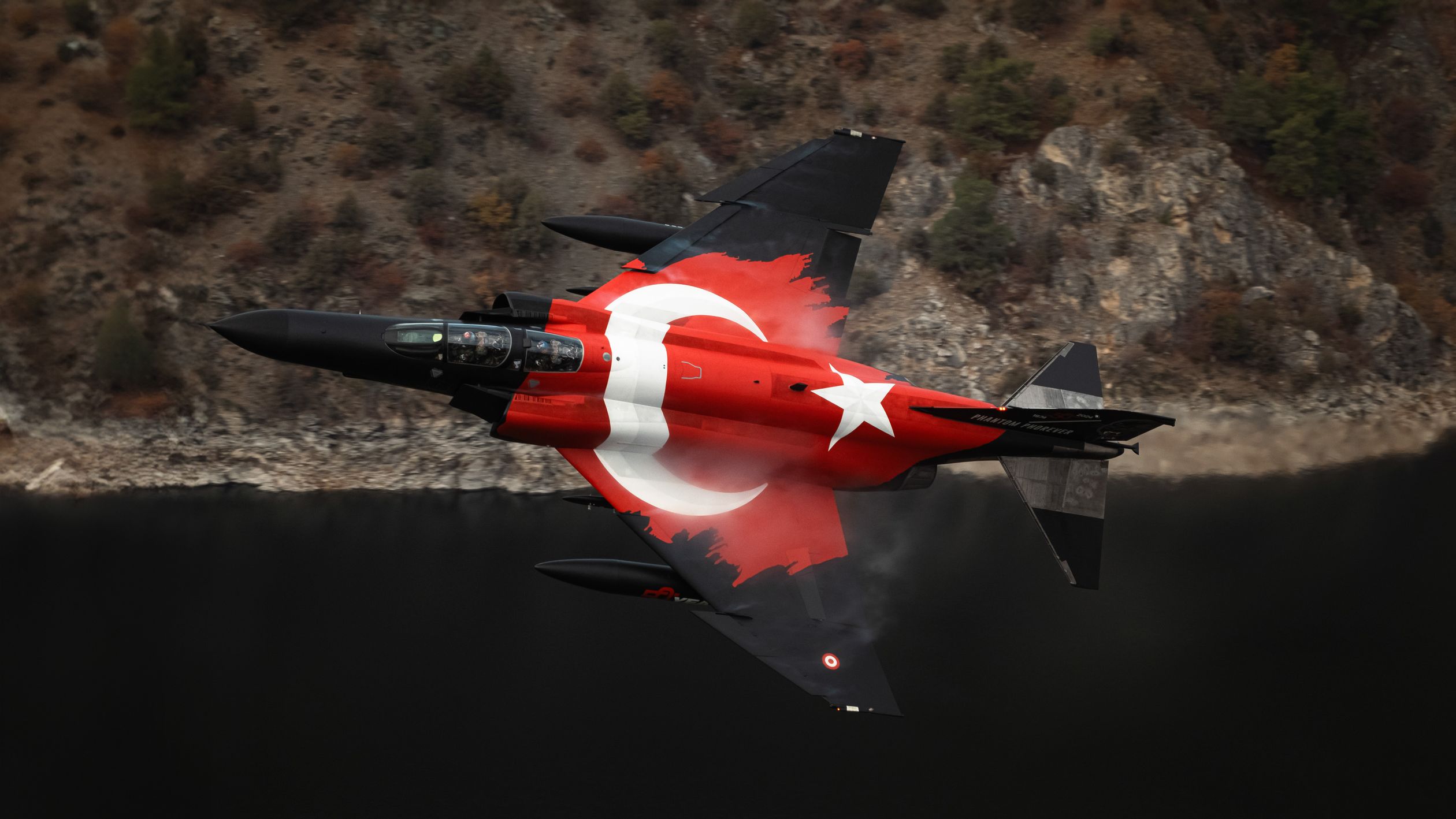
Discussions regarding the Turkish Air Force frequently fixate on the chronological age of its F-16 block inventory. This metric ignores the cumulative impact of indigenous modernization programs. Ankara bypassed modernization bottlenecks by developing domestic avionics upgrades, structural life extension kits, and indigenous missile inventories such as the GÖKDOĞAN and BOZDOĞAN air-to-air missiles.
A fleet's true capability is defined by its upgrade ceiling rather than its manufacture date. The Ozgurluk project, which integrates indigenous radar and mission computers into older F-16 airframes, decouples Turkey's operational readiness from foreign export restrictions. While waiting for newer platform acquisitions, these avionics overhauls elevate legacy airframes closer to current electronic warfare standards.
However, platform upgrades face strict physical limits. Airframe fatigue life, measured in flight hours and structural stress cycles, dictates the hard ceiling for operational availability. Even with composite reinforcements, legacy airframes cannot match the radar cross-section reduction or internal carriage capacity of fifth-generation platforms. This structural reality explains why regional strategy relies heavily on force multipliers like the Akinci and Bayraktar unmanned combat aerial vehicles, which offset human pilot risk and supplement ISR bandwidth.
The Economic and Industrial Cost Function
Defense procurement operates within strict fiscal and geopolitical constraints. Turkey's exclusion from the Joint Strike Fighter program forced a recalibration of its long-term aerospace industrial strategy. Relying solely on localized upgrades of legacy platforms represents a defensive financial maneuver to bridge a generational capability gap.
The cost function of maintaining a mixed-fleet air force involves heavy expenditure on maintenance man-hours per flight hour. Older platforms demand intensive depot-level overhauls. When a state simultaneously funds indigenous fifth-generation fighter development—such as the KAAN project—and maintains a massive regional operational tempo across multiple borders, capital allocation becomes intensely competitive.
Ankara manages this strain by shifting the tactical burden to unmanned systems and localized munition production. Precision-guided munitions manufactured domestically reduce dependence on foreign resupply during active engagements. Yet, unmanned platforms operate at lower altitude bands and sub-sonic speeds, leaving them vulnerable to sophisticated integrated air defense systems unless supported by heavy electronic countermeasures.
Strategic Forecast and Regional Equilibrium
The intersection of Turkish expansion in northern Syria and Israeli redlines creates a permanent friction point. As Washington attempts to construct trilateral deconfliction mechanisms, the underlying operational imperatives of both militaries remain fundamentally misaligned.
Ankara will continue utilizing bilateral agreements with Damascus to institutionalize its security perimeter, testing the durability of Israeli deterrence. Conversely, Israel will maintain its counter-material campaign against any infrastructure that threatens its aerial hegemony or intelligence-gathering corridor. The stability of the northern theater will not be determined by diplomatic communiques, but by the physical threshold at which electronic surveillance integration triggers preemptive kinetic denial.