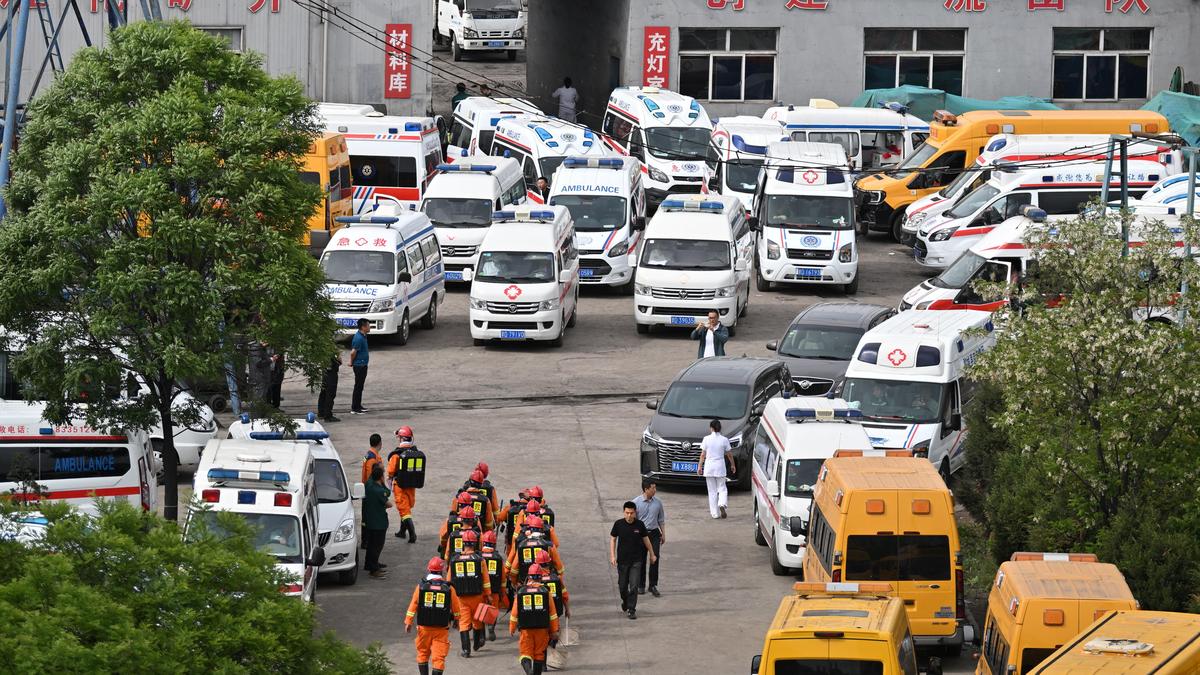
Western media loves a predictable script. Whenever a disaster occurs in a developing industrial hub—specifically within China’s state-regulated sectors—the immediate reaction follows a well-worn narrative arc: a tragedy happens, local officials adjust the data, and international observers scream "cover-up."
The recent adjustments to the official death toll of the Shanxi coal mine disaster down to 82 fatalities triggered the exact same reflex. The lazy consensus screamed that Beijing is merely cooking the books to save face.
They are missing the entire point.
Focusing exclusively on whether a localized death toll is 115, 82, or 50 is a superficial exercise that obscures a much harsher reality. The obsession with raw casualty counts is a metric fixation trap. It allows global analysts to feel morally superior while completely ignoring the structural shift happening underneath the surface of global energy logistics. The real story in Shanxi is not a clumsy statistical rewrite. It is the brutal, hyper-efficient optimization of resource extraction under extreme geopolitical pressure.
The Metric Fixation Trap
When a regulatory body updates a disaster statistic, commentators assume the motive is purely public relations. That is a naive view of how centralized command economies operate.
In heavy industry, data points are levers of capital allocation. For decades, the international community evaluated industrial safety through a single, flawed lens: the body count. If the numbers go down, progress is happening. If they go up, the system is failing.
This binary logic fails to grasp how modern industrial compliance actually works. I have spent years analyzing supply chain risk and regulatory frameworks in high-hazard environments. Here is what happens when you penalize organizations solely based on raw fatality numbers: you do not inherently make the workplace safer; you simply disincentivize accurate reporting at the lowest levels while driving the risk deeper into the operational dark corners.
Consider the structural mechanics of the Shanxi coal mining complex. This region produces a massive percentage of the metallurgical and thermal coal that keeps global manufacturing alive. When an incident occurs, the immediate audit that follows is not just about counting bodies for a press release. It is a cold recalculation of asset liability, production quotas, and insurance viability.
By fixating on whether the death toll was lowered to 82, critics overlook the operational reality. The reduction of an official figure often reflects a bureaucratic sorting mechanism—distinguishing between direct extraction casualties, third-party contractors, and delayed medical fatalities. Is it cynical? Absolutely. Is it a unique symptom of authoritarian malice? No. It is standard corporate risk management scaled up to a state level.
Moving the Risk Instead of Eliminating It
To understand why the mainstream analysis of the Shanxi incident is wrong, you have to understand the concept of risk displacement.
When a centralized government demands a drastic reduction in mining fatalities, the industry complies. But how do they comply? Not always by installing pristine safety systems overnight. Instead, they automate the highest-risk environments and push the manual labor onto unregulated, fragmented sub-contracting networks.
The Industrial Reality: A lower official death toll in primary state-owned mines rarely means the industry suddenly became safe. It frequently means the danger was outsourced to smaller, ancillary operations that do not trigger the same regulatory tripwires.
Imagine a scenario where a major mining conglomerate reduces its core workforce by 40% through mechanization. The remaining workforce looks safer on paper. The fatality rate per million tons of extracted material plummets. But the maintenance of those automated machines, the clearing of deep structural blockages, and the high-hazard logistics are handed over to third-party firms. When an incident occurs within those sub-contracted layers, the legal and statistical accountability becomes fragmented.
When the Shanxi data was revised to 82, it likely represented a recalibration of which fatalities legally belonged to the primary state enterprise versus independent logistics operators. The global press reported it as a deception. In reality, it was a demonstration of corporate restructuring disguised as governance.
The Geopolitical Cost of Cheap Energy
Everyone wants clean, ethical supply chains until the electricity bills arrive.
The global economy demands a relentless flow of raw materials. Shanxi is the engine room that fuels the processing of rare earths, the smelting of steel, and the manufacturing of the components that power western technology. The international markets demand low prices, high volume, and rapid delivery. At the same time, western commentators demand flawless Western-style labor standards in regions operating under wartime-level production mandates.
You cannot have both.
+------------------------------------+------------------------------------+
| Global Market Demand               | Local Operational Reality          |
+------------------------------------+------------------------------------+
| Low-cost consumer goods            | Maximum extraction speed           |
| Rapid technology supply chains     | Compressed maintenance windows     |
| Surface-level ESG compliance       | Bureaucratic data optimization    |
+------------------------------------+------------------------------------+
The underlying driver of mining disasters is not a lack of rules. China has some of the most draconian mining safety laws on paper, including capital punishment for executives who willfully cause mass casualties. The driver is the systemic pressure of global consumption. When the world economy stutters, the mandate to extract increases. When extraction increases, safety margins shrink.
Blaming the resulting casualties entirely on local administrative corruption is a convenient way for global consumers to wash their hands of the blood on the floor. The revised death toll of 82 is a direct product of an industry trying to balance impossible global production quotas with strict domestic political targets.
The Flaw in the "People Also Ask" Consensus
If you look at standard industry forums or search trends surrounding industrial disasters, the questions asked are fundamentally wrong.
Flawed Question: "Why do foreign governments lie about industrial accidents?"
The Honest Answer: They do not lie merely for the sake of pride; they manage data to maintain economic stability, prevent capital flight, and ensure supply chain continuity. Every industrialized nation, from the United States in the early 20th century to modern developing economies, has manipulated industrial data to protect critical infrastructure.
Flawed Question: "How can international pressure fix safety in foreign mines?"
The Honest Answer: It cannot. International pressure usually results in superficial compliance measures—more paperwork, more digital surveillance, and better PR firms. The only thing that changes safety profiles is a fundamental economic shift where the cost of human life exceeds the marginal profit of the extracted material. Right now, with global energy markets highly volatile, that shift is nowhere in sight.
The Downside of True Transparency
Let us engage in a thought experiment. Suppose Beijing completely opens its industrial books. Total transparency. Real-time, unedited streaming data of every industrial accident, near-miss, and fatality across every province, accessible to every foreign media outlet.
What happens next?
The immediate result is not a wave of global support to fix the mines. The result is instant market volatility. Sovereign risk ratings drop. Commodity prices spike. Insurance premiums for shipping and logistics skyrocket. Capital pulls out of high-risk regions, causing local economic collapses that lead to even lower safety standards as operations struggle to survive on shoestring budgets.
The harsh truth nobody admits is that the global economic system requires a certain level of statistical smoothing to function without constant panic. The managed narrative around the Shanxi mining disaster is a buffer mechanism. It keeps the factories running, the shipping lanes open, and the consumer prices predictable.
Stop Counting Bodies, Start Tracking Capital
If you want to understand the future of heavy industry, stop reading the official casualty reports and stop reading the reactionary editorials condemning them. They are both theater.
Instead, watch where the capital is moving. Track the procurement of heavy automated equipment. Monitor the consolidation of small, independent mines into massive, state-directed conglomerates. Look at the energy grid integration metrics.
The real transformation in the Shanxi coal sector is not that fewer people are dying because the paperwork changed. It is that the human element is slowly being engineered out of the primary extraction phase because human beings have become a liability to the data stream.
The reduction of the death toll to 82 is the final gasp of an old administrative model trying to force a messy, violent human industry into a clean corporate spreadsheet. The future of extraction is not safer; it is just quieter. The casualties of the next decade will not happen at the rock face under the glare of a headlamp; they will happen in the logistics networks, the processing plants, and the sub-contracted maintenance yards where the cameras do not look and the bureaucrats do not bother to count.
Stop looking at the number 82 and expecting to find the truth. The truth is in the tons extracted, the profit margins sustained, and the unyielding, insatiable global demand that ensures the machines never stop turning.