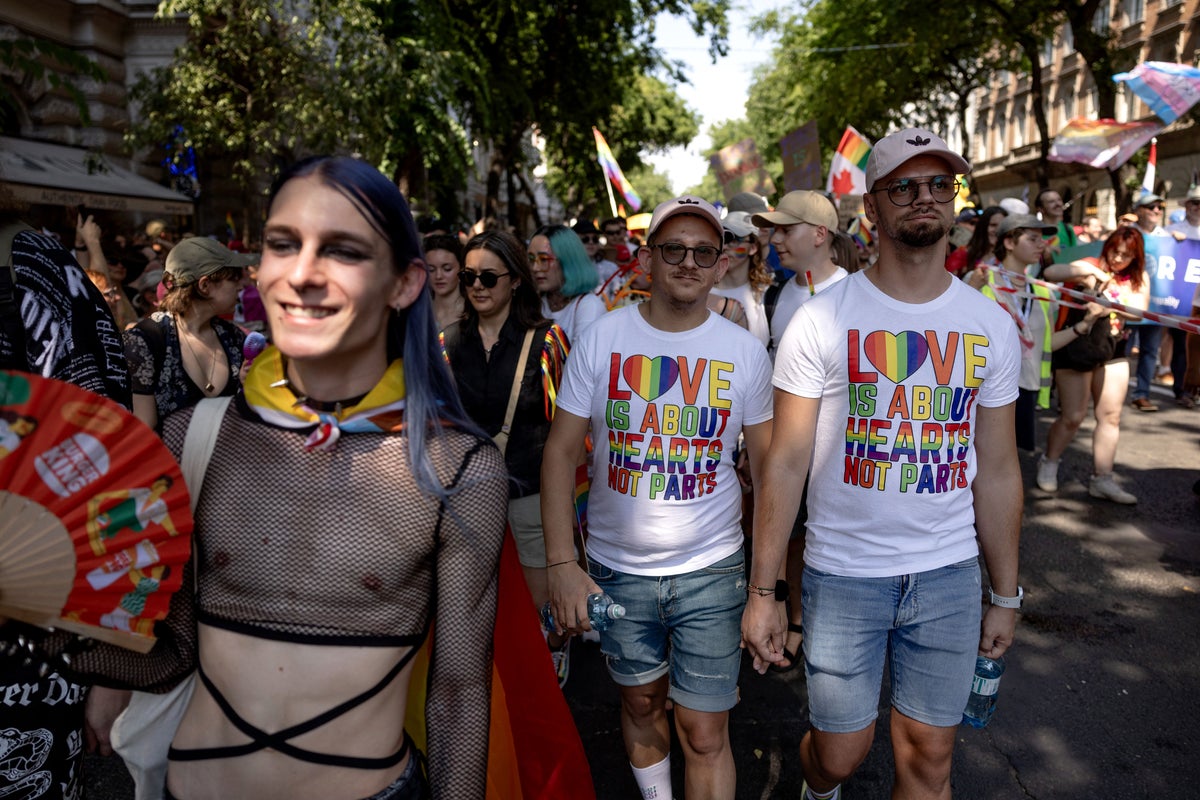
Western media loves a neat redemption arc. The narrative broadcasted globally from the streets of Budapest seems straightforward. Viktor Orbán is out, tens of thousands braved a historic heatwave to dance at Budapest Pride, and democracy has allegedly conquered Central Europe. It makes for fantastic television. It provides comforting confirmation bias for liberal commentators who view global politics as a binary battle between progress and regression.
It is also completely wrong. Don't miss our previous coverage on this related article.
The assumption that removing a single populist leader instantly reverses a decade of deep institutional engineering is dangerous. It mistakes a temporary cultural release valve for structural political change. Parading down Andrássy Avenue in the blistering heat is an act of defiance, yes, but it is not a policy victory. The hard truth about post-Orbán Hungary is that the infrastructure of his illiberal state remains entirely intact, and the new political coalition is far less progressive than outsiders desperately want to believe.
The Illusion of the Single-Leader Culprit
For over a decade, international observers treated Hungary’s political system as a one-man show. The consensus dictated that if you remove Orbán, the country naturally defaults back to a standard Western model. This view ignores how power actually operates. If you want more about the background here, Associated Press provides an excellent breakdown.
Orbán did not just govern Hungary; his party, Fidesz, rewrote the rules of the game to ensure their influence outlives his tenure. They executed a deep, systematic capture of the state apparatus that cannot be undone by a single election cycle or a change in the Prime Minister's office.
Consider the reality of Hungarian institutions:
- The Judiciary: The courts are packed with conservative appointments holding long tenures that extend far past the current government's mandate.
- Media Monopolies: The Central European Press and Media Foundation (KESMA) still controls hundreds of media outlets, maintaining a massive right-wing messaging machine that operates independently of who sits in the parliament building.
- Economic Capture: State contracts, corporate ownership, and vital national industries are concentrated in the hands of oligarchs loyal to the old guard.
When a new government takes power under these conditions, they do not inherit a neutral vehicle of governance. They inherit a vehicle where the steering wheel is disconnected from the wheels. Celebrating an election victory as a total systemic reset is a fundamental misunderstanding of institutional inertia.
The Conservative Core of the New Opposition
The second major misconception lies in the nature of the coalition that replaced the old regime. Western reporting frequently paints the post-Orbán leadership as an ideological mirror image of Western European social democracy. This is a fantasy.
To unseat a powerful incumbent, the Hungarian opposition had to build an incredibly broad, fragile tent. This coalition includes everything from urban liberals and green activists to traditional conservatives and former far-right nationalists. To keep this alliance from fracturing, controversial social issues—specifically LGBTQ+ rights—are routinely sidelined or heavily compromised.
Imagine a scenario where the new government attempts to fast-track full marriage equality or repeal the restrictive 2021 laws concerning minors and LGBTQ+ content. The immediate result would not be a progressive triumph; it would be the immediate collapse of the governing coalition. The rural voters who swung the election away from Fidesz did not suddenly convert to progressive social values. They voted against corruption, inflation, and economic mismanagement.
If the new administration prioritizes Western-style culture war issues over basic economic stabilization, they guarantee a swift, vengeful return of the populist right in the next election.
Street Turnout vs. Legislative Reality
There is a massive disconnect between activist visibility and legislative power. A well-attended march in a capital city does not equal national consensus.
Budapest has always been an island of relative liberalism in a deeply conservative sea. The city's mayor and urban population have long opposed the nationalist line. Therefore, a massive turnout at Budapest Pride during a heatwave is not a sign of a nationwide ideological shift. It is a manifestation of the exact same urban-rural divide that defines politics across the globe, from the United States to Poland.
Outside the capital, in the rust belt towns and agricultural villages of the Great Hungarian Plain, the social attitudes that sustained the previous regime remain completely unchanged. Activists celebrating in Budapest are shouting into an echo chamber while the structural challenges of the country go unaddressed.
True policy change requires legislative majorities, constitutional amendments, and structural economic reform. None of those things are achieved by marching with a flag, no matter how brave the participants are for enduring record temperatures.
The Risk of Western Triangulation
The international community's rush to declare victory in Hungary creates a secondary danger: the premature normalization of relations and the lifting of crucial accountability mechanisms.
The European Union spent years withholding billions in funds from Hungary due to rule-of-law violations. Now, with a new face in Budapest, there is immense diplomatic pressure to release those funds to signal support for the new regime. Doing so based on optics rather than concrete, verifiable legislative reform is a massive mistake.
If the EU rewards a change in leadership without demanding a complete dismantling of the illiberal legal frameworks, it proves that the Union's objections were never truly about principles—they were simply about personalities. The new government must be held to the exact same rigorous standards as the old one. If they lack the political capital or the will to repeal discriminatory laws, they should not receive a pass just because they speak the language of European diplomacy more fluently than their predecessor.
The celebration on the streets of Budapest was a moment of genuine human emotion, but emotion is a terrible metric for political analysis. The heatwave will break, the crowds will disperse, and the grueling, deeply compromised reality of governing a structurally captured state will remain. The real fight for Hungary’s future hasn't ended; it hasn't even begun.