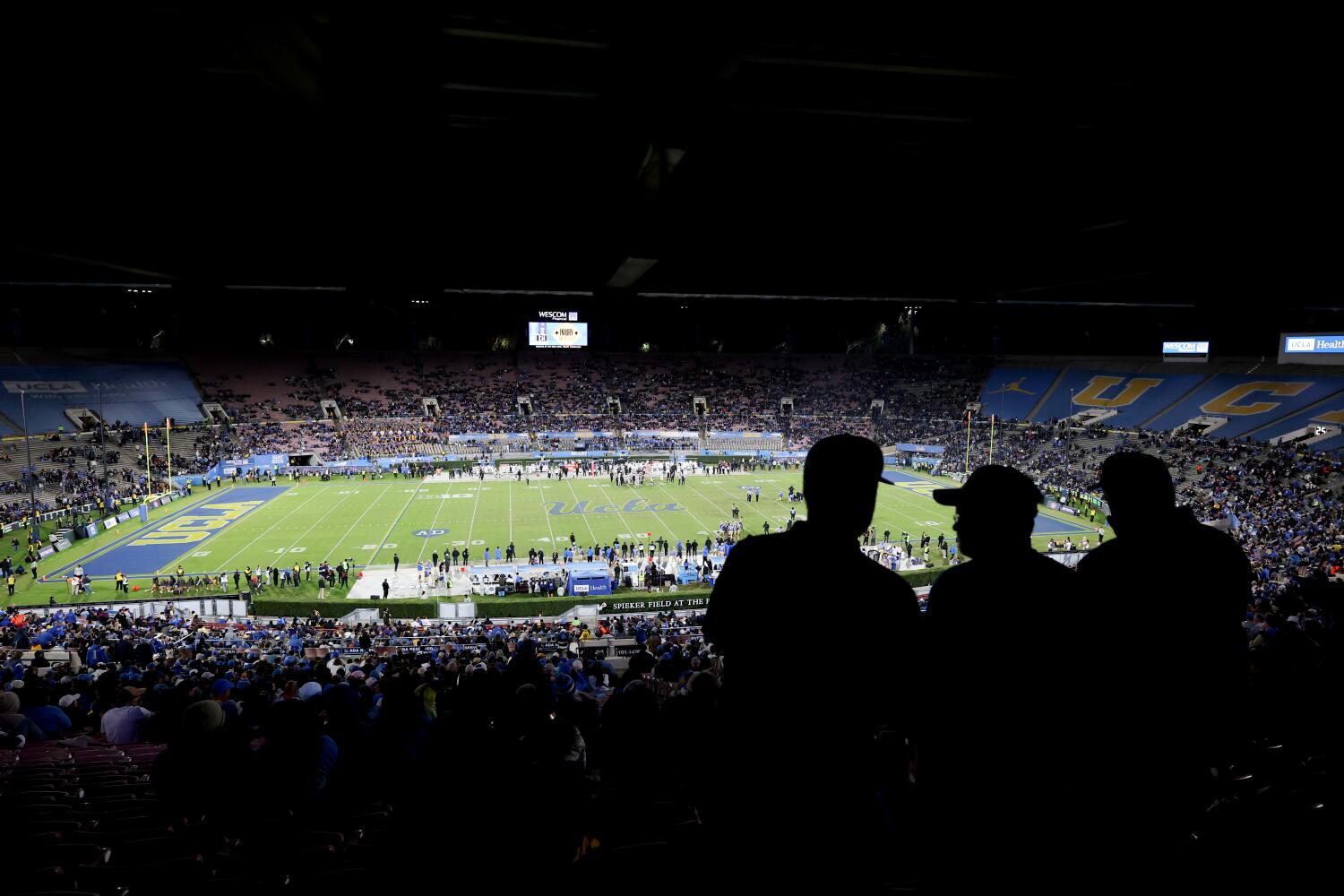
UCLA football will remain at the Rose Bowl for the 2026 season, but the decision is less a triumphant homecoming and more a forced retreat. This week, the university officially confirmed its intent to stay in Pasadena, momentarily pausing a high-stakes legal war with the City of Pasadena and the Rose Bowl Operating Company (RBOC). The reality is that UCLA tried to leave, got caught in a billion-dollar legal snare, and is now attempting to manage a PR disaster while its former financial architect is shown the door.
For decades, the marriage between the Bruins and the "Granddaddy of Them All" was considered sacred. That illusion shattered when the City of Pasadena filed a massive breach-of-contract lawsuit in late 2025. The filing alleged that UCLA was actively plotting to ditch its lease, which runs through 2044, to play at SoFi Stadium in Inglewood. While the 2026 announcement provides a temporary cooling-off period, the underlying friction suggests a program in the middle of an identity crisis, torn between 20th-century tradition and 21st-century survival.
The Billion Dollar Lease Trap
The crux of the conflict is a contract that the City of Pasadena views as an ironclad insurance policy. Over the last decade, taxpayers have poured more than $150 million into Rose Bowl renovations. These upgrades—luxury suites, modernized press boxes, and expanded concourses—were financed on the assumption that UCLA would be there to pay the bills for the next 20 years.
When rumors surfaced that UCLA was eyeing SoFi Stadium, the city didn't just express disappointment; it went for the jugular. The lawsuit claims that a UCLA departure would cause damages exceeding $1 billion. This isn't just hyperbole for the sake of litigation. The Rose Bowl is the economic engine of Pasadena. Without seven or eight Saturdays of Bruin football revenue, the bond obligations tied to those renovations could potentially bankrupt the stadium’s operating arm.
UCLA’s legal team tried to move the fight behind closed doors. They filed motions to compel arbitration, hoping to settle the dispute through a private mediator rather than a public jury. In February 2026, Los Angeles Superior Court Judge Joseph Lipner dealt the university a massive blow, ruling that the case must be heard by a jury. The judge noted that the arbitration clause in the lease was intended for minor "defects or deficiencies," not for an "anticipatory repudiation" of the entire agreement. By losing this motion, UCLA was faced with the prospect of a public trial where every internal email and financial projection regarding a SoFi move would be entered into the public record.
The Fall of the Architect
You cannot understand the 2026 "choice" to stay at the Rose Bowl without looking at the recent firing of UCLA Chief Financial Officer Stephen Agostini. Agostini was the primary champion of the Inglewood move. He looked at the math and saw a program drowning in a $425 million deficit. To a numbers man, the Rose Bowl is a nostalgic money pit.
The Bruins averaged roughly 35,000 fans in 2025 in a stadium that holds over 90,000. The optics are terrible, and the revenue sharing is worse. Under the current lease, UCLA pays no traditional rent but also sees zero revenue from the stadium’s luxury suites—the primary profit center for modern sports venues. Agostini believed that moving 13 miles closer to campus to the state-of-the-art SoFi Stadium would fix the attendance lag and unlock the premium revenue streams required to compete in the Big Ten.
When Agostini was fired in early 2026, the SoFi momentum hit a brick wall. His departure signaled a shift in power back toward the traditionalists and a desperate attempt by the university to settle the waters before the legal discovery process got too deep.
The SoFi Temptation
Why is UCLA so desperate to leave a National Historic Landmark? The answer is geographical and financial.
- Proximity: The Rose Bowl is 26 miles from the UCLA campus. In Los Angeles traffic, that is a two-hour odyssey for students. SoFi Stadium is 12 miles away.
- Modern Amenities: The Rose Bowl is a museum that happens to host football. SoFi is a revenue-generating machine.
- Recruiting: High school recruits are increasingly swayed by "pro-style" environments. Playing in the home of the Rams and Chargers carries a weight that a century-old stadium in a residential neighborhood struggle to match.
Despite these advantages, the legal cost of exit is currently too high. The UC Regents, who oversee UCLA, are currently appealing Judge Lipner’s arbitration ruling. They argue that being forced into a jury trial will cause "irreparable harm." While they fight that battle in the appellate courts, they have no choice but to play nice with Pasadena.
The 2026 Reality Check
New head coach Bob Chesney will lead the Bruins into the 2026 season under a cloud of administrative uncertainty. The schedule is daunting, featuring home matchups against Wisconsin, Michigan State, and the rivalry game against USC.
| Date | Opponent | Venue |
|---|---|---|
| Sept 12, 2026 | San Diego State | Rose Bowl |
| Sept 19, 2026 | Purdue | Rose Bowl |
| Oct 17, 2026 | Wisconsin | Rose Bowl |
| Oct 24, 2026 | Michigan State | Rose Bowl |
| Nov 28, 2026 | USC | Rose Bowl |
While Vice Chancellor Mary Osako’s recent statement emphasized "how much game day means to Bruins," the statement was notably silent on anything beyond 2026. The university is essentially buying time. They are hoping a winning season under Chesney will fix the attendance issues and make the Rose Bowl viable again, or they are waiting for a legal opening that allows them to settle with Pasadena for a fraction of that $1 billion figure.
Pasadena Mayor Victor Gordo has been vocal, stating that the city expects the Bruins to stay for "generations to come." It is a nice sentiment, but it ignores the cold reality of the Big Ten era. In a world where television contracts and NIL pools dictate success, UCLA cannot afford to be the only major program in the country that doesn't control its own stadium revenue.
The 2026 season isn't a commitment to tradition; it's a stay of execution. The lawsuit continues to grind through the courts, and until a settlement is reached or a judge breaks that lease, the Bruins are effectively prisoners of their own history.
Would you like me to track the specific court dates for the UC Regents' appeal as they become available?