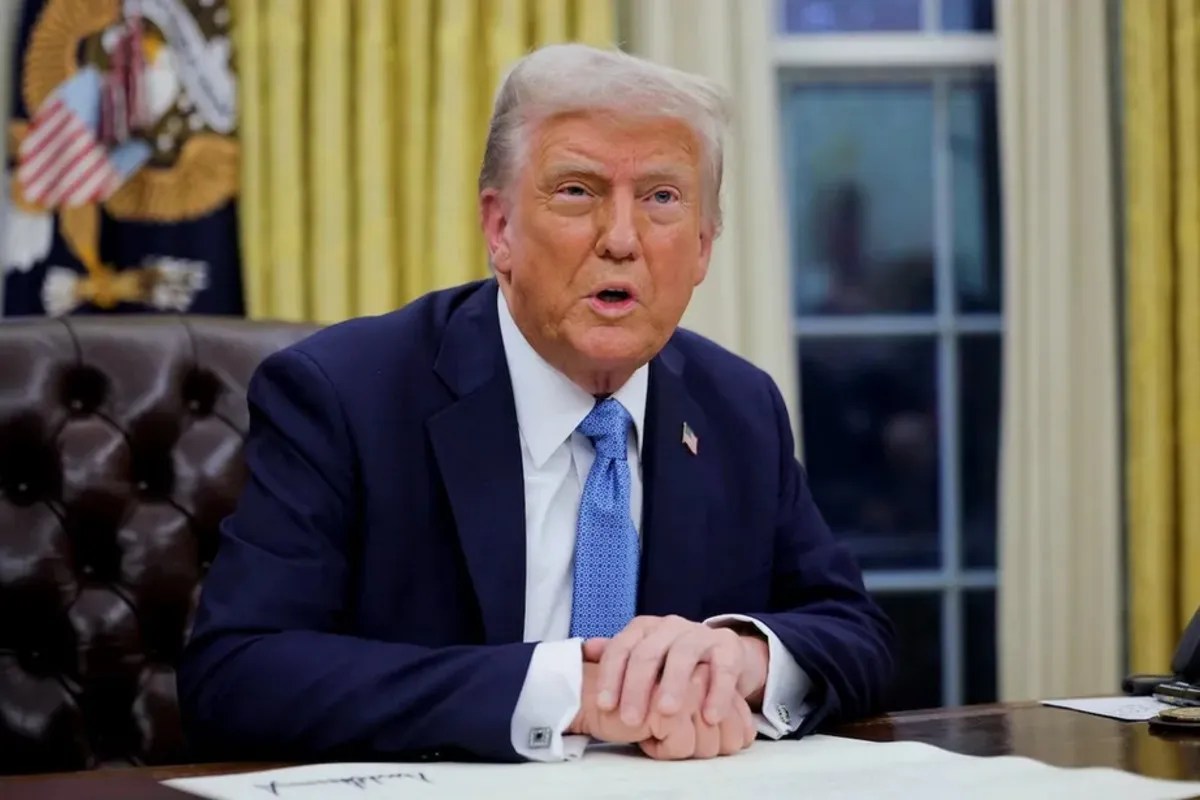
Donald Trump’s recent national address sent shockwaves through the political arena by claiming Beijing successfully stole the personal voter data of 220 million Americans. While the headline triggered immediate panic, a deeper investigation into the infrastructure of American election data reveals a much more complicated, troubling reality. The panic isn't entirely baseless, but the threat isn't exactly what the public thinks it is. Rather than a sophisticated breach of secure government vaults, the vulnerability lies in an industry of loosely regulated commercial data brokers and public records aggregation.
Understanding this threat requires looking past the political theater and examining how election data actually flows through the American political machinery.
The Anatomy of the 220 Million Number
To evaluate the claim, we must first look at the math. The United States has roughly 160 to 180 million registered voters at any given time, depending on the election cycle. A figure of 220 million does not represent a clean list of active, registered voters. Instead, it mirrors the total number of eligible citizens or a massive, aggregated database compiled by commercial entities.
State election databases are decentralized. There is no single, centralized federal repository of American voter data for a foreign adversary to hack in one single swoop. Each of the 50 states maintains its own voter registration system, guarded by varying levels of cybersecurity, firewalls, and protocols. To steal 220 million records directly from government sources, state-sponsored actors would need to compromise dozens of separate state systems simultaneously without triggering early warning alarms.
The more plausible pipeline for such a massive data acquisition is the commercial data market. Political campaigns, marketing firms, and private data brokers routinely scrape public records, purchasing history, property deeds, and social media footprints to build voter profiles. These private companies aggregate the data, creating massive, consolidated databases. These commercial silos, rather than the fortified state election servers, are the soft underbelly of American data security.
How State-Sponsored Actors Weaponize Public Data
Foreign intelligence agencies rarely need to deploy highly sophisticated zero-day exploits to gather information on American citizens. They can simply buy it, or breach the poorly secured servers of a third-party marketing vendor.
Once an adversary acquires a database containing millions of voter profiles, the objective is rarely to alter vote tallies directly. The real value lies in micro-targeting and psychological operations.
- Behavioral Profiling: By combining basic voter registration data—like name, address, and party affiliation—with commercial data like consumer habits and estimated income, analysts can build highly accurate psychological profiles of specific demographics.
- Precision Disinformation: Armed with these profiles, foreign operatives can tailor specific narratives to exploit existing social grievances, targeting highly specific precincts in swing states to suppress voter turnout or inflame political divisions.
- Phishing and Social Engineering: Detailed personal information allows for highly convincing phishing campaigns directed at local election officials or campaign staff, serving as an entry point for deeper network penetration.
A hypothetical example illustrates the risk. Imagine a small marketing firm contracted by a local campaign. The firm uploads a list of 500,000 voters to an unsecured cloud storage bucket. An automated scanner operated by a threat actor detects the open bucket and downloads the file. Multiply this occurrence across hundreds of campaigns and vendors over a decade, and an adversary can easily assemble a comprehensive mosaic of the American electorate without ever touching a government server.
The Decentralization Paradox
American officials often cite the decentralized nature of the U.S. election system as its greatest defense. Because the system is fragmented into thousands of local jurisdictions, it is virtually impossible to swing a national election through a single cyberattack.
However, this decentralization creates a massive defensive vulnerability. A chain is only as strong as its weakest link. While a well-funded state election office might possess top-tier cybersecurity defenses, a rural county office operating on a shoestring budget may rely on outdated software and minimal IT support.
Adversaries do not attempt to breach the front door of the most secure systems. They look for the poorly defended side doors managed by third-party contractors, printing vendors, and local administrative offices. The focus on "stolen voter data" often obscures the real danger, which is the systemic lack of standardized security protocols across the entire ecosystem of political campaigns and vendors.
Moving Past the Rhetoric
Fixing this vulnerability requires a fundamental shift in how the nation views data privacy and political infrastructure. Political campaigns are currently exempt from many consumer privacy laws, allowing them to accumulate vast troves of data with minimal oversight regarding how that information is stored, shared, or secured after the election cycle ends.
Strict data retention limits for political campaigns would drastically reduce the attack surface. National security policy must treat the commercial data broker industry not just as a regulatory issue, but as a critical national security vulnerability. Until the United States addresses the unchecked monetization and aggregation of personal information by private entities, massive databases of American citizens will remain easily accessible to any foreign adversary with enough patience or money to acquire them.