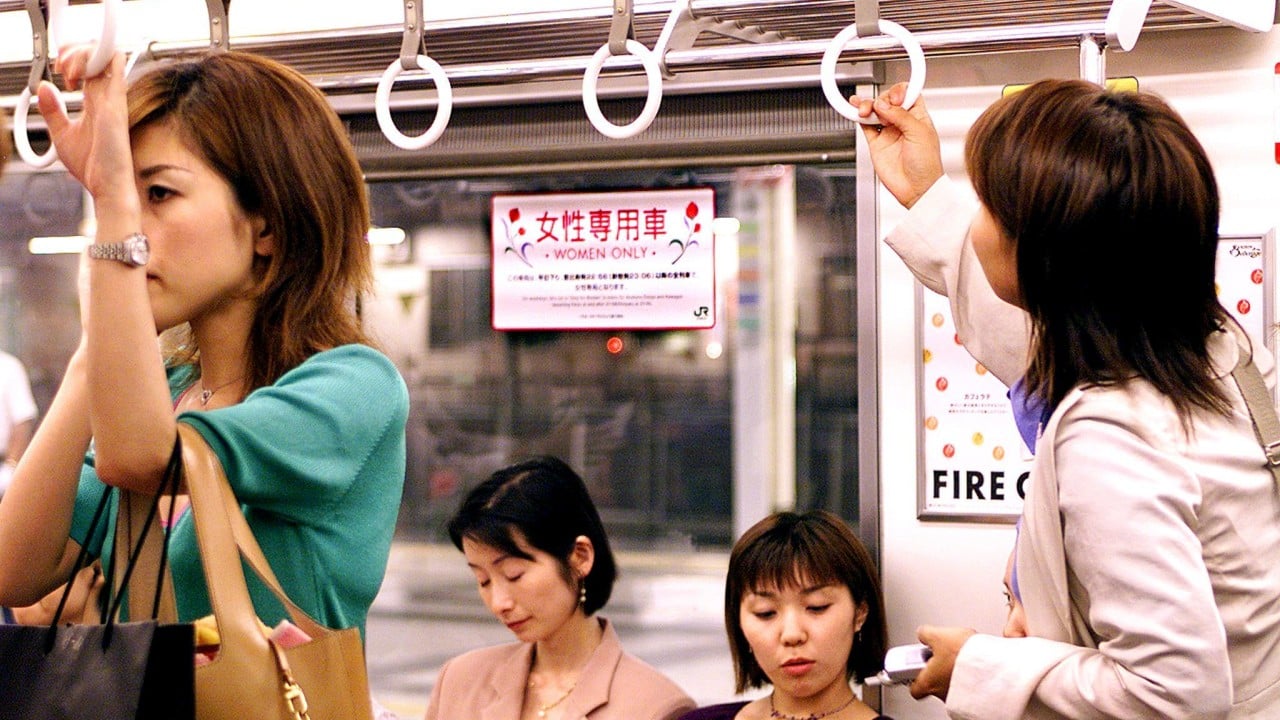
A quarter-century has passed since Japan formalized the modern version of its women-only train carriages. Introduced widely across Tokyo and Osaka between 2000 and 2005, the system was hailed as an essential shield against chikan—the pervasive, systematic groping of female passengers on suffocatingly crowded commuter lines. Yet twenty-five years later, official police data reveals that transit-based sexual harassment remains a daily crisis, exposing the bitter reality that segregating passengers was a logistical band-aid rather than a societal cure.
The system is failing to eliminate the root problem because physical isolation does nothing to alter criminal behavior or improve abysmal conviction rates. Instead of solving the issue, the policy effectively places the burden of safety squarely on the victim. Meanwhile, you can find similar stories here: The Italian Airbase Myth and the Illusion of Neutrality in Modern Warfare.
The Illusion of Containment
When Keio Electric Railway introduced late-night women-only cars in December 2000, it was an emergency response to the chaos of the year-end party season. Drunken salarymen frequently used the packed conditions of commuter trains as cover for sexual assault. By 2005, major operators across Tokyo, including the subway systems, expanded this policy to morning rush hours.
The immediate result was visual and spatial. Bright pink stickers marked the platforms, and the josei senyou sharyo became a standard fixture of Japanese transit. To understand the full picture, we recommend the recent analysis by Associated Press.
The public narrative presented these carriages as an absolute refuge. In reality, they are an option, not a legal mandate. The exclusion of men is enforced entirely through social pressure and station announcements, rather than criminal penalties.
This creates immediate operational friction. On hyper-congested lines like the JR Saikyo Line or the Osaka Metro Midosuji Line, squeezing half the population out of a single carriage forces the remaining mixed-gender cars into even higher levels of congestion.
Sociologists tracking transit behavior note that this spatial squeezing has created an unintended, dangerous side effect. When a woman chooses to ride in a standard, mixed-gender carriage—often because it aligns better with her station exit or transfer point—her presence is frequently weaponized against her. The underlying social bias implies that if a woman does not actively seek out the designated safe car, she is implicitly accepting the risk of the general carriages.
The Math Behind the Crowds
The physical mechanics of the Japanese commute make total prevention nearly impossible without structural rail reform. During morning peak hours, passenger load factors routinely exceed 150 percent of a train's rated capacity. In these environments, individual autonomy disappears.
Consider a standard ten-car commuter train running into central Tokyo. Reserving one carriage for female passengers reduces the available space for male commuters by roughly 10 percent, compounding the density in the remaining nine cars.
- 1912: The original introduction of the Flower Train on the Chuo Line to separate male and female students.
- 1947: Post-war reintroduction to protect physically vulnerable passengers from dangerous, crushing crowds.
- 2001: Modern implementation specifically targeting chikan networks.
- 2026: A system caught between logistical necessity and growing demands for genuine structural reform.
The underlying issue is that the threat has simply migrated. Women do not spend their entire journey inside a single train car; they must navigate crowded platforms, stairs, escalators, and station corridors where security presence remains minimal. Data collected by regional police departments shows that a significant percentage of harassment incidents now occur precisely at these transition points, outside the perimeter of the pink platform lines.
The Failure of Legal Deterrence
The fundamental flaw of the women-only carriage system is its reliance on spatial avoidance over legal accountability. For generations, the legal apparatus in Japan treated transit groping as a minor public nuisance rather than a serious sexual crime.
Even today, the vast majority of victims never report incidents to authorities. A Cabinet Office study indicated that up to 80 percent of victims suffer in silence. The reasons are systemic: intensive interrogation processes, a lack of immediate physical evidence, and the profound social embarrassment associated with halting a packed commuter train.
When cases do reach the courts, the system struggles with verification. The intense crowding means distinguishing between accidental physical contact and deliberate assault is incredibly difficult. This ambiguity cut both ways, giving rise to a parallel panic regarding false accusations—a phenomenon popularized by the 2007 film Sore de mo, Boku wa Yatte Inai (I Just Didn't Do It).
Because the legal system proved slow to adapt, the burden was shifted back to transit operators. The railways, unable to police human behavior, chose to alter the architecture of the train instead. This allowed the state and corporate employers to bypass the far more difficult work of restructuring corporate work culture, which forces millions of citizens into identical, compressed commuting windows every single morning.
The Emerging Generational Divide
As the policy hits its 25-year milestone, a stark ideological split is widening across Japanese society. Younger generations, raised in an environment with greater awareness of global gender equality standards, increasingly view the physical segregation of passengers as an outdated, defeatist approach.
The Sociological Critique
Sociologists argue that by relying on separate carriages, the state implicitly normalizes the idea that men are inherently incapable of controlling their behavior in public spaces. It reframes a criminal behavior problem as a spatial management problem. The message sent to society is clear: the environment cannot be fixed, so the potential victims must be hidden away.
The Backlash Movement
Concurrently, small but highly vocal anti-WOC activist groups have begun staging coordinated protests. These groups deliberately board women-only carriages during rush hours, filming the ensuing confrontations with station staff to post online. While these actions are widely condemned as disruptive, they highlight a growing friction regarding public space access on transit systems that are funded by universal taxes and rider fares.
Shifting From Segregation to Surveillance
If physical separation has failed to eradicate transit crime, the next phase of the struggle is increasingly digital. Train operators are quietly shifting their strategy away from pink-labeled safe zones and toward real-time surveillance and technological intervention.
Major operators, including Tokyo Metro and JR East, have begun installing high-definition security cameras inside every single passenger carriage, not just the designated women-only cars. These cameras provide continuous, recorded coverage that can be pulled instantly by law enforcement to verify claims of assault.
Furthermore, silent reporting smartphone apps allow victims to alert transit police or train conductors to an ongoing incident without drawing the attention of the perpetrator or forcing a public confrontation. When an alert is triggered, nearby station staff can be deployed to the specific carriage door at the next stop.
These technological measures attack the core mechanism that chikan rely upon: anonymity within a crowd. By making the entire train hostile to offenders, rather than making one car safe for victims, the industry is finally moving toward a model of active deterrence.
The 25-year history of the women-only carriage proves that you cannot solve a deep-seated cultural crisis with a vinyl sticker on a train window. True safety on public transport will not come from building higher walls between passengers, but from ensuring that those who commit assaults face immediate, unavoidable legal consequences. Until the legal system and corporate culture match the efficiency of the transit network itself, the pink carriages will remain a permanent, visible monument to a societal failure.