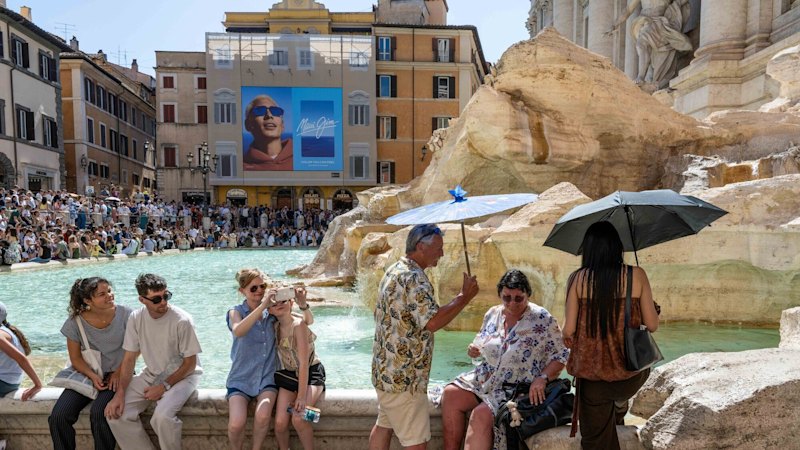
For generations, the Italian approach to summer heat was a masterclass in stubborn architectural discipline. Heavy exterior shutters, known as persiane, stayed bolted shut against the midday glare. Thick stone walls absorbed the punishing Mediterranean sun during the afternoon, slowly releasing that accumulated heat only when the evening breeze finally swept down from the hills. Turning on a compressor-driven machine to cool indoor air was viewed not merely as an unnecessary luxury, but as an architectural failure, an environmental nuisance, and an assault on natural living.
That romantic resistance has collapsed.
As extreme heatwaves routinely push temperatures past forty degrees Celsius across the peninsula, the historical aversion to mechanical cooling has given way to a frantic scramble for climate-controlled survival. Over half of all Italian households now rely on air conditioning units, a dramatic surge from the mere fraction of the population that owned them at the turn of the century. Italy now accounts for a staggering share of the European Union's residential cooling electricity usage.
This shift is more than a simple lifestyle adjustment. It is a stressful collision between rapid climate reality and an energy grid built for a cooler, more predictable era.
The historical reluctance to adopt air conditioning was never just about stubbornness. It was rooted in an economic and cultural framework that treated electricity as a precious resource and quiet, naturally ventilated spaces as a birthright. Italian housing stock, dominated by multi-story apartment buildings constructed long before modern HVAC standards existed, presented massive structural hurdles to retrofitting ductwork. Wall thicknesses, historical preservation laws governing urban centers like Rome and Florence, and the high cost of imported energy combined to keep mechanical cooling at bay.
Furthermore, a pervasive cultural skepticism lingered. Older generations maintained that artificial cooling caused stiff joints, summer colds, and unnatural shocks to the human body. The prevailing philosophy held that humans should adapt to the season rather than forcing the season to adapt to them.
Then came the summers that shattered every historical benchmark.
The turning point was not a single hot afternoon, but a cascading series of lethal heat domes that transformed major Italian cities into urban pressure cookers. The 2003 European heatwave claimed tens of thousands of lives, exposing the grim vulnerability of an aging population living in uncooled concrete and stone structures. Subsequent decades brought even fiercer anomalies, including heat systems bearing grim mythological names like Cerberus that scorched the Mediterranean with record-shattering intensity.
When nighttime temperatures refuse to drop below thirty degrees Celsius, traditional architectural tactics fail entirely. Without indoor climate control, sleep becomes impossible, worker productivity collapses, and public health crises mount rapidly among vulnerable demographics. The choice for millions of Italians shifted from preserving a cultural ideal of natural ventilation to preventing heat stroke.
The sudden, widespread embrace of cooling technology has triggered an immediate infrastructural crisis. When heatwaves spike across the country, residential power demand surges by alarming margins, threatening regional distribution networks. Major urban centers face a compounding vulnerability. They experience the most punishing urban heat island effects while simultaneously drawing massive power loads from a grid that struggles to keep pace.
The energy equation is brutally simple. Every compressor switched on to cool an apartment adds immense draw to local transformers, which themselves heat up and lose efficiency under ambient thermal stress. This dynamic creates a vicious cycle where the very tool required to survive the heat contributes directly to the energy spikes and carbon emissions that worsen regional warming.
Yet, treating air conditioning solely as an environmental villain misses the deeper transformation happening across the Italian peninsula. The country is currently racing to couple its cooling explosion with decentralized renewable generation.
Recent energy data highlights a growing reliance on rooftop photovoltaic systems to absorb the shock. Because solar generation peaks precisely during the sunniest, hottest hours when cooling demand is highest, households equipped with rooftop panels are managing to offset significant portions of their daytime energy draw. On peak summer afternoons, residential solar installations successfully reduce grid withdrawals by substantial margins, shielding homeowners from volatile energy price spikes.
However, this solution remains geographically uneven. Northern regions and areas with higher historical rates of solar adoption are weathering the transition far better than dense southern urban cores, where architectural restrictions and rental dynamics make rapid solar retrofitting difficult.
The cultural debate has shifted from whether Italians should use air conditioning to who gets to stay cool without facing financial ruin. Polling across Southern Europe indicates that a clear majority of citizens now view widespread access to cooling as an absolute necessity rather than a dispensable luxury, frequently prioritizing immediate heat mitigation over strict short-term emission targets.
The traditional Italian summer of open windows and heavy shutters is gone, replaced by the hum of modern compressors fighting an unforgiving climate. How the nation manages the remaining gaps in its energy infrastructure will determine whether this new era of survival remains sustainable or pushes the grid to its absolute breaking point.