Hong Kong is offering three prime residential development sites to sweeten the upcoming tender for the Smart and Green Mass Transit System in East Kowloon because the project is financially unviable on its own. The Chief Executive-in-Council approved a funding structure that hands over valuable land parcels in Ma Yau Tong, Kai Tak, and Cha Kwo Ling Road to the winning private consortium. Without this direct property subsidy, the projected ridership revenues simply cannot meet the required capital returns for private builders.
By tying transit infrastructure directly to lucrative real estate rights, the government is attempting to revive its classic "Rail plus Property" model. However, this is no longer the booming property market of the past decades. The state is forced to assume the heavy financial risk of a difficult, steep terrain project that heavy rail operators abandoned years ago due to prohibitive engineering costs.
The High Cost of Climbing Hills
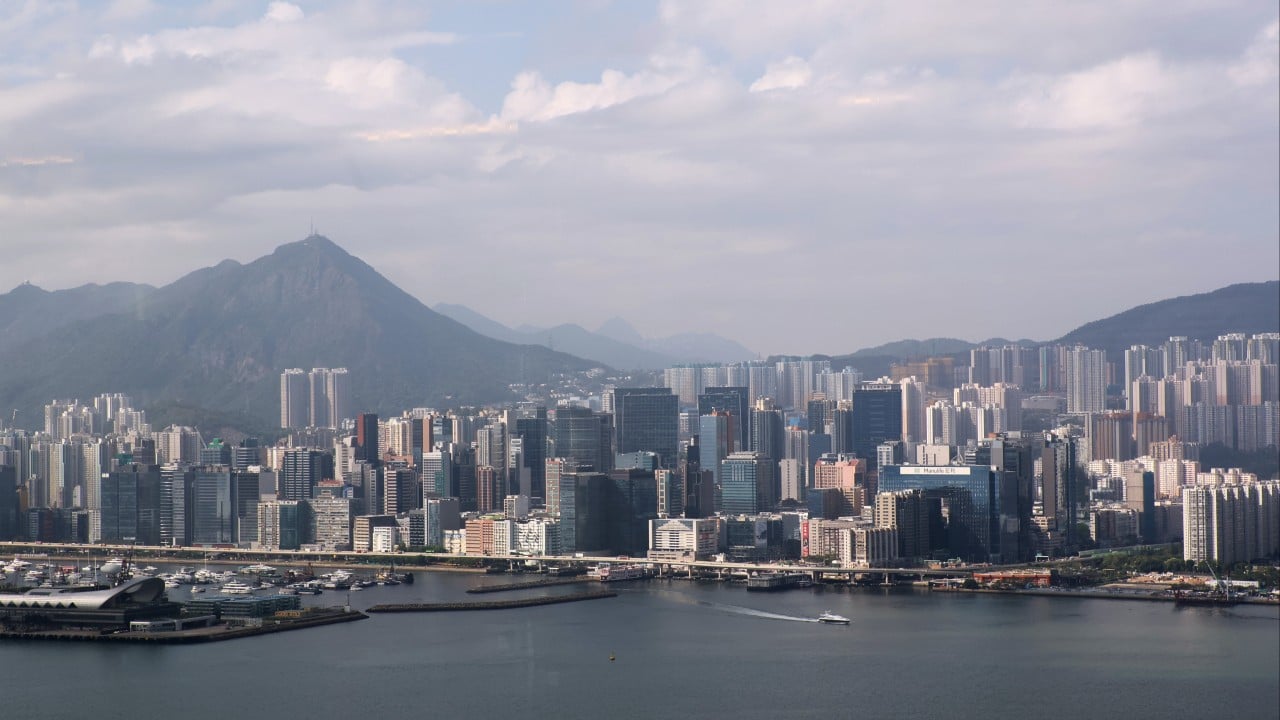
Building mass transit along the steep ridges of Kwun Tong and Sau Mau Ping has been a bureaucratic headache for more than a decade. The government originally envisioned a standard heavy rail link for the uphill areas of East Kowloon. That plan was quietly shelved when engineers realized the local topography required trains to dig deep underground or navigate inclines that normal steel-on-steel railways could not climb.
The compromise is the Smart and Green Mass Transit System (SGMTS), a lighter, rubber-tired or monorail-adjacent technology designed to handle sharp curves and steep vertical climbs without overhead power cables. The line will stretch seven kilometers, running between Choi Hung East and Yau Tong East via nine stations, serving over 300,000 residents isolated in high-density public housing estates like Po Tat and Shun Lee.
While the technology solves the engineering puzzle, the financial mathematics remain broken. The capital expenditure required to construct viaducts, a one-kilometer tunnel, and specialized maintenance depots across rugged terrain outweighs the farebox revenue potential of a commuter base heavily composed of public housing tenants. A standard franchise model would fail on day one.
Decoding the Three-Site Bait
To prevent a failed tender when bidding opens in July, the government is utilizing private treaty grants at a nominal premium to hand over three distinct parcels of land. The mechanism relies on a fixed-sum clawback. Bidders must propose a specific cash sum payable back to the public treasury, which will form the primary benchmark for grading the bids.
The targeted land parcels reveal the strategic lengths to which officials are going to offset construction risks.
- The Ma Yau Tong Depot Site: This site forces the operator to build housing directly on top of or adjacent to the maintenance facilities, requiring complex structural engineering but offering immediate proximity to the line’s eastern tail.
- Kai Tak Sites 3E1 and 3E2: Located away from the actual uphill alignment, these premium plots act as pure financial ballast. They offer the developer high-value waterfront potential in a district that has struggled with its own aborted monorail plans.
- The Cha Kwo Ling Road Site: Situated near Kwun Tong Road, this parcel positions the operator near established commercial hubs, offering a reliable, traditional real estate play.
This dispersed land package shows that the immediate vicinity of the East Kowloon line cannot generate enough real estate value to cover the transit construction costs. The government had to look down the hill toward Kai Tak to find land valuable enough to make the contract attractive.
Shifting Risk in an Uncertain Property Market
The "Rail plus Property" strategy made the MTR Corporation a global corporate blueprint, but replicating it with a private franchisee in the current economic climate is highly speculative. Private developers are wrestling with high interest rates and compressed margins. Residential land tenders have faced repeated withdrawals or weak bidding over recent cycles.
Under the terms of the SGMTS tender, the winning franchisee assumes total responsibility for the financing, design, construction, long-term operation, and maintenance of the system. If construction costs spiral due to the congested underground utilities and difficult hillside rock formations typical of Kwun Tong, the developer bears the brunt of the overrun.
Conversely, if the property market softens further by the time these residential blocks hit the presale market in the late 2020s, the subsidy mechanism deflates. The government is essentially betting that the intrinsic value of Hong Kong residential land will recover strongly enough over the next seven years to fund a niche public transit system.
The Tight Timeline for Delivery
Officials want the contract awarded next year, with a strict target for full commissioning on or before 2033. For residents of Sau Mau Ping and Po Tat, the system promises to cut commuting times down to 10 or 15 minutes to major interchange hubs at Yau Tong or Choi Hung. Currently, those same journeys take up to 30 minutes via congested, winding roads prone to gridlock during morning rainstorms.
The project will also introduce extensive pedestrian infrastructure, including ten major sets of public escalators and lifts to connect the steep hillsides. This transforms the franchisee from a simple transit operator into a primary manager of neighborhood urban mobility.
The open question is whether international transport conglomerates will partner with local property giants to swallow the long-term operational risks of an unproven technology in Hong Kong. The upcoming July tender will prove whether free land is still enough to tempt private capital into building public infrastructure.