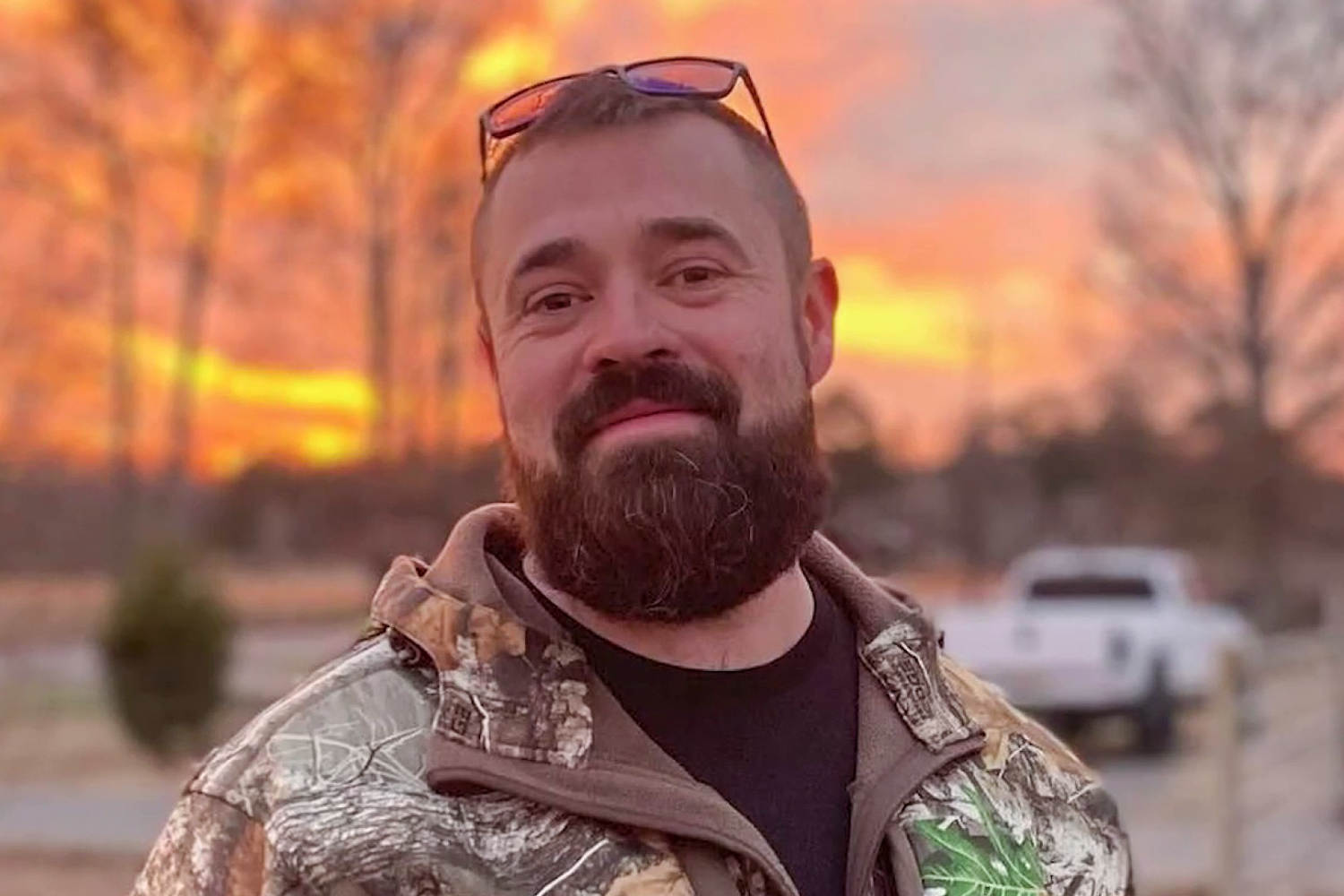
An Arkansas circuit court judge has thrown out the second-degree murder charge against Aaron Spencer, the local sheriff candidate who shot and killed his daughter's accused sexual predator. The decision hinges on an egregious failure of police process that a judge noted gave the appearance of a law enforcement cover-up. Special Circuit Court Judge Ralph Wilson Jr. dismissed the case with prejudice after finding that crucial dash-cam video evidence collected by the Lonoke County Sheriff’s Office had been mishandled, stored in a personal office rather than an evidence room, and ultimately lost or destroyed. The ruling removes the final legal barrier preventing Spencer from assuming the top law enforcement job in the county if he wins the general election this November.
To understand how a capital case collapsed into a administrative disaster, look past the visceral narrative of parental vengeance. The legal unraveling of the State of Arkansas v. Aaron Spencer is not a referendum on vigilante justice. It is a clinic on what happens when institutional incompetence meets a fiercely protective community that had already lost faith in its local institutions.
A Midnight Chase on Highway 67
The facts that set the case in motion began at 1:00 a.m. on October 8, 2024. Spencer, a U.S. Army combat veteran living in Lonoke County, woke to find his 13-year-old daughter missing from her bedroom. He did not call 911 immediately. He got into his truck and began searching the rural roads himself.
He spotted a vehicle driven by 67-year-old Michael Fosler. In the passenger seat sat Spencer's missing daughter.
Fosler was not a stranger to local authorities. At the time of the encounter, he was free on a $50,000 bond despite facing 43 criminal counts, including sexual assault, possession of child abuse imagery, and internet stalking of a minor. The sole witness tying Fosler to those active charges was Spencer’s daughter.
Spencer used his truck to force Fosler’s vehicle off the road. An altercation followed. Moments later, Spencer dialed 911 to report that he had shot Fosler to death.
Prosecutors later built their second-degree murder charge on the premise of intent. They argued that Spencer had choices. He could have maintained a distance and updated dispatchers as police intercepted the vehicle. By choosing to ram the truck and confront Fosler with a firearm, the state argued, Spencer bypassed the legal system entirely. Spencer’s defense team never denied the shooting occurred. They maintained that Spencer acted under the imminent necessity of protecting a child from an active kidnapper and predator.
The Missing Memory Card
The trial was scheduled to begin this summer. It never made it to jury selection because the primary piece of objective evidence vanished while in the custody of the very department prosecuting the case.
When deputies arrived at the scene of the shooting in late 2024, a detective removed a dash-camera system from Fosler’s truck. The camera, which recorded both audio and video, potentially held the definitive record of the altercation. It could have proven whether Fosler lunged at Spencer, whether a physical struggle occurred, or if Spencer executed the older man without provocation.
Court records reveal the detective did not log the device or its internal SD memory card into the official evidence room. Instead, the detective left the equipment sitting on a desk in his personal office. By the time the defense demanded access to the files through discovery requests, the memory card was gone.
In a scathing written order, Judge Wilson did not mince words. He called the actions of the Lonoke County Sheriff’s Office an outright violation of standard operating procedures and best practices. The intentional failure to preserve the digital evidence, coupled with what the court described as "manipulated" equipment, created an incurable due process violation. The loss of evidence was so severe that a fair trial became impossible.
Ballot Box Retribution
The political fallout of the case had already transformed the county before the judge issued his dismissal.
Following his arrest by the Lonoke County Sheriff’s Office, Spencer launched a campaign to unseat the incumbent three-term Republican Sheriff, John Staley—the man whose deputies handcuffed him. Spencer turned his personal tragedy into a political platform, campaigning on transparency, institutional accountability, and a pledge to build a dedicated unit specifically tasked with aggressively pursuing internet predators and child abusers.
The message struck a nerve in the heavily conservative county of 76,000 residents. In the March primary, Spencer secured over 50 percent of the vote in a multi-candidate field, ending Staley's decade-long control of the department.
The primary victory created an unprecedented legal paradox. Had Spencer been convicted of second-degree murder at his upcoming trial, Arkansas law would have barred him from holding public office as a convicted felon. For months, local voters faced the real possibility that the candidate they chose to run the jail might end up residing in it.
The dismissal removes that gridlock. Spencer will face Democratic nominee Brian Mitchell Sr. in November without the shadow of an active homicide indictment. Given the county's deep-red voting history, Spencer is the heavy favorite to win.
Systemic Fractures in Rural Justice
The collapse of the Spencer prosecution exposes a deeper crisis within small-town law enforcement infrastructure. This case did not fall apart because of an ambiguous self-defense statute or a sympathetic jury. It failed because of fundamental failures in chain-of-custody protocols that are supposed to be foundational for any rookie patrol officer.
The public anger that propelled Spencer to a primary victory was fueled by Fosler's status at the time of his death. To many residents, the fact that a man facing 43 felony charges involving a child was walking free on a modest bond represented a systemic failure. When the sheriff's office subsequently lost the objective recording of the shooting, public skepticism turned into outright hostility.
The state tried to salvage the case by requesting a special judge after the Arkansas Supreme Court removed the original circuit judge for issuing an overly broad gag order that trampled on Spencer's free speech rights. But a new judge could not recreate destroyed data.
The lesson here is stark. When law enforcement agencies cut corners, ignore evidence storage protocols, or allow critical files to sit in personal offices, the entire legal machinery locks up. The state lost its chance to prove a murder charge, a family was forced to litigate their trauma in public, and an entire community was left to wonder whether their sheriff's department was incompetent or corrupt.