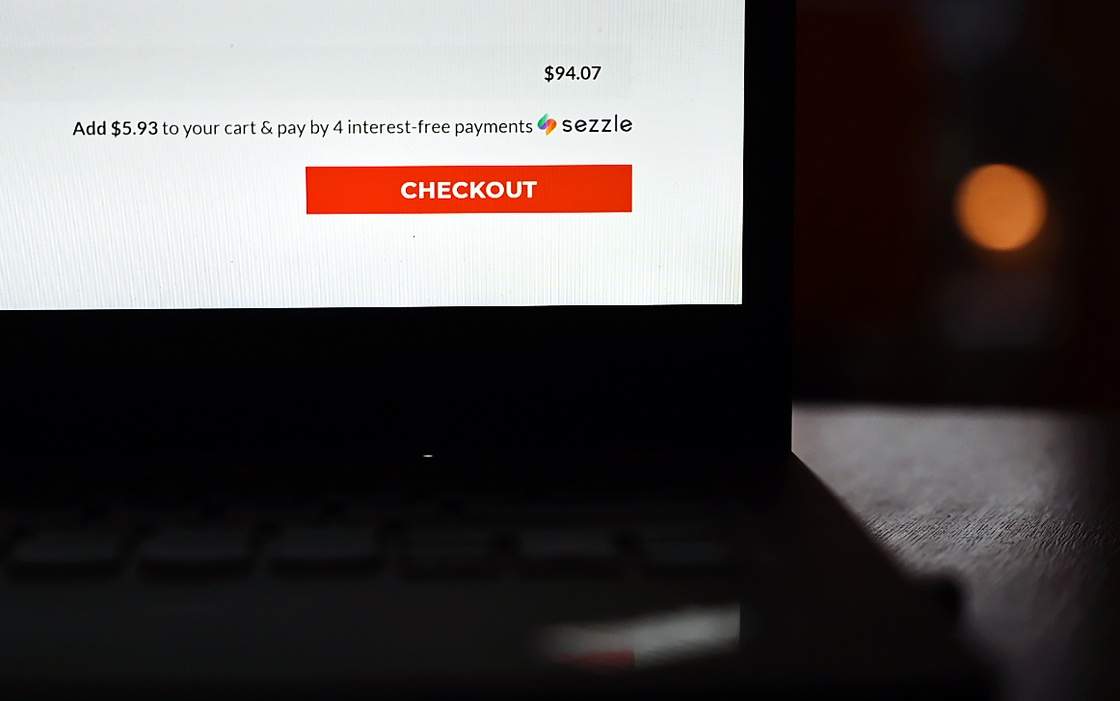
Illinois Governor JB Pritzker recently signed the Buy-Now-Pay-Later Loan Consumer Protection Act, a sweeping piece of legislation intended to rein in an unsupervised seventy-billion-dollar industry. The law forces providers to register with state regulators, subjects them to a thirty-six percent rate cap, and requires them to check if buyers can actually afford their payments. But while politicians celebrate this as a triumph over predatory lending, consumer advocates are sounding alarms. The state has inadvertently constructed a regulatory framework filled with severe structural loopholes that might make tracking predatory debt patterns impossible.
The political optics were immaculate. Standing at a music venue in Chicago, lawmakers painted a picture of a predatory industry acting like the Old West, trapping low-income families who rely on installment plans for groceries and utilities. The new law, Senate Bill 3561, takes effect immediately but gives fintech firms until January 2028 to fully comply. On paper, it addresses the exact friction points that consumer groups have highlighted for years. It stops automated payment systems from repeatedly draining empty bank accounts, grants consumers credit-card-style dispute rights, and mandates risk-based underwriting.
The legislation ignores how these consumer tech platforms are engineered. By tailoring the rules to a narrow definition of installment credit, the state has provided corporate compliance lawyers with a roadmap to bypass the law entirely.
The Mathematical Illusion of the Interest Rate Cap
The centerpiece of the Illinois law is the expansion of the state’s thirty-six percent interest rate cap to cover short-term installment products. This sounds like a devastating blow to high-cost lenders. In practice, the cap struggles to compute the core revenue mechanism of modern installment apps.
Most services offer a standard pay-in-four model. A consumer buys a one-hundred-dollar pair of shoes, pays twenty-five dollars upfront, and promises three subsequent bi-weekly payments of twenty-five dollars. The consumer pays zero interest. The fintech company makes its money by charging the merchant a fee of around four to six percent of the transaction value. Because there is no stated interest rate, applying a traditional annual percentage rate cap requires complex regulatory contortions.
The friction occurs when late fees enter the ledger. If a buyer misses a single twenty-five-dollar payment and faces an eight-dollar late fee, that fee is not just a minor penalty when viewed through the lens of short-term lending math. It functions as a massive spike in the true cost of credit. Because the duration of the loan is measured in weeks rather than years, translating that fixed fee into an annualized percentage rate pushes the transaction far past the legal thirty-six percent boundary.
Fintech trade groups argue that treating fixed late fees as annualized interest is a fundamental misunderstanding of short-term credit. If a platform is legally blocked from charging a late fee because it triggers an technical violation of the rate cap, the platform will simply stop offering services to borrowers with lower credit scores. The law tries to protect subprime borrowers but might end up cuting off their access to short-term liquidity, driving them toward unregulated underground lenders.
The Financial Engineering of the One Hundred Twenty Day Loophole
The most glaring flaw in Senate Bill 3561 is its rigid definition of what constitutes a short-term installment loan. The text specifically targets closed-end credit options that are payable in four or fewer installments, or have a total term of one hundred twenty days or less.
This arbitrary timeframe invites immediate evasion. A financial tech firm does not need to fight the regulation in court when it can simply change its repayment schedule. By restructuring a product to settle over a period of one hundred twenty-one days, a lender completely steps outside the boundaries of the act. The entire operation instantly becomes exempt from the new consumer protections.
Some major market leaders already operate outside this window. Several top-tier European and American platforms regularly offer extended payment terms spanning three to twenty-four months for larger retail purchases. These products slip through the legislative net entirely. The law targets a specific snapshot of software design from five years ago, while the underlying financial technology evolves at a pace that state legislatures cannot match.
Lenders who want to avoid the administrative costs of state licensing do not need to abandon the Illinois market. They just need to rewrite a few lines of code to alter their loan terms by forty-eight hours.
The Consumer Credit Data Blackout
While the public focus remains on interest rates and loopholes, a deeper crisis is unfolding within the state's regulatory data tracking infrastructure. To pass the bill, lawmakers compromised on a key provision, removing installment platforms from the data reporting mandates of the Illinois Consumer Installment Loan Act database.
This database is not just an administrative file cabinet. It serves as a real-time defense mechanism against predatory lending loops. It tracks loans in real time, preventing a borrower from taking out multiple high-interest loans simultaneously from different vendors, a destabilizing process known as loan stacking.
By removing installment apps from this central clearinghouse, Illinois has created a dangerous data blind spot. A consumer can easily open four different apps on their smartphone at the checkout counter, securing a separate loan from each platform to fund a single shopping trip. Because none of these platforms communicate with a centralized state database, every individual lender remains completely unaware of the borrower's total outstanding debt load.
Underwriting requirements become useless when lenders operate in a data vacuum. A risk assessment can show that a user is capable of paying back a single fifty-dollar grocery loan. It cannot see that the exact same user has just approved three identical loans on rival apps within the last ten minutes. Consumer advocacy groups warn that this omission turns the law into a tool that obscures systemic debt rather than solving it.
The Battle Shift from Federal to State Level
The timing of the Illinois legislation is part of a broader, chaotic shift in how consumer finance is regulated across America. State governments are increasingly forcing themselves into defensive positions due to a sharp pullback in federal enforcement.
Historically, the Consumer Financial Protection Bureau maintained consistent, nationwide scrutiny over emerging lending models. Recent shifts in the federal judiciary and changing political administrations have systematically dismantled the bureau's enforcement capabilities. State houses are suddenly forced to step into the void, creating a highly fragmented regulatory environment.
California led this movement by enforcing strict licensing requirements on alternative lenders. New York followed by crafting a comprehensive state law aimed at transparent disclosures. Now Illinois has entered the arena with Senate Bill 3561. The result is a patchwork of conflicting state rules that creates massive compliance headaches for national tech platforms while offering uneven protections for consumers who cross state lines.
A tech company operating across the Midwest now faces different legal definitions of credit in Chicago, Indianapolis, and St. Louis. To handle this fragmentation, firms are creating localized lending entities, separating their user bases into distinct legal zones. This corporate restructuring isolates state regulators, making it difficult for an agency like the Illinois Department of Financial and Professional Regulation to audit an enterprise that shifts its assets across state borders.
The Reality of Everyday Debt Accumulation
The political narrative surrounding installment lending focuses on retail consumerism, like buying luxury apparel or high-end electronics. The operational reality on the ground is far grimmer.
Internal industry data and independent consumer surveys indicate that the fastest-growing segments for short-term financing are non-discretionary purchases. People are splitting the cost of eggs, milk, auto repairs, and rent into four installments. When basic survival is financed through short-term credit, the traditional mechanics of financial regulation break down.
A thirty-six percent interest rate cap or an explicit dispute resolution mechanism means very little to a household using an app to prevent their utilities from being shut off. If the platform rejects the transaction due to strict underwriting rules, the underlying financial pressure does not vanish. The debt simply migrates to more volatile environments, such as internet-based tribal lenders or unregulated wage-advance schemes.
Illinois has attempted to regulate a checkout option without addressing the structural economic instability that makes that option necessary. By tightening the rules on the most visible short-term credit products, the state risks driving vulnerable populations deeper into unmonitored financial systems.
Lenders have already begun advising investors that compliance costs in Illinois will be managed by altering fee structures rather than reducing operations. They will adjust platform access fees or introduce optional premium service tiers to recoup the money lost to the state rate caps. The financial products will survive, the loopholes will be utilized, and the core vulnerability of the consumer will remain completely unchanged.
The state has regulated the symptom while leaving the engine of the crisis intact. True consumer protection requires a total overhaul of real-time debt tracking across all digital platforms, an initiative that the current legislation explicitly avoided. Until regulators close the data gaps and eliminate the arbitrary duration rules, the installment lending industry will continue to outmaneuver the law.