The American Southwest is currently trapped in a thermal vice that has shattered every historical precedent for March. While headlines often frame these events as "unseasonably warm" or a "spring preview," the reality on the ground is far more clinical and dangerous. In Yuma, Arizona, the mercury hit 112°F this Friday, not just breaking a record but obliterating the previous national March high of 108°F. This is not a weather "blip." It is a structural failure of our climate's seasonal boundaries, and the ripple effects are already tearing through the power grids of California and the wheat fields of Nebraska.
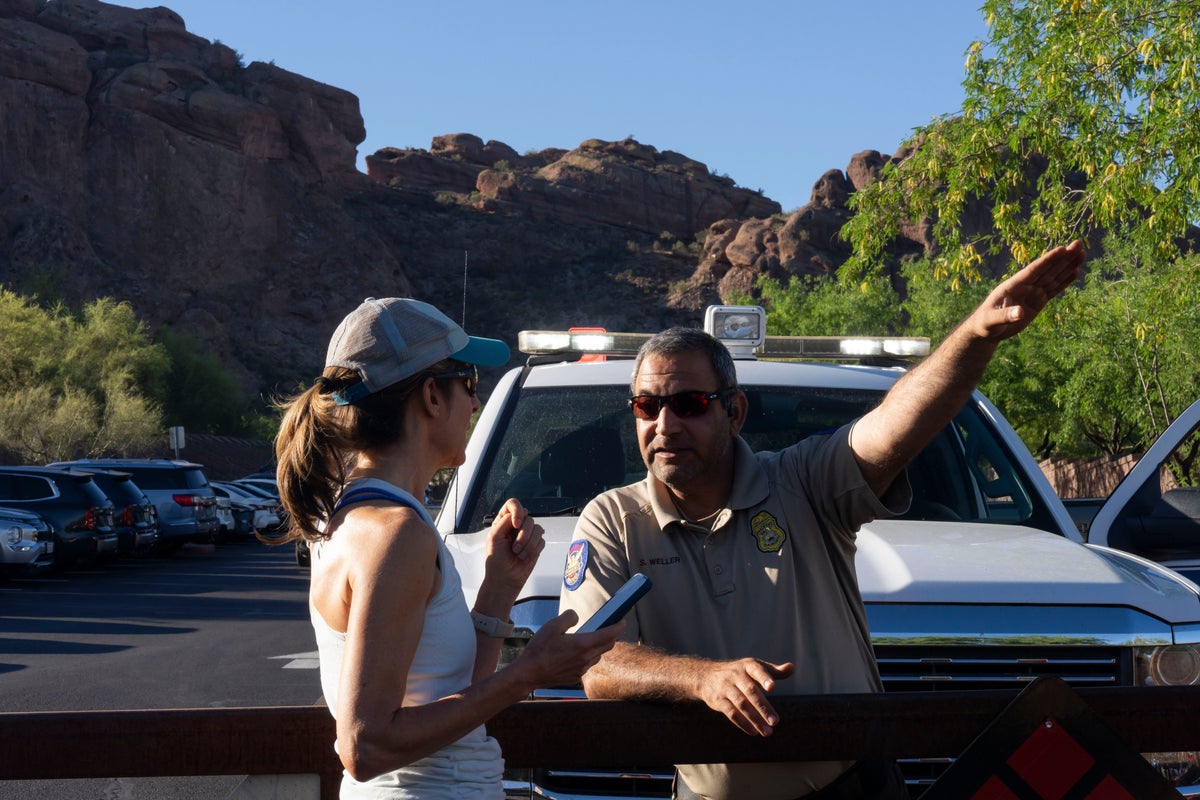
When 100-degree days arrive in March instead of May, the human body and the mechanical infrastructure we rely on are caught in a state of unreadiness. This week, over 40 million Americans faced heat alerts during a month typically reserved for light jackets and blooming wildflowers. In Phoenix, hikers were turned away from Camelback Mountain as rangers closed trails to prevent a surge in search-and-rescue calls. The reason is simple. At 110°F, the cooling mechanism of the human body—evaporative sweating—reaches a tipping point of inefficiency when the surrounding air is essentially a convection oven. For another view, check out: this related article.
The Grid Transition Trap
The most immediate and overlooked threat isn't just the heat itself, but the timing. Most major metropolitan areas in the Southwest and California are currently in "shoulder season." This is the period when utilities take massive power plants offline for scheduled maintenance, assuming that the mild spring weather will keep demand low.
It is a calculated risk that has now backfired. With temperatures running 25 to 35 degrees above normal, the California Independent System Operator (CAISO) saw peak demand surge to 36 gigawatts this week. This is a summer-level load hitting a winter-configured system. Related reporting on this trend has been published by The New York Times.
The Solar Cliff
The crisis is worsened by the "Duck Curve," a phenomenon well-known to energy analysts but rarely explained to the public. During the day, solar power flooded the grid, but as the sun dipped and the heat remained trapped in the asphalt and concrete of cities like Los Angeles and Las Vegas, the demand for air conditioning stayed pinned at the ceiling.
- Thermal Lag: Buildings that bake in 100-degree heat all day don't cool down the moment the sun sets.
- The Ramp: Utilities were forced to rapidly fire up natural gas "peaker" plants to fill the massive gap left by disappearing solar late in the afternoon.
- Infrastructure Stress: Transformers, which require cooler nighttime temperatures to shed the heat they build up during the day, are failing because the "lows" are staying in the 80s.
This is the hidden fragility of the modern grid. We are building a system that relies on predictable patterns, yet the patterns have dissolved.
Nebraska and the Grassland Tinderbox
While the desert states are used to extreme heat—even if not this early—the expansion of this heat dome into the Midwest is a different beast entirely. In Nebraska, temperatures spiked into the 90s this Saturday, followed by a violent 40-degree drop predicted for Sunday. This "weather rollercoaster" is a nightmare for the state's agricultural backbone.
The record heat has turned the Great Plains into a tinderbox. The Cottonwood and Morrill fires have already scorched over 1,200 square miles of Nebraska grassland. These aren't just forest fires; they are fast-moving range fires that threaten the winter wheat crops and the soil moisture necessary for the upcoming corn and soybean planting.
The heat isn't just "uncomfortable" for a Nebraska farmer. It is an economic predator. Winter wheat, which is currently emerging from dormancy, is being tricked into growing too fast by the heat, only to be potentially decimated by the inevitable frost that follows these spikes. Soil temperatures are rising prematurely, leading to a loss of moisture that no amount of spring rain can easily replace.
The Myth of the Cold Drink
The competitor's narrative suggests that "even Nebraska needs a cold drink," a phrase that trivializes the systemic collapse of our water management. The Southwest isn't just thirsty; it is bankrupt.
Lake Mead and Lake Powell, the two largest reservoirs in the United States, remain at approximately one-third and one-quarter capacity respectively. This week’s heatwave has accelerated snowmelt in the Rockies, which sounds like a win for water levels, but it is actually a disaster. Early melt means the water arrives in the reservoirs months before the peak irrigation season, leading to massive evaporation losses and a lack of flow when the crops actually need it in July.
The Hydroelectric Deadline
The Bureau of Reclamation is now facing a terrifying math problem. If Lake Powell drops below the "minimum power pool" elevation, the Glen Canyon Dam will stop producing electricity. This isn't a "maybe" scenario for the distant future. At the current rate of depletion and the increasing frequency of "virtually impossible" heat events, we are looking at a permanent loss of a major renewable energy source for the West.
Why the "New Normal" is a Lie
To call this the "new normal" is to suggest we have reached a plateau. We haven't. World Weather Attribution recently conducted a flash analysis of this March event and concluded it would have been "virtually impossible" without human-induced warming. The heat dome we are witnessing is fueled by an atmospheric feedback loop where dry soil leads to more heat, which leads to even drier soil.
The truth is that we are operating outside the historical playbook. Our building codes, our insurance premiums, and our water rights were all designed for a 20th-century climate that no longer exists.
- Insurance Retreat: Major insurers are already pulling out of markets in California and the Southwest, not just because of fire, but because the cost of maintaining habitability in a 115-degree world is becoming unfixable.
- Health Costs: Heat is the deadliest weather-related hazard in the U.S., killing roughly 2,000 people annually. When the heat hits in March, the body hasn't had the weeks of "acclimatization" it usually gets in May, making the risk of heatstroke significantly higher for the elderly and outdoor workers.
The survival of these regions depends on more than just "turning up the AC." It requires a fundamental redesign of how we move water, how we store power, and how we protect the people who grow the country's food. The heat in Yuma and the fires in Nebraska are the same alarm bell, ringing at a frequency we can no longer ignore.
Would you like me to analyze the projected impact of this heatwave on the 2026 winter wheat commodity prices?