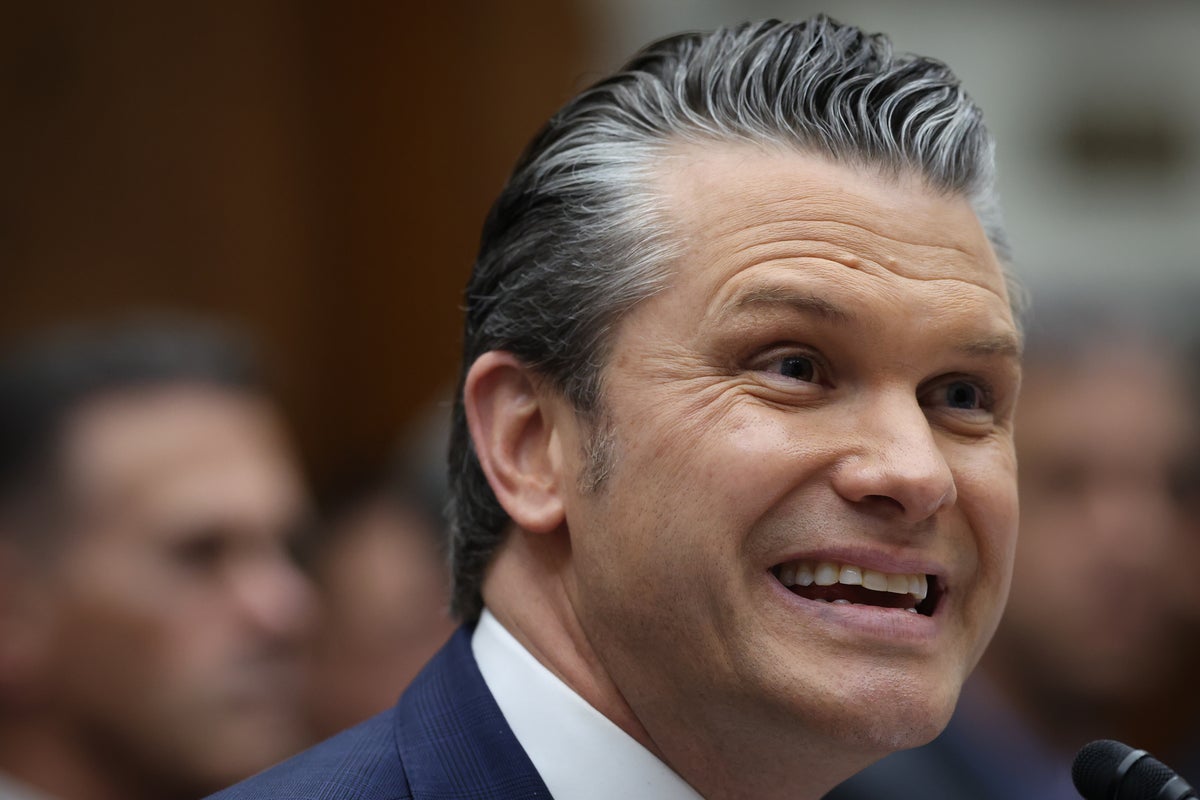
Pete Hegseth’s recent testimony before lawmakers has fundamentally altered the Pentagon’s trajectory regarding Middle Eastern intervention. The core takeaway is a shift from managed containment to a philosophy of decisive, high-impact force. Hegseth explicitly signaled that the era of "proportional response" against Iranian proxies is over. Under his leadership, the Department of Defense is pivoting toward a strategy where any provocation by Tehran or its affiliates is met with overwhelming, direct retaliation against Iranian infrastructure. This isn't just a change in rhetoric; it is a structural overhaul of how the United States projects power in the Persian Gulf.
For decades, the American military establishment operated on a logic of de-escalation. If a drone hit a base in Iraq, the U.S. struck a warehouse in Syria. Hegseth’s testimony suggests those days are dead. He views the previous decades of Middle Eastern engagement as a series of expensive, indecisive failures that drained American blood and treasure without achieving a lasting peace. His intent is to replace the "forever war" of counter-insurgency with a "surgical hammer" capable of crippling a nation-state's ability to function.
The Architecture of Escalation
The testimony revealed a specific worldview: deterrence is only effective if the adversary believes the consequence of action is total. Hegseth’s tenure has focused on stripping away the layers of bureaucracy that often slow down kinetic responses. He argued that the speed of modern warfare requires a commander-in-chief and a Secretary of Defense who are willing to bypass traditional diplomatic off-ramps in favor of immediate military clarity.
This approach carries a massive risk. By removing the buffer of proportional response, the United States moves closer to a full-scale regional conflict. Hegseth brushed aside these concerns, asserting that the fear of escalation is precisely what has emboldened Iran for forty years. He maintains that the Iranian regime respects only the credible threat of its own destruction. This is a gamble of historic proportions. It assumes the Iranian leadership is rational enough to back down when faced with total war, rather than doubling down in a desperate attempt at survival.
Reframing the Iranian Threat
Hegseth’s analysis goes beyond the nuclear program. He views Iran’s "gray zone" activities—maritime harassment, cyber-attacks, and the funding of the "Axis of Resistance"—as acts of war that have been ignored for too long. In his testimony, he detailed a plan to hold Tehran directly accountable for every rocket fired by a proxy group. If a Hezbollah cell strikes an American asset, the Hegseth doctrine dictates that the response may not land in Lebanon, but rather on an Iranian port or oil refinery.
This decoupling of the proxy from the patron is intended to force the Iranian Revolutionary Guard Corps (IRGC) to rein in its subordinates. However, critics point out that the IRGC does not always have granular control over every local militia. Hegseth’s policy creates a hair-trigger environment where a mistake by a low-level commander in Yemen could spark a direct missile exchange between Washington and Tehran.
Cleaning House at the Pentagon
Beyond the foreign policy shifts, the testimony provided a window into Hegseth’s internal war at the Pentagon. He has made it clear that his tenure is defined by a purge of what he calls "social engineering" within the ranks. His focus is on "lethality" as the sole metric for success. This has put him at odds with much of the career military brass and civilian leadership who believe that diversity and inclusion initiatives are essential for modern recruitment and retention.
Hegseth’s stance is uncompromising. He believes the military has become a laboratory for progressive politics, which he argues has weakened the warrior spirit. During the hearing, he faced intense questioning regarding his dismissal of senior officials who disagreed with his vision. His responses were short and sharp. He isn't interested in consensus. He is interested in a military that can win a conventional war against a peer or near-peer adversary without being bogged down by internal cultural debates.
The Personnel is Policy Problem
The reality of the Hegseth era is that the Department of Defense is undergoing its most radical cultural shift since the end of the Vietnam War. By prioritizing ideological alignment with his "lethality" mission, Hegseth is effectively creating a new officer class. This has led to a brain drain in certain sectors, particularly in intelligence and logistics, where career professionals are choosing to retire rather than navigate the new political environment.
This internal friction impacts readiness. A military in the midst of a cultural civil war is a military that might blink at the wrong moment. Hegseth argues the opposite. He believes that by removing the "distractions," he is sharpening the blade. The coming months will determine if this streamlining leads to a more effective fighting force or a hollowed-out institution struggling to maintain basic operational standards.
The Budget as a Weapon
Hegseth’s testimony also touched on the massive reallocation of resources required for his "Great Power Competition" focus. He wants to move money away from long-term occupation capabilities and toward high-tech munitions, hypersonic missiles, and naval expansion. He argued that the U.S. Navy is too small to protect global trade while simultaneously threatening the Iranian coastline.
The budget he defended is a blueprint for a nation preparing for a major conflict. There is little room for "nation-building" or humanitarian assistance. Every dollar is being scrutinized for its direct contribution to the destruction of an enemy’s assets. This shift is meeting resistance from Congress, where members are concerned about the economic fallout of cutting programs in their home districts.
The Hypersonic Gap and the Iranian Factor
A significant portion of the closed-door sessions reportedly focused on Iran’s advancement in missile technology. Hegseth expressed frustration that American bureaucracy has allowed adversaries to close the gap in areas like hypersonic flight. His solution is to cut the red tape surrounding defense procurement, essentially allowing private contractors to fail fast and iterate quickly.
He wants to turn the defense industry into a Silicon Valley-style ecosystem. This sounds efficient on paper, but it ignores the reality of why those regulations exist: to prevent the massive waste of taxpayer money on unproven systems. Hegseth is willing to accept some waste if it means getting a weapon into the field eighteen months faster. For him, time is the most valuable currency, and currently, he believes the U.S. is spending it poorly.
The Proxy War Paradox
One of the most contentious points of the testimony was the discussion of American involvement in regional alliances. Hegseth suggested that traditional allies in the Middle East need to "step up or step out." He is tired of the United States acting as the unpaid security guard for wealthy Gulf nations. This "America First" approach to defense implies that future interventions will only happen if there is a direct, undeniable American interest at stake.
Yet, this contradicts his stance on Iran. If the U.S. pulls back from its regional partners, it leaves a vacuum that Tehran is eager to fill. Hegseth’s answer to this paradox is that the U.S. doesn't need a massive footprint if it has the capability to strike from a distance with devastating accuracy. He prefers a "presence through power" rather than a "presence through people."
Redefining Victory
In the Hegseth worldview, victory isn't a stable democracy in the Middle East. Victory is an adversary that is too afraid to move. This is a return to a Cold War style of thinking, but without the predictable "red lines" that kept the peace between the U.S. and the Soviet Union. The lines under Hegseth are invisible and subject to change based on the immediate needs of American security.
The testimony made it clear that the U.S. is no longer interested in being the world's policeman. It wants to be the world's judge, jury, and executioner when its interests are crossed. This shift from a rule-based international order to a power-based order is the defining characteristic of Hegseth’s tenure. It is a philosophy that prioritizes strength over legitimacy, and action over consensus.
Intelligence and the New Guard
The Secretary also faced grilling over his relationship with the intelligence community. He has been vocal about his skepticism of the "Deep State," and his testimony reinforced that he intends to rely more on tactical military intelligence than on the strategic assessments of the CIA or the NSA. He believes these agencies have been too cautious in their assessments of Iranian intentions, often advocating for diplomacy when Hegseth sees a need for force.
This skepticism creates a dangerous feedback loop. If the leadership only listens to intelligence that supports its desired course of action, the risk of miscalculation grows exponentially. We have seen this play out before in the lead-up to the Iraq War. Hegseth, however, maintains that his military background gives him a "ground-truth" perspective that career analysts lack. He is betting his career, and American lives, on the idea that his instincts are better than the collective data of the intelligence community.
The Nuclear Threshold
While the public testimony focused on conventional war, the underlying tension was always the nuclear question. Hegseth’s aggressive posture is designed to prevent Iran from ever reaching "breakout" capacity. But by backed a cornered regime into a position where they feel their survival is at stake, he may be inadvertently speeding up their desire for a nuclear deterrent.
He dismissed this concern during the hearings, stating that a nuclear-armed Iran is an "existential impossibility" for the United States. This implies that the U.S. is prepared to launch a preemptive strike to prevent such a scenario. The testimony didn't just outline a plan for war; it outlined a justification for it.
Economic Warfare as a Prelude
The final pillar of the testimony involved the integration of military force with economic strangulation. Hegseth argued that the Pentagon and the Treasury Department should work as a single unit. He wants the military to be able to physically enforce sanctions, such as seizing oil tankers or destroying illicit facilities, without waiting for international legal frameworks to catch up.
This move toward "kinetic sanctions" would be a massive escalation in international law. It would effectively turn the U.S. military into a global maritime enforcement agency. Hegseth believes this is the only way to make sanctions truly "bite." If a nation continues to trade with an American adversary, Hegseth wants the authority to treat that trade as a hostile act.
The Consequences of the Shift
The immediate impact of this testimony is a heightened state of alert across the Middle East. Adversaries are recalculating their risks, and allies are questioning their commitments. Hegseth has succeeded in making the American position unpredictable, which he sees as a form of power. To everyone else, it looks like a recipe for a conflict that no one can control.
The Pentagon is now a different institution than it was even two years ago. The focus has narrowed, the tone has hardened, and the willingness to use force has become the default setting. Hegseth isn't just managing the military; he is remaking it in his image—one that is focused on a singular, violent resolution to the Iranian problem.
The strategy hinges on the belief that a massive display of force will bring peace. History rarely supports this conclusion. Usually, a massive display of force simply leads to a more massive response from the other side. Hegseth has placed his chips on the table. He is betting that the Iranian regime will fold before it is forced to fight for its life. If he is wrong, the resulting fire will consume more than just the political career of a controversial Secretary of Defense. It will redefine the 21st century as an era of renewed, high-intensity state conflict.
The American military is no longer a deterrent force; it is a strike force waiting for a target. Tehran is currently the primary focus, but the methods being established under Hegseth’s leadership are designed to be applied globally. The world is watching a superpower abandon the nuances of diplomacy for the clarity of the sword. There is no turning back from this path once the first missile is fired. The doctrine is set, the personnel are in place, and the triggers are live. All that remains is the spark.