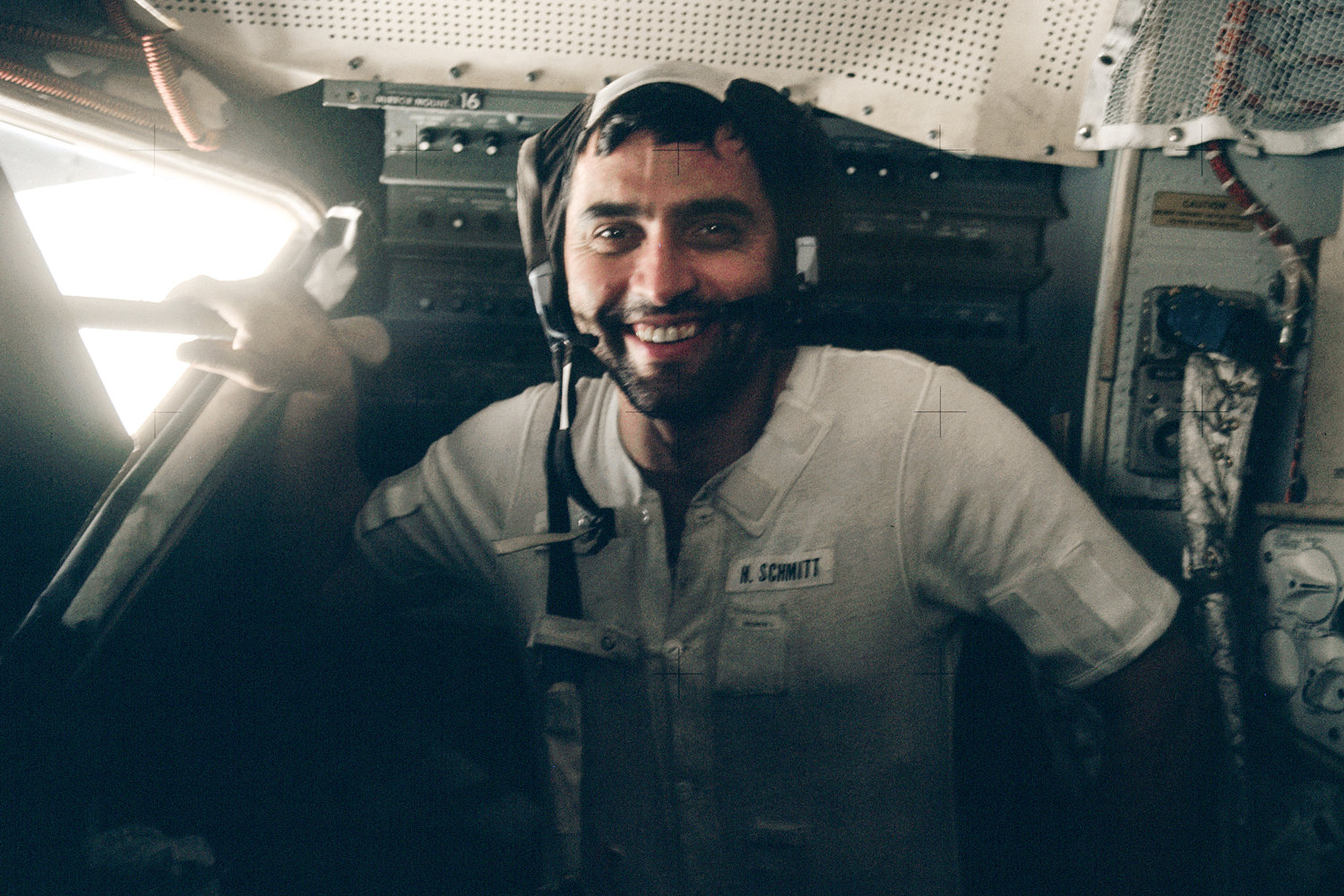
Charlie Duke was the tenth human to walk on the lunar surface, a feat he accomplished during the Apollo 16 mission in 1972. As NASA prepares to send the Artemis II crew around the Moon, Duke’s advice centers on the violent reality of spaceflight that modern simulations cannot fully replicate. His message to the new generation of explorers is grounded in the unpredictability of the lunar environment and the absolute necessity of manual proficiency when automated systems fail. While the technology has evolved from 8-bit processors to integrated glass cockpits, the fundamental risks of deep space—radiation, high-velocity reentry, and total isolation—remain unchanged since the Nixon administration.
The Ghost of Apollo 16
When we look at the Artemis II mission, it is easy to get distracted by the shiny Orion capsule and the massive power of the Space Launch System. But the veterans of the Apollo era see something different. They see the thin margin between a successful mission and a catastrophic loss of crew. Charlie Duke remembers the vibration. He remembers the way the Saturn V shook until he thought the bolts would shear off.
The Artemis II crew will face a similar baptism. Their mission is a checkout flight, a high-stakes test of a life support system that has never been used by humans in deep space. Duke has been vocal about the fact that no matter how many hours you spend in a centrifuge or a virtual reality headset, the first ten minutes of a launch are a physical assault. The Orion capsule is designed to be more comfortable than the cramped Apollo command module, but the physics of escaping Earth's gravity well haven't softened in fifty years.
The Simulation Gap
One of the most significant hurdles for the Artemis II astronauts is the reliance on digital automation. In 1972, Duke and his commander, John Young, had to be prepared to fly the Lunar Module manually if the primitive guidance computer froze. Today’s astronauts deal with millions of lines of code. The danger here is a phenomenon pilots call "automation complacency."
If a sensor fails on the far side of the Moon, the crew cannot wait for a software patch from Houston. They have to understand the Newtonian mechanics of their orbit with a level of intimacy that goes beyond pushing buttons on a touchscreen. Duke’s insistence on "stick and rudder" skills is not just the nostalgia of an old pilot; it is a survival strategy. If the primary flight computer on Orion glitches during the critical TLI (Trans-Lunar Injection) burn, the crew has seconds to react before they are flung into a permanent solar orbit or dragged back into a destructive atmospheric skip.
The Loneliness of the Far Side
Artemis II will take its four-person crew further from Earth than any human has traveled in history. This is not the low-Earth orbit of the International Space Station, where a rescue craft or a quick descent is always an option. Once they commit to the lunar trajectory, they are on a "free-return" path that dictates their fate for days.
Duke often speaks about the psychological weight of seeing the Earth shrink to the size of a marble. At that distance, the lag in communication becomes a factor. You are truly alone. The Artemis II crew—Reid Wiseman, Victor Glover, Christina Koch, and Jeremy Hansen—will be the first to experience this profound isolation in the 21st century. They aren't just testing a heat shield; they are testing the limits of human composure.
Radiation and the Invisible Killer
During the 1970s, the Apollo missions benefited from a period of relatively low solar activity. We got lucky. The Artemis missions are scheduled during a more volatile solar cycle. The Orion spacecraft has a dedicated "storm shelter" area where the crew can huddle during a Solar Particle Event, using water tanks and cargo as shielding.
Duke’s advice to the crew includes a grim acknowledgment of the environment. Unlike the ISS, which sits safely within the Earth’s Van Allen radiation belts, Orion will be exposed to high-energy galactic cosmic rays. These particles can slice through DNA like microscopic bullets. The veteran's perspective is simple: you accept the dose because the objective is worth the risk. But the industry must be honest about the long-term health costs of deep space exploration, which remain a grey area in aerospace medicine.
The Reentry Problem
The most dangerous part of the Artemis II mission isn't the launch or the moon-loop; it’s the return. Orion will hit the Earth’s atmosphere at roughly 25,000 miles per hour. The heat shield must withstand temperatures of 5,000 degrees Fahrenheit, nearly half as hot as the surface of the sun.
In the Apollo days, the heat shield was a monolithic piece of ablative material. Orion uses a different design, a "tiled" system that is more efficient but introduces more failure points. Duke knows that at those speeds, even a minor flaw in the shield’s resin can lead to a "burn-through." There is no backup for a heat shield. You either hold together, or you vaporize.
The Comparison of Kinetic Energy
To understand the violence of this return, consider the math. The kinetic energy of a spacecraft returning from the Moon is vastly higher than one returning from the ISS.
$$E_k = \frac{1}{2}mv^2$$
Because velocity ($v$) is squared, doubling your speed results in four times the energy that must be dissipated as heat. The Artemis II crew is coming home twice as fast as a SpaceX Crew Dragon returning from the space station. This is the "Brutal Physics" that Duke warns about. It is an unforgiving calculation that leaves zero room for engineering shortcuts or "good enough" manufacturing.
Hardware vs. Software
There is a growing tension in the aerospace industry between the "move fast and break things" ethos of private companies and the "safety at all costs" culture of NASA. Artemis is a hybrid of both. The SLS rocket is built using decades-old shuttle technology, while the Orion capsule is a modern marvel.
Charlie Duke has seen what happens when these two worlds collide. During Apollo 16, a gimbal motor on the Service Module malfunctioned, nearly scrubbing their moon landing. They had to troubleshoot a mechanical hardware failure using limited data. In the modern era, a similar failure might be obscured by layers of software abstraction. The veteran’s warning is to never trust the sensors implicitly. If the seat of your pants tells you the ship is yawing, but the screen says you’re straight, believe the ship.
The Cost of the Second Giant Leap
We are no longer in a space race fueled by Cold War desperation. The budget for Artemis is scrutinized by a public that often wonders why we are going back to a "dead rock" when there are problems at home. Duke’s rebuttal to this has always been about the expansion of human horizon. But as an analyst, one must look at the sustainability of the program.
Apollo was canceled because it was too expensive to maintain. Artemis is designed to be sustainable, yet the per-launch cost of the SLS is staggering—estimated at over $2 billion. If Artemis II suffers even a minor setback, the political will to continue to Artemis III (the actual landing) could evaporate. The crew carries not just their lives, but the entire future of American deep-space presence on their shoulders.
Mastering the Lunar Orbit
Artemis II will perform a complex maneuver known as a "hybrid free-return trajectory." This allows the spacecraft to use the Moon’s gravity to whip it back toward Earth without a massive engine burn. It is a masterpiece of orbital mechanics, but it requires pinpoint accuracy.
Duke’s experience with the lunar gravity field—which is "lumpy" due to mass concentrations called mascons—is vital intelligence. The Moon's gravity is not uniform. As Orion passes behind the Moon, it will be tugged and nudged by these invisible forces. The crew must be prepared for the ship to behave in ways that the simulators in Houston, which assume a more uniform gravity model, might not perfectly predict.
The Final Descent
The mission ends in the Pacific Ocean. Parachute deployment is the final hurdle. During Apollo 15, one of the three main chutes failed to open. The crew survived, but it was a reminder that the mission isn't over until the hatch opens on the recovery ship.
Charlie Duke’s advice to the Artemis II team isn't found in a technical manual. It is the wisdom of a man who looked at the blackness of the void and saw the fragility of the machines we build to conquer it. He knows that the most sophisticated computer in the Orion capsule is the three-pound brain of the astronaut sitting in the commander's seat.
Stop looking at the telemetry and start feeling the spacecraft. The Moon is a harsh teacher, and it does not offer retakes. Training ends when the engines ignite; after that, it's just a matter of who is better at managing the chaos. Success in deep space is never guaranteed by the hardware; it is earned by the people who refuse to let the hardware dictate the outcome.