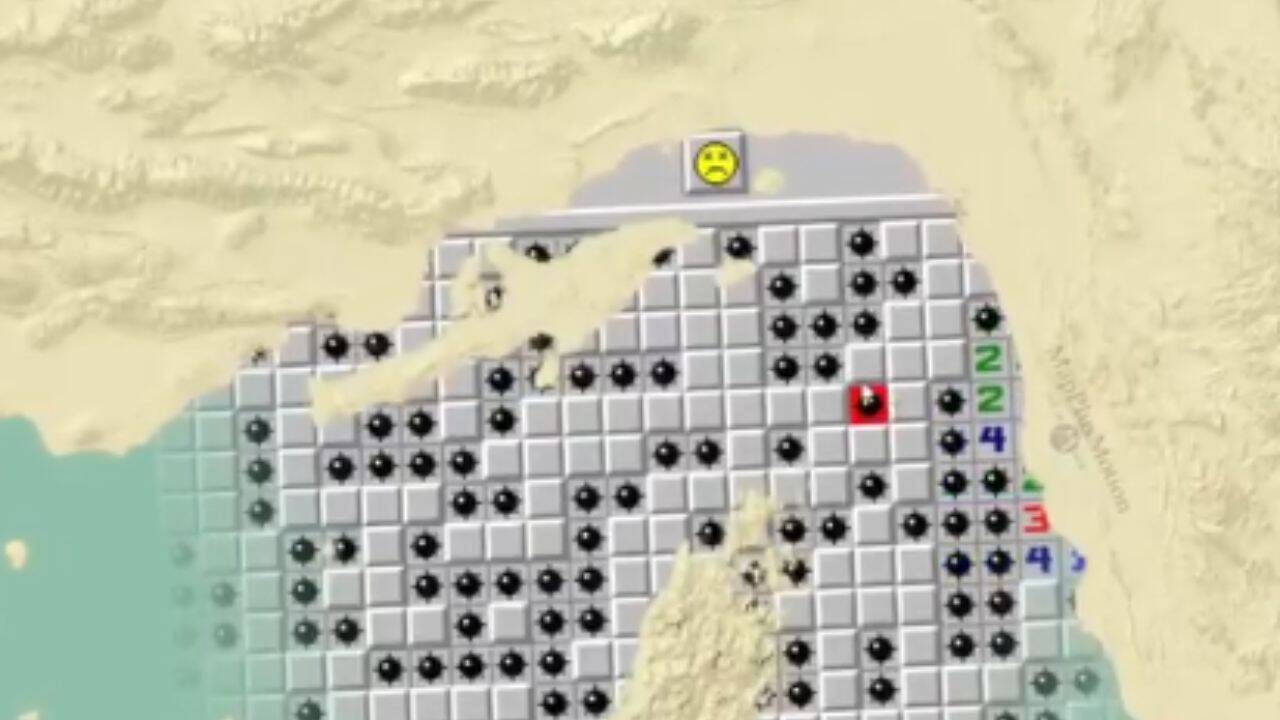
The recent viral video published by Iran's diplomatic mission in Sierra Leone overlaying a classic Windows Minesweeper grid onto a 3D map of the Strait of Hormuz is more than a juvenile internet meme. It is a chillingly accurate reflection of asymmetric psychological warfare. When the embassy broadcasted "Habibi, come to Iran!" alongside a simulation of hidden marine ordnance, Washington laughed it off as online bluster. They are missing the point. This digital provocation exposes the exact vulnerability that asymmetric actors exploit: the astronomical cost imbalance between deploying cheap explosive devices and the grueling, multi-billion-dollar machinery required to sweep them.
Naval chokepoints dictate global energy flow. Every barrel of crude moving out of the Persian Gulf runs an invisible gauntlet.
The Economics of Asymmetric Chokepoints
To understand why a cartoon grid rattles military planners, look at the ledger. A vintage Soviet-designed or domestically reverse-engineered contact mine costs a few thousand dollars to manufacture and drop into a shipping lane. Countering that threat requires the deployment of specialized mine countermeasures vessels, nuclear-powered submarines, elite Navy divers, and airborne mine-hunting helicopters.
The financial disparity is staggering. A single specialized mine-hunting drone or hull refit costs orders of magnitude more than the entire inventory of an adversary's coastal defense cache.
- Low-Cost Deployment: Small, radar-evading fiberglass boats can seed a shipping lane under the cover of night without leaving a distinct thermal signature.
- High-Cost Remediation: Scanning a thirty-mile corridor for acoustic, magnetic, and pressure-activated triggers takes days of standstill traffic.
- Systemic Friction: Insurance rates for commercial supertankers spike the moment a single explosive device is confirmed, choking global supply chains instantly.
When Tehran maps a video game over a vital economic artery, they are highlighting a persistent truth of modern maritime conflict. You do not need to win a naval battle to paralyze international commerce. You only need to create enough uncertainty to make ship captains hesitant to weigh anchor.
The Reality of Clearing Operations
Statements from the Pentagon routinely project absolute control over contested waterways. Officials note that sweepers routinely clear designated corridors, ensuring uninterrupted passage for crude carriers.
Reality on the water is messier. Sea mines do not simply sit passively waiting to be bumped. Modern variants utilize sophisticated logic gates, resting dormant through multiple sweeps before activating on the tenth or twentieth vessel signature.
Take a hypothetical scenario involving an automated acoustic mine resting fifty meters below the surface of a shipping channel. Traditional mechanical sweeps can cut tethered contact cables, but bottom-resting smart mines require high-resolution sonar identification and targeted explosive neutralization by specialized divers. If an adversary claims they have replenished their hidden inventory faster than coalition forces can verify the seabed, the psychological objective is already achieved. The sea lane remains technically open, yet commanders hesitate.
Information Warfare as Statecraft
The choice of platform for this message matters. Diplomatic outposts far from the Middle East, such as the embassy in Freetown, act as unconventional megaphones for state-sanctioned trolling. By framing a high-stakes geopolitical standoff as a retro desktop puzzle game, Tehran bypasses traditional diplomatic channels to directly target Western civilian populations scrolling through social feeds.
This memetic warfare weaponizes irony. It reduces complex naval deployments to a binary click: safe square or fatal detonation.
Decades of watching defense strategies evolve reveal a recurring blind spot in Western military leadership. Technologically superior forces build magnificent, expensive hammers, assuming every geopolitical problem is a nail worth crushing. Adversaries adapt by turning the environment itself into a weapon. They do not need to match carrier strike groups drone for drone. They only need to convince the global market that every wave in the Persian Gulf conceals an invisible trigger.
The grid remains on the screen. The tankers keep moving, for now. Every transit through the strait becomes another square clicked in a high-stakes match where nobody knows where the next hidden explosive lies.