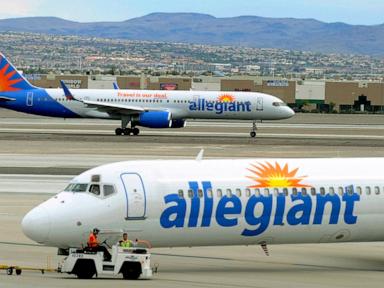
The union of Allegiant Air and Sun Country is not a victory lap for the budget traveler. It is a defensive crouch. By merging these two ultra-low-cost carriers (ULCCs), the industry is witnessing a frantic consolidation designed to survive a high-interest, high-cost environment that has made the old "nickel and dime" model nearly impossible to sustain independently. This move creates a massive niche player, but it also signals the end of an era where cheap seats were subsidized by investor patience and low fuel costs.
The new entity suddenly commands a fleet and a route map that stretches from the secondary airports of the Midwest to the vacation hotspots of Florida and Mexico. On paper, it looks like a powerhouse. In reality, it is a scramble for scale. The merger is less about "offering more choices" and more about preventing the total collapse of the ULCC segment under the weight of rising labor demands and the relentless expansion of legacy carriers into the basic economy space.
A Monopoly on Flyover Country
For decades, Allegiant and Sun Country operated on the fringes. They didn't fight Delta at Minneapolis-St. Paul or United in Chicago. Instead, they went where the big players wouldn't touch: Peoria, Sioux Falls, and Punta Gorda. This merger locks down those underserved markets. If you live in a mid-sized city in the Rust Belt, your options for a direct flight to the sun just dropped from two to one.
The efficiency here is found in the "unbundled" revenue model. These airlines don't sell transportation; they sell a base fare and then auction off the rest of the experience. Water, carry-on bags, and even the privilege of sitting next to a family member are all high-margin add-ons. By combining, they can now rotate aircraft more effectively between Sun Country’s seasonal scheduled service and Allegiant’s fixed-base operations.
But there is a catch. When a market loses its only competing budget carrier, prices do not stay low. History shows that consolidation in the airline industry almost always results in a "creep" of base fares. The new Allegiant-Sun Country won’t just be competing with Southwest; they will be setting the floor for what a vacation costs for the American middle class.
The Pilot Problem That Forced the Hand
You cannot fly planes without pilots. This is the simple, painful truth that triggered this merger. Over the last three years, legacy carriers like American and Delta have poached pilots from budget airlines at an unprecedented rate. They offer better pay, better schedules, and the prestige of flying wide-body jets on international routes.
Allegiant and Sun Country were bleeding talent. By merging, they gain a unified seniority list and, theoretically, more leverage to negotiate a contract that can actually retain a flight crew. However, this comes at a massive cost. Integrating two different workforces is a nightmare. Different unions, different pay scales, and different cultures usually lead to years of operational friction.
The Fleet Fragmentation Risk
Allegiant has built its empire on a mix of Airbus A320s and a massive pending order for Boeing 737 MAX jets. Sun Country is a dedicated Boeing 737 shop. While this sounds like a match made in heaven, the technical reality is a logistical headache.
- Maintenance redundancy: Keeping parts for both engine types at every outstation is expensive.
- Pilot cross-training: A pilot certified for an Airbus cannot simply hop into a Boeing 737.
- Scheduling rigidity: The flexibility promised by the merger is hampered until the fleet is standardized, which could take a decade.
If they cannot harmonize these fleets quickly, the "synergies" promised to Wall Street will evaporate into maintenance hangars and training centers.
Ancillary Revenue is the Only Target
Let’s be clear about how these companies make money. It isn’t the $49 fare. It is the credit card. Both Allegiant and Sun Country have pivoted toward becoming financial services companies that happen to operate aluminum tubes. Their loyalty programs and co-branded credit cards are the real profit centers.
The merger allows them to pool their data. They now have a granular view of the spending habits of millions of travelers who prioritize price over everything else. This data is the collateral used to back loans and satisfy shareholders. The "airline" part of the business is essentially a customer acquisition tool for the "bank" part of the business.
This shift explains why the onboard experience continues to degrade. There is no financial incentive to make the flight comfortable. There is only an incentive to make the flight happen as cheaply as possible so the customer stays in the ecosystem of the loyalty program.
The Regulatory Blind Spot
The Department of Justice has been aggressive in blocking mergers recently, most notably the JetBlue-Spirit deal. Why did this one go through? Because Allegiant and Sun Country argued that they are "complementary" rather than "competitive."
They successfully convinced regulators that because they rarely fly the same routes, their union doesn’t hurt competition. This is a clever bit of legal maneuvering. While they may not share many routes, they compete for the same dollar. A family in Minnesota might choose between a Sun Country flight to Phoenix or an Allegiant flight to Destin. Now, that choice is managed by the same boardroom.
By avoiding the "overlap" trap, they have created a de facto monopoly on low-cost leisure travel in the interior of the country. The regulators looked at the map, but they failed to look at the wallet.
The Charter Hedge
Sun Country brings something to the table that Allegiant desperately needed: a diversified revenue stream through cargo and charters. Sun Country flies for Amazon and handles massive military and sports charters. This provides a steady stream of income that isn't dependent on whether a family in Ohio feels like going to Vegas this month.
In a recession, leisure travel is the first thing people cut. By absorbing Sun Country’s charter and cargo contracts, the new Allegiant becomes more resilient. They can pivot their aircraft away from struggling passenger routes and toward guaranteed-contract flying. This is a brilliant move for the company’s survival, but it does nothing for the traveler who finds their favorite route canceled because the plane was redirected to haul packages for a retail giant.
The Myth of the Better Experience
The press releases will talk about "more destinations" and "easier booking." Don't believe them. The primary goal of any airline merger is to reduce "redundant" costs. In plain English, that means fewer customer service agents, more automated phone trees, and tighter seating configurations to maximize revenue per square inch.
The ULCC model is built on high utilization. The planes need to be in the air 12 hours a day to be profitable. When you combine two systems, the complexity of managing that schedule grows exponentially. One thunderstorm in Denver can now ripple through a much larger network, causing delays that stretch from coast to coast.
What Travelers Should Actually Expect
- Fee Standardization: If one airline had a cheaper bag fee, expect it to rise to the level of the more expensive partner.
- Less Frequency: Instead of two airlines flying to a destination three times a week, the merged company might fly four times a week total, reducing overhead.
- Aggressive Credit Card Pitching: Expect the flight attendants to spend more time selling Visa cards than checking seatbelts.
The industry is watching to see if this "leisure giant" can actually execute. If they fail to integrate the tech stacks—the software that handles bookings and crew scheduling—we will see a repeat of the Southwest Christmas meltdown, but on a smaller, more concentrated scale.
The Real Winner is Neither the Airline Nor the Flyer
The winners here are the private equity firms and institutional investors who have been waiting for an exit strategy. The ULCC market was overcrowded. There were too many players chasing the same budget-conscious traveler. This merger thins the herd and protects the profit margins of the remaining carriers.
For the traveler, the "larger budget airline" is a mirage. It is a larger corporation with more power to dictate terms to a consumer who has fewer places to turn. We are moving toward a tiered aviation system: a luxury experience for those who can pay for the "Big Three," and a flying bus service for everyone else.
If you want to see the future of American travel, look at the seat pitch on a Sun Country jet and the boarding process of an Allegiant flight. Now, imagine they are the only game in town. That isn't progress; it's a consolidation of necessity in a market that no longer rewards independence.
The next time you see a $59 fare, look closely at the fine print. You aren't a passenger anymore; you are a data point in a massive, consolidated experiment in how much a traveler is willing to endure for the sake of the destination. The merger is complete, the competition is dead, and the bill is about to come due.