Basketball fans who lived through the turn of the millennium remember the smell of popcorn mixed with nervous anticipation under the soaring white arches of what was then called the Staples Center. It was a concrete palace built for stars, but for a long time, it lacked a soul. The franchise that owned the parquet floor had already erected monuments to its past. Jerry West stood frozen in a golden drive. Magic Johnson grinned his electric smile toward the downtown streets. Kareem Abdul-Jabbar raised his skyhook to the Los Angeles sky.
Yet an enormous, glaring vacancy remained on that concrete plaza. Recently making waves in this space: Why Hiring Denny Bruce Won't Save Burton and Why Snowboarding Despises Corporate Saviors.
The man who orchestrated eleven championship parades, who turned volatile egos into synchronized poetry, who sat quietly on the bench with a notebook and a closed-eye stillness while chaos erupted around him, had no bronze likeness.
That oversight is finally coming to an end. Phil Jackson is getting a statue outside Crypto.com Arena in 2027. More information into this topic are detailed by ESPN.
When the news drops, the casual observer nods and scrolls away. Another plaque for another legend in a city built on the self-mythologizing of celebrity. But anyone who watched the purple and gold during those frantic years understands the profound weight of this addition. This is not merely about honoring a man who won more rings than fingers to hold them. This is about cementing a philosophy that flew in the face of modern sports management, a method so bizarre and counterintuitive that critics labeled it academic nonsense right up until the moment it destroyed the competition.
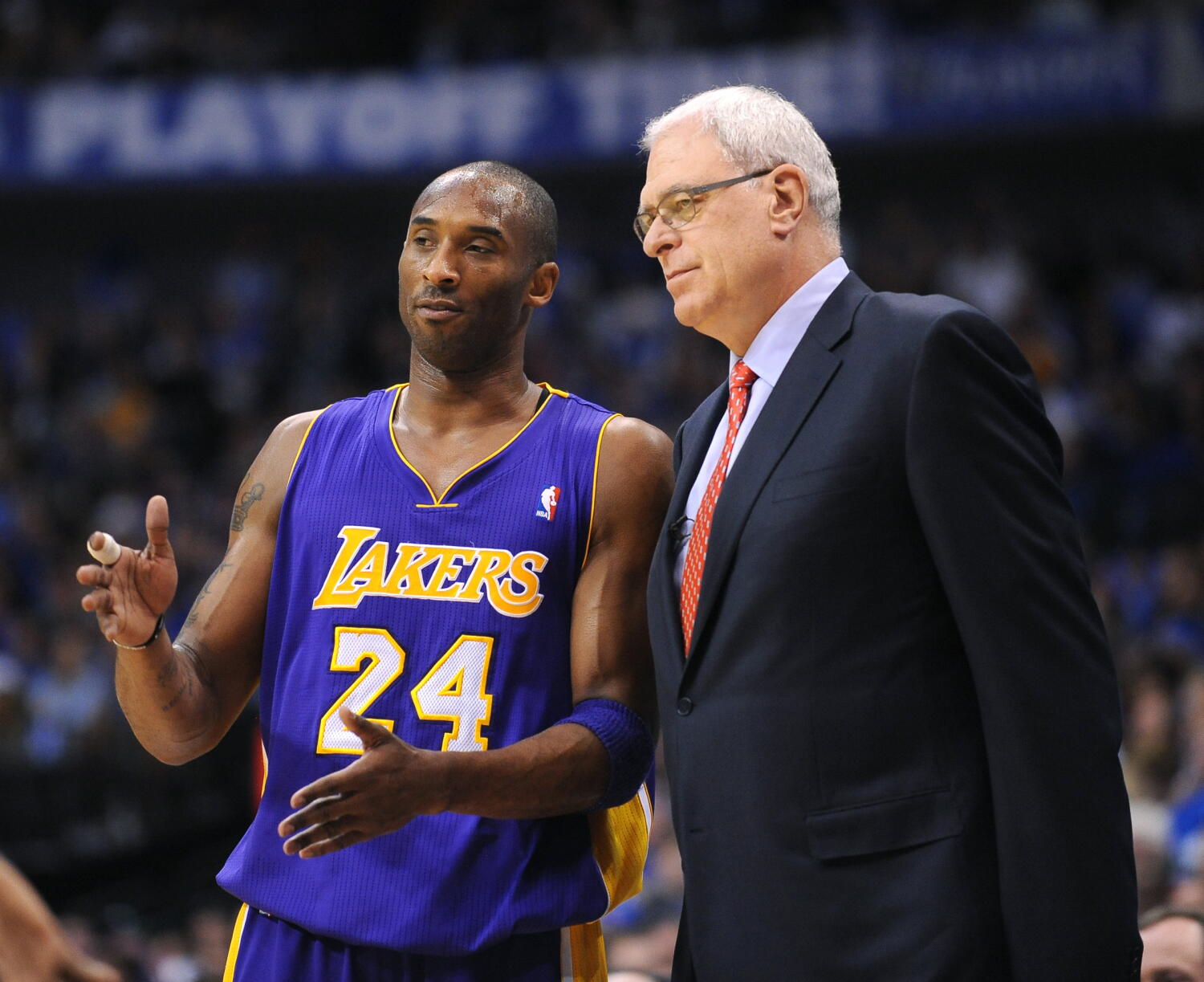
Consider what happens when you put two of the most fiercely competitive alpha males on the planet into the same locker room. Shaquille O'Neal was an unstoppable physical anomaly, a laughing titan who dominated the paint with the force of a tectonic plate. Kobe Bryant was an obsessive, midnight-gym-rat perfectionist who viewed basketball not as a game, but as a blood sport requiring total psychological eradication of the opponent.
By all laws of human nature, they should have torn each other apart. In many ways, they did. The friction between them was legendary, documented in whispered team leaks, glaring practice sessions, and passive-aggressive media salvos. A conventional coach would have screamed. A conventional manager would have cracked the whip, demanded unity, and forced corporate harmony.
Phil Jackson did something entirely different. He handed out books.
To understand the absurdity of this approach, imagine walking into a high-stakes corporate boardroom where billions of dollars hang in the balance, where the employees are hyper-aggressive, exhausted, and mutually resentful. Now imagine the boss ignores the spreadsheets, closes the door, and assigns reading material on Native American spirituality or Zen meditation.
That was Jackson. He was the Zen Master, a moniker given to him half in reverence, half in mockery. He understood that basketball teams are fragile ecosystems. If you squeeze them too tightly, they shatter. If you let them run wild, they self-destruct. His job was not to dictate every dribble or micromanage every defensive rotation. His job was to create an invisible container of safety and purpose where egos could dissolve into something larger.
This was the embodiment of the triangle offense, a system invented by Tex Winter but brought to lethal life by Jackson. On paper, the triple-post offense is a geometric puzzle. It requires spacing, unselfish passing, floor vision, and an almost telepathic understanding of where your teammate is moving before they even make the cut. It is an egalitarian nightmare for players who want to pad their scoring averages. It demands sacrifice.
Kobe hated it initially. He wanted the ball. He wanted to score fifty points. Shaq wanted to dominate every single possession down low.
Jackson's genius lay in his patience. He did not break their spirits; he redirected them. He used the triangle as a mirror. If you step outside the flow of the offense, the offense fails, and you look foolish. If you surrender to the flow, you achieve immortality. Three titles with Chicago. Three titles with Los Angeles. Five more as a player with the New York Knicks. Eleven rings as a head coach, surpassing the legendary Red Auerbach.
Yet numbers fail to capture the sensory reality of a Lakers game during the peak of the three-peat era. The roar of the crowd was not a polite applause; it was a physical pressure wave that hit you in the chest the moment you walked through the tunnel. Celebrities sat courtside, sunglasses indoors, pretending not to watch the game while actually memorizing every referee whistle. The air smelled of expensive perfume, stale beer, and the electric sweat of twenty thousand people holding their collective breath.
And in the center of it all, sitting with his legs crossed, was Jackson.
While opposing coaches turned purple, screaming hoarse insults at referees and chewing through a dozen sticks of gum per quarter, Jackson often sat motionless with his eyes closed. Was he meditating? Was he sleeping? Was he calculating the exact defensive breakdown that would manifest three minutes from now? The players never knew for sure, and that uncertainty was a weapon in its own right. It projected a serene, unshakeable confidence that bled into the huddles during high-pressure playoff moments.
When the Lakers hoist his statue in 2027, it will anchor that era in physical space forever. It joins a pantheon of sports history where fans pilgrimage to touch the bronze, take blurry photographs, and whisper about the old days.
Statues are frozen in time, but the legacy of the Zen Master was always about movement. It was about the pass before the assist. It was about the breath before the shot. It was about finding stillness in the middle of a roaring arena.
Years from now, a young kid will walk up Star Plaza, look up at the towering bronze likeness of a man holding a playbook and a quiet smile, and ask a parent who he was.
The parent will point to the Staples Center—now Crypto.com Arena—and explain that this man didn't just win games. He taught a city how to breathe together.