Dawn breaks differently in the rugged expanse of Balochistan. There is no gentle awakening here, no soft light filtering through quiet streets. Instead, the sun claws its way over jagged ridges, casting long, bruised shadows across valleys that have long forgotten the meaning of peace.
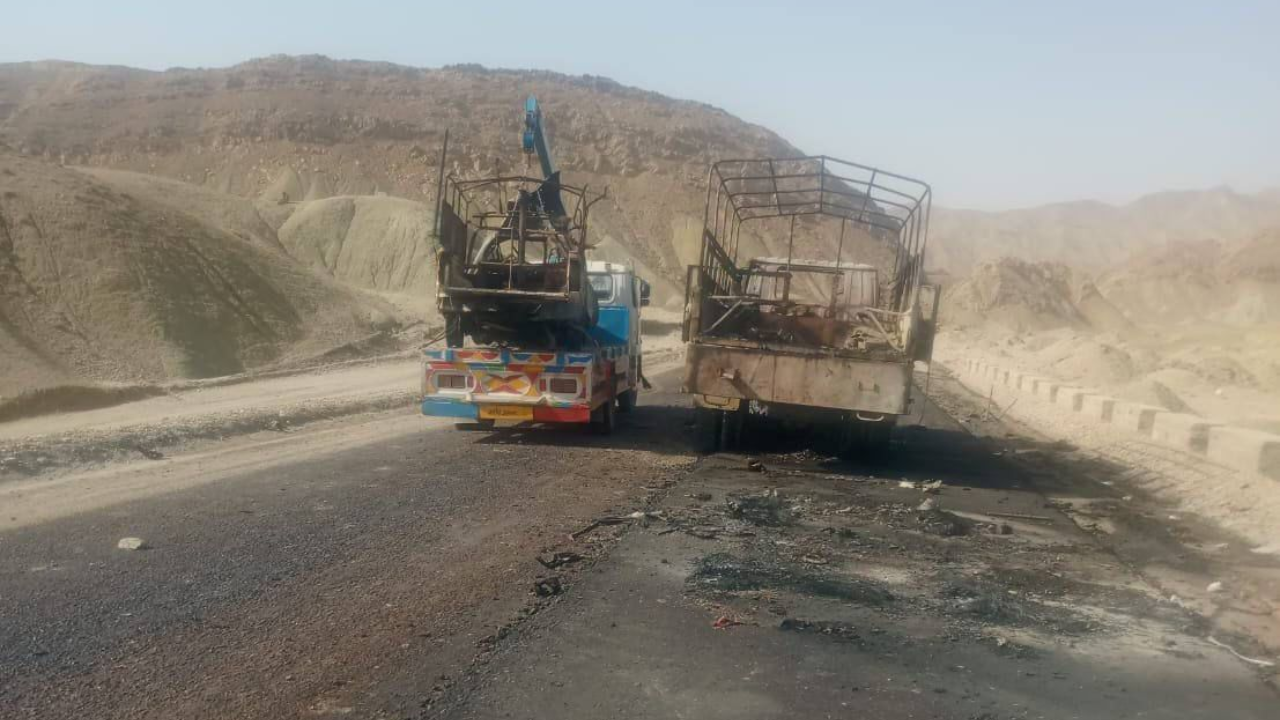
Dust hangs heavy in the morning air. A convoy of military vehicles hums, idling on a desolate stretch of highway. For the men inside, this is routine. Or at least, it is supposed to be. Don't forget to check out our previous coverage on this related article.
Then, the world shatters.
Explosions tear through the stillness. Gunfire cracks, echoing off the stone walls of the canyon with terrifying precision. In a matter of minutes, twenty-five Pakistani military personnel are dead, their lives claimed in a coordinated wave of violence attributed to the Balochistan Liberation Army. To read more about the background here, NPR provides an in-depth breakdown.
To the rest of the world, this is a headline. It is a data point swallowed by a 24-hour news cycle. It is a casualty count scrolling across a screen before fading into the background noise of global conflict. But numbers do not bleed. Statistics do not leave behind empty chairs at dinner tables, or mothers staring blankly at folded flags.
Consider what happens next.
Back home, thousands of miles away from the smell of cordite and burning rubber, a phone rings. A wife answers. Or a father picks up, his hand trembling before he even hears the voice on the other end. The news arrives not as a shockwave, but as a suffocating weight that drops over a household, changing the architecture of everyday life forever.
This is the hidden cost of the ongoing insurgency in Pakistan's largest and most resource-rich province.
Balochistan is a land of profound contradictions. It sits atop vast reserves of natural gas and mineral wealth, yet its people often grapple with deep poverty and systemic neglect. For decades, a simmering resentment has boiled beneath the surface. Local nationalist groups, most notably the Balochistan Liberation Army, argue that the region's resources are plundered while the local population receives little in return.
Silence.
That has been the default response from many corridors of power. When grievances are met with closed doors, desperation often finds a darker outlet. The BLA operates in the shadows, executing hit-and-run attacks, targeting infrastructure, and ambushing security forces with ruthless efficiency. They claim to fight for liberation. Yet, the collateral damage of their campaign paints a grim picture of escalating bloodshed that consumes lives on both sides of the barricade.
Security forces find themselves caught in an impossible vise. They are sent to patrol hostile terrain where every rock could conceal an improvised explosive device, and every civilian could be an informant or a victim waiting to happen. They are symbols of the state, which makes them prime targets for insurgents seeking to prove that the government cannot protect its own territory.
When twenty-five soldiers fall in a single coordinated assault, it is not merely a tactical failure or a localized skirmish. It is a seismic tremor that reverberates through the entire military apparatus in Islamabad. It forces commanders back to the drawing boards, questioning intelligence gaps, response times, and the sheer sustainability of holding hostile ground against an elusive enemy.
Yet, behind the strategic briefings and the official press statements lies the human element that gets lost in translation.
Imagine a young recruit, barely twenty-one years old, lacing up his boots before dawn. He adjusted his helmet, thinking of the letter he planned to send home next week. He was not a politician. He was not a strategist drawing lines on a map. He was a son, a brother, a kid who joined the ranks because it offered stability in an unstable world.
Now, his story ends in the dust of a Balochistan highway.
The cycle of violence feeds on itself. Every attack invites a harsher crackdown. Every crackdown deepens the grievances of the local population, who find themselves squeezed between the heavy hand of state security and the ruthless coercion of insurgent factions. Trust evaporates. Fear takes its place. In this vacuum, peace becomes an impossible mirage, shimmering just out of reach on the sun-baked asphalt.
There are no easy answers here. Military might alone cannot heal a fractured province, nor can empty political promises undo decades of economic alienation. Until the root causes of unrest are addressed with genuine dialogue and structural reform, the mountains of Balochistan will continue to echo with gunfire.
The dust eventually settles on the highway. The wreckage is cleared, the reports are filed, and the official statements are archived. But in quiet homes across the country, the empty chairs remain.
And the wind continues to sweep across the ridges, carrying the ghosts of a conflict that refuses to die.