History smells like old iron and wet wool.
I remember sitting in a dimly lit office in Islamabad over a decade ago, staring at a teletype machine that hummed with the steady, anxious rhythm of a failing heart. Outside, the dust of the Potwar plateau settled over windshields, and inside, the conversation was always the same. It was about borders that looked like scars drawn by a drunken cartographer. It was about alliances written on water.
When leaders stand at podiums and speak of collective security, they use polished nouns. They talk about defense pacts, strategic depth, and mutual deterrence. But down on the asphalt, where the air tastes of sulfur and diesel, security feels entirely different. It feels like a mother checking the latch on her front door twice. It feels like a soldier tightening a fraying strap on a flak jacket that he secretly knows won't stop the shrapnel.
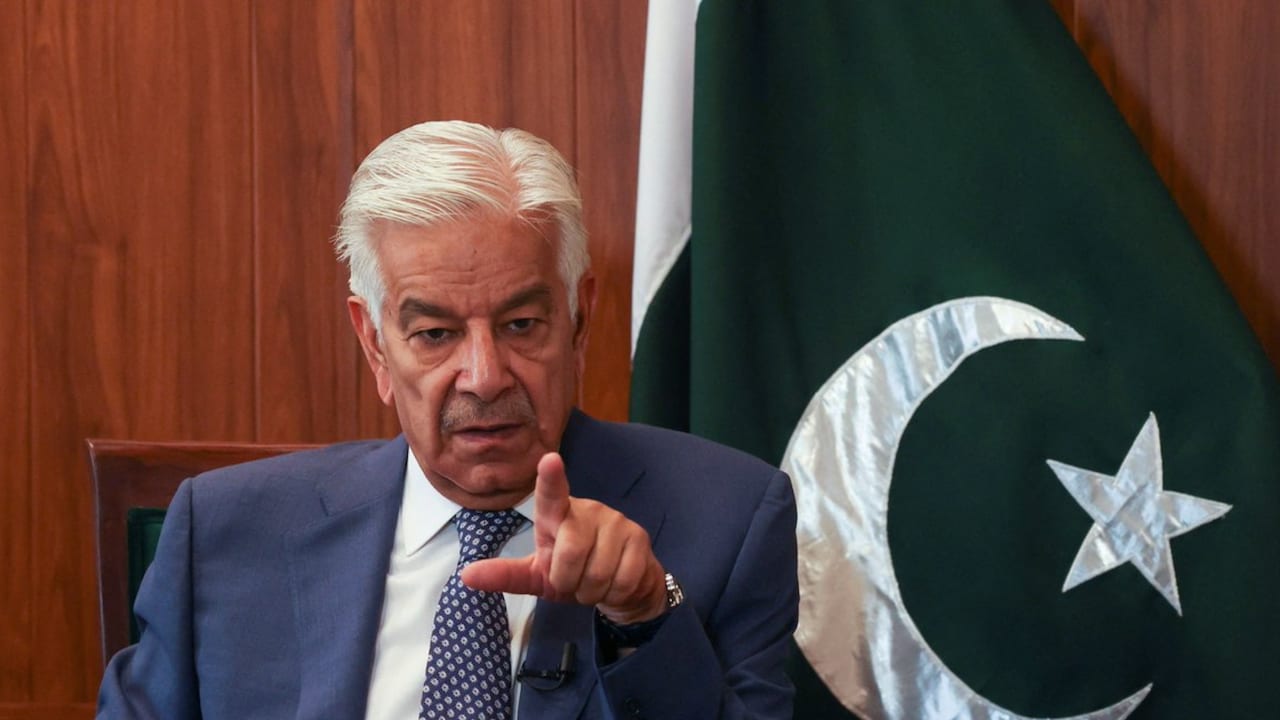
Pakistan has spent generations walking a tightrope stretched over a canyon of regional chaos. The country's recent diplomatic signals—urging Muslim-majority nations to finally bridge their fractures and build a unified military architecture often dubbed an Islamic NATO—are not born of sudden ambition. They are born of exhaustion.
Consider the sheer map of the Muslim world for a moment. It stretches from the Atlantic coast of Morocco through the jagged peaks of the Hindu Kush all the way to the maritime archipelagos of Southeast Asia. It holds the bloodlines of ancient empires, the corridors of global energy trade, and more than a billion souls. Yet, on the chessboard of international power, this vast expanse has often behaved like a collection of wealthy, suspicious neighbors living in a sprawling mansion while the roof is on fire. Each owner locks their own bedroom door, hires a private guard, and pretends the smoke creeping under the hallway floorboards belongs to someone else.
The proposal for a unified military coalition among Islamic nations surfaces every few years, usually after a fresh catastrophe lays bare the vulnerability of individual states. The logic is deceptively simple. If the North Atlantic Treaty Organization could bind disparate European nations together under a single umbrella where an attack on one is an attack on all, why couldn't the nations of the Organization of Islamic Cooperation do the same?
The math of survival dictates that unity multiplies strength.
(Note: When evaluating this concept through a hypothetical lens, strategic analysts often point to the theoretical deterrent effect of a combined force pool exceeding millions of active-duty personnel.)
Yet theory is a clean room. Reality is a muddy trench.
To understand why an Islamic NATO remains a ghost rather than a shield, you have to look past the joint communiqués and examine the deep, unhealed fractures within the house itself. Trust is an expensive commodity in international relations, and most of these capitals are flat broke.
Decades ago, I watched foreign ministers shake hands in air-conditioned halls in Riyadh while their proxy wars burned out the heart of the Levant and the Arabian Peninsula. I watched diplomats smile for the cameras while intelligence agencies funded opposing factions three hundred miles away. You cannot build a joint command center on top of a minefield of mutual suspicion.
The structural hurdles are staggering. Who takes the wheel? Is power concentrated in Islamabad, Riyadh, Ankara, or Cairo? Historical rivalries for leadership of the Muslim world run deep, tracing back centuries through theological disputes, dynastic ambitions, and modern nationalist pride. No major power wants to bleed its own sons to defend a neighbor whose government it secretly distrusts.
Furthermore, the economic and military capabilities are wildly asymmetrical. You have nations operating fifth-generation stealth fighters alongside states struggling to keep their basic grid online. Integrating communications systems, logistics, and doctrines across such a fragmented landscape is a logistical nightmare that would take decades of unprecedented political will to untangle.
And yet, the alternative to unity is becoming too heavy to bear.
Look at the shifting sands of global power. Traditional Western security guarantees are no longer viewed as permanent fixtures. Washington's gaze drifts steadily toward the Pacific, leaving the Middle East and South Asia to grapple with their own demons. New powers are rising in the East. Non-state actors armed with advanced drone technology and cyber warfare capabilities laugh at traditional national borders.
In this unforgiving climate, fighting alone is a slow suicide.
When Pakistani leaders make passionate appeals to put differences aside, they are speaking from the scars of their own history. Few nations have paid as high a price for regional instability. Decades of porous borders, refugee crises, and cross-border insurgencies have taught Islamabad a brutal lesson: instability is contagious. You cannot quarantine a fire in your neighbor's living room and expect your own curtains not to catch.
The push for a collective security framework is an admission that the old playbook is dead. Bilateral alliances are too fragile. Ad-hoc coalitions are too slow. What is needed is a permanent institutional mechanism that can deter aggression before the first shot is fired.
Imagine a summit where the old grievances are finally shelved not out of sudden idealism, but out of the cold, hard realization of mutual peril. Imagine a joint defense council where intelligence is shared instantly, where naval patrols in the Arabian Sea and the Red Sea are coordinated, and where an aggressor knows that striking one member means confronting the entire weight of a billion-strong demographic and economic engine.
It sounds utopian. It is supposed to. Every great architecture of peace starts as an impossible dream whispered by tired realists.
The road there is paved with humiliation. Governments will have to swallow their pride. They will have to halt the funding of proxy conflicts that drain their treasuries and destroy their moral authority. They will have to look their populations in the eye and explain why sovereignty must occasionally be pooled to be preserved.
Most leaders lack the courage for this. They prefer the short-term safety of domestic demagoguery, blaming external enemies for internal rot, keeping their populations divided so they remain easily manageable.
The clock is ticking louder now. The deserts are heating up. The water tables are dropping. The missiles flying across regional skies are getting faster and deadlier.
The ghost of an Islamic NATO will keep haunting these capitals until someone finally finds the courage to give it flesh and bone. Until then, the borders will remain nervous. The soldiers will keep tightening their straps. And the mothers will keep locking their doors twice, listening to the wind outside, wondering whose war is coming down the road next.
:max_bytes(150000):strip_icc()/ar-American-Cheese-taste-test-horizon-4x3-54cc339550cd44b9a818c17bdfd5428d.jpg)