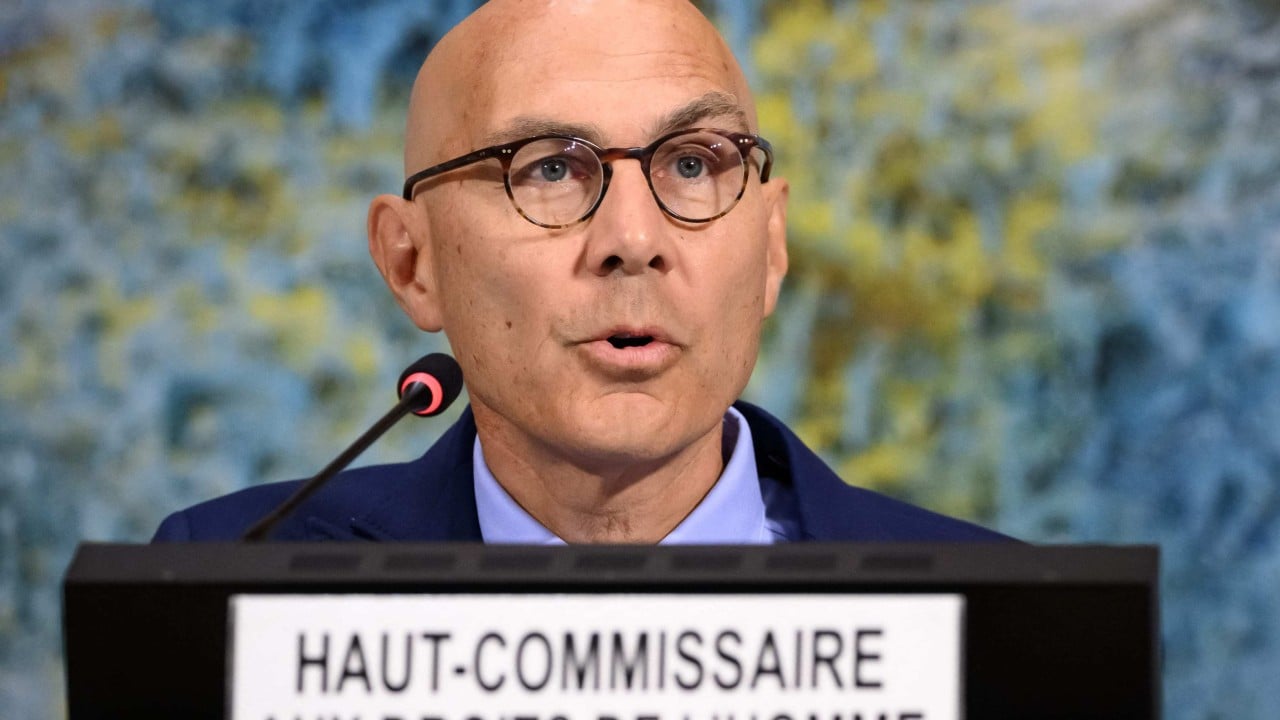
The United Nations High Commissioner for Human Rights recently labeled violence against women a "global emergency," a term that carries significant weight in diplomatic circles but feels hollow on the ground. When a situation is an emergency, the sirens should be blaring and the response should be immediate. Instead, we see a steady, predictable rhythm of bureaucratic hand-wringing while the numbers climb. This is not a sudden flare-up. It is a structural failure of the modern state to protect its most vulnerable citizens, disguised as a series of isolated tragedies.
To understand why this "emergency" persists, we have to look past the rhetoric of international summits. The real crisis isn't a lack of awareness. It is a profound disconnect between the high-minded treaties signed in Geneva and the lived reality in police stations, courtrooms, and homes from San Salvador to Seoul. We are witnessing the collapse of the legal and social safety nets that were supposed to make the 21st century safer than the last.
The Mirage of Legal Reform
On paper, the world has never been more committed to ending gender-based violence. Almost every nation is a party to the Convention on the Elimination of All Forms of Discrimination Against Women (CEDAW). National legislatures have passed thousands of laws specifically targeting domestic abuse and femicide. Yet, the gap between the law on the books and the law in practice has become a canyon.
In many jurisdictions, the passage of a law is treated as the finish line rather than the starting block. A government announces a new "zero tolerance" policy to appease international donors, but fails to fund the specialized police units or shelters required to make that policy functional. Without the infrastructure of enforcement, a law is just a press release. This creates a dangerous "justice gap" where victims are encouraged to report crimes, only to find that the system lacks the will or the resources to follow through.
Consider the mechanics of a typical domestic violence report. In many regions, a woman who goes to the police is met with a "reconciliation" mandate. Officers, often under-trained and overworked, view domestic disputes as private matters to be settled quietly rather than criminal acts requiring intervention. This isn't just a cultural relic; it is a systemic shortcut. It is easier for the state to tell a woman to go home than it is to prosecute a perpetrator and provide long-term housing for a survivor.
The Economic Architecture of Entrapment
We cannot talk about violence without talking about the wallet. Economic dependency remains the most effective tool for abusers, and current global economic shifts are sharpening that tool. While high-level reports focus on physical strikes, the underlying engine is often financial coercion.
When social safety nets are shredded under the guise of fiscal responsibility, women lose their exit ramps. If affordable housing is non-existent and childcare costs exceed a median wage, "leaving" is an abstract concept rather than a practical choice. The current inflationary environment has exacerbated this. When the cost of basic survival—food, rent, utilities—spikes, the leverage shifts heavily toward the person who controls the bank account.
The Hidden Cost of the Informal Economy
A significant portion of the global female workforce operates in the informal economy. These are women selling goods in street markets, working as domestic help, or performing seasonal agricultural labor. Because they lack formal contracts, they are invisible to the labor protections that might otherwise offer a shred of security.
When violence occurs in these settings, there is no HR department to call. There is no paid leave to recover or find a new place to live. The state's failure to formalize these sectors means that for millions of women, work is not a path to independence, but another arena of vulnerability. The "global emergency" is fueled by an economic system that treats this labor as disposable.
Technology as a Force Multiplier for Abuse
The digital shift was marketed as a tool for liberation, but for many women, it has become a sophisticated tracking and harassment suite. Digital violence is no longer a separate category; it is the frontline of physical abuse. GPS trackers hidden in cars, spyware on phones, and the weaponization of private images are now standard operating procedures for abusers.
The tech industry has been glacially slow to respond. Features designed for convenience—like "Find My Device" or smart home automation—are easily repurposed for stalking. When a survivor flees, her digital footprint often leads her abuser straight to her door. The legislative framework for dealing with this is decades behind. In most countries, police lack the technical literacy to even document digital stalking, let alone stop it.
We see a pattern where the burden of security is placed entirely on the victim. She is told to change her passwords, get a new phone, and delete her social media presence. Effectively, the solution offered by the state is for the woman to disappear from public life. This is not justice; it is a form of digital exile.
The Backlash Industry
There is a growing, coordinated movement actively working to roll back the protections that do exist. This isn't just a collection of angry internet users. It is a well-funded political effort that frames women’s rights as a threat to "traditional values" or national stability.
This backlash has found a home in the highest levels of government in several nations. We are seeing the decriminalization of certain forms of domestic battery and the removal of "gender" as a category from public policy. By framing the struggle against violence as an "ideology" rather than a human rights necessity, these actors are successfully dismantling decades of progress.
The rhetoric used by these movements often mirrors the language of the UN, but flips the script. They talk about "family rights" as a way to prioritize the integrity of the household over the safety of the individuals within it. When the UN calls for an emergency response, these counter-movements call for a "return to order," which is often code for the restoration of unchecked patriarchal authority.
The Failure of the Data Sets
You cannot fix what you cannot measure, and our current data on violence against women is a mess of underreporting and inconsistent definitions. Many countries do not even have a specific legal category for femicide—the killing of a woman because she is a woman. Instead, these deaths are folded into general homicide statistics, masking the specific motivations and patterns behind the killings.
Without accurate, disaggregated data, policy is a shot in the dark. We see governments celebrating a "drop in reported cases" as a victory, when it often actually reflects a total loss of faith in the police. If women believe that reporting an assault will lead to more danger and no justice, they stop reporting. The numbers go down, the politicians take a victory lap, and the violence continues in the shadows.
To get a real picture of the crisis, we have to look at secondary indicators. Look at the occupancy rates of shelters. Look at the number of emergency room visits for "unspecified trauma." Look at the sale of personal security devices. These are the metrics that tell the true story of the global emergency.
Beyond the Rhetoric of Empowerment
The word "empowerment" has been neutralized by overuse. It suggests that the solution to violence is for women to simply find more inner strength or better negotiation skills. This is a profound deflection of responsibility. A woman does not need to be "empowered" to not be hit; she needs her government to fulfill its basic duty of protection.
Real intervention requires boring, expensive, and difficult work. It means:
- Mandatory, multi-year training for the judiciary to strip away the myths of "provocation" and "crimes of passion" that still result in light sentences for abusers.
- Decoupling social services from the police. Many survivors are terrified of the legal system. Providing housing, healthcare, and legal aid through independent, well-funded organizations allows for an exit strategy that doesn't rely on a conviction that may never come.
- Holding tech platforms legally liable for the stalking and harassment tools they facilitate. If a company's software is used to facilitate a crime, and they have been notified of the flaw, they should face the consequences.
- Direct financial transfers. Research consistently shows that the single most effective way to reduce domestic violence is to give women direct access to their own money.
The Myth of Cultural Sensitivity
One of the most persistent hurdles in addressing this "emergency" is the tendency of international bodies to defer to "cultural context." This is a diplomatic euphemism for allowing violence to continue because it is traditional. When the state refuses to intervene in a "private" or "cultural" matter, it is making a political choice. It is choosing the status quo over the lives of its citizens.
Human rights are not a buffet where governments can pick and choose based on local customs. If a culture requires the subjugation and physical abuse of half its population to survive, then that culture is in conflict with the fundamental principles of modern civilization. The UN rights chief can call it an emergency, but until the international community is willing to apply real pressure—including trade and diplomatic consequences—on states that fail to protect women, the word "emergency" remains a linguistic flourish.
The current approach is akin to treating a systemic infection with a single bandage. We fund a few workshops, print some posters, and hope for the best. Meanwhile, the structures that allow violence to thrive—economic inequality, legal indifference, and political backlash—remain untouched.
The Architecture of a Real Response
If we treated this like a genuine emergency, like a pandemic or a natural disaster, the response would be unrecognizable compared to what we see today. We would see massive mobilizations of capital to create safe housing. We would see the immediate suspension of officials who fail to investigate reports. We would see a global effort to track and disrupt the financial flows of those who profit from the exploitation of women.
Instead, we have the status quo. We have annual reports that tell us what we already know: that being born female is still one of the most significant risk factors for experiencing violence.
The "global emergency" isn't a new phenomenon that just arrived on our doorstep. It is the predictable outcome of a world that has decided some lives are more valuable than others. Until the cost of committing violence—and the cost of ignoring it—becomes higher than the cost of stopping it, the body count will continue to rise.
Stop waiting for a new treaty or a more passionately worded speech from a high commissioner. The tools to end this have existed for decades. What has been missing is the political courage to use them against the interests of those who benefit from the current order. The emergency isn't the violence itself; it is the fact that we have collectively decided to live with it.
Direct your attention to the local municipal budgets. Check the funding for legal aid in your own city. Ask why the "emergency" isn't reflected in the police department's priorities. The solution isn't found in Geneva; it’s found in the hard, unglamorous work of holding every level of government accountable for the safety they promise but fail to deliver.


