The rain in Lyon tastes like diesel and damp wool when the tear gas clears.
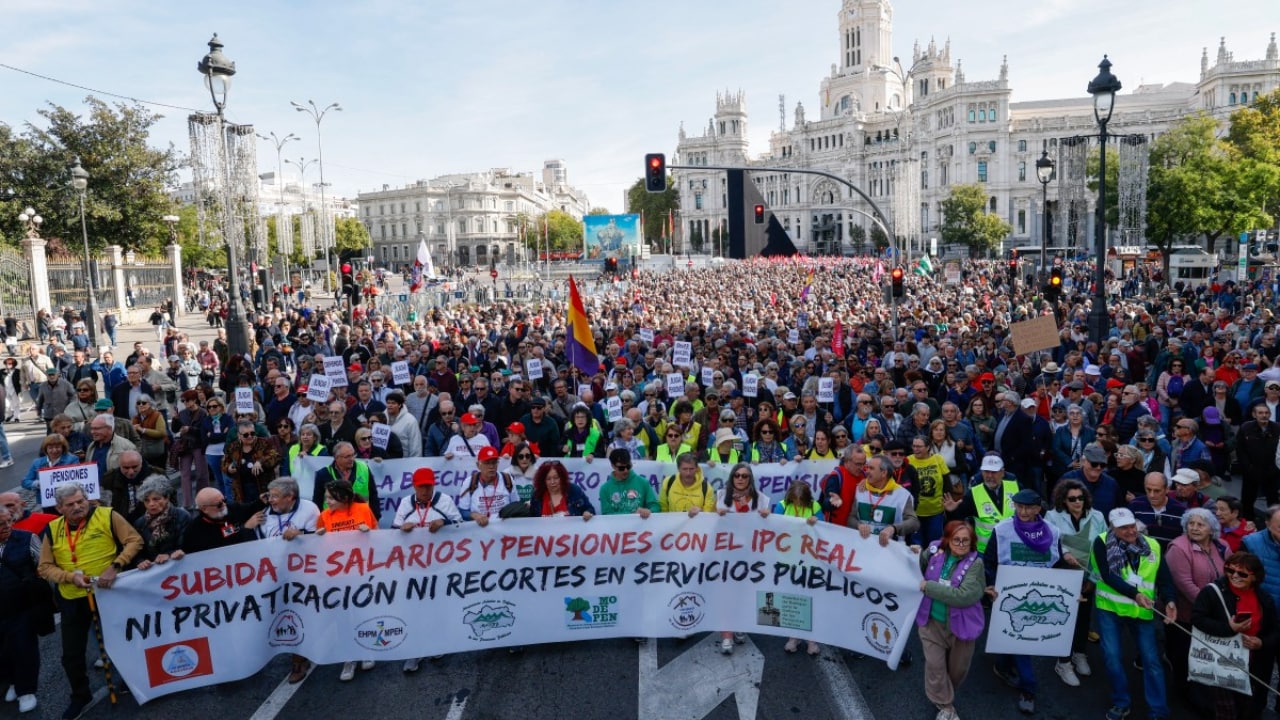
Stand near the Place Bellecour on a Thursday afternoon in late autumn, and you will hear a sound that does not belong to a continent supposedly at peace. It is not the rhythmic, practiced chant of seasoned union workers in high-visibility vests, though they are there too. It is higher, sharper, and ragged at the edges. It is the sound of nineteen-year-olds shouting until their throats bleed because they have run out of polite ways to ask for a future. You might also find this connected article useful: The Quiet Room in Tehran Where the Lights Stayed On.
For years, the dominant story told about Generation Z in Europe was one of quiet retreat. Pundits called them the bedroom generation, glued to glowing screens, medicated by algorithms, too anxious to make a phone call, let alone mount a barricade. That story was comforting to the people running ministries in Paris, Madrid, Berlin, and Rome. It meant the kids would stay indoors while the adults made the hard, unpopular choices about pension deficits, housing deregulation, and carbon targets.
That comfort is dead. As reported in detailed reports by BBC News, the implications are worth noting.
From the boulevards of France to the sun-baked plazas of Spain, young Europeans are abandoning lecture halls, minimum-wage shifts, and cramped shared flats to flood the asphalt. They are not marching for a single abstract ideology. They are marching because the basic arithmetic of growing up has stopped adding up.
The Invisible Math of a Rigged Game
To understand why a twenty-two-year-old in Madrid is willing to risk a police baton over a housing bill, you have to look at the spreadsheet of her life. Let us call her Elena—a composite drawn from dozens of young Spaniards living in the outer rings of the capital, though her exact twin exists in Bordeaux, Milan, and Lisbon.
Elena did everything right. She studied through the lockdowns of 2020 in a bedroom with thin walls. She graduated with a degree in environmental engineering. She speaks three languages. She interns at a consulting firm that pays her 950 euros a month, which is legal under Spain’s labyrinth of youth training contracts, and she supplements it by tutoring English online until ten at night.
A studio apartment within forty minutes of her office costs 1,100 euros.
Do the subtraction. You do not need an economics degree to feel the cold knot in her stomach every time she opens a property portal. In Spain, youth unemployment consistently hovers near the top of the European Union—often double the bloc's average, flirting with twenty-five to thirty percent depending on the season. Even for those who find work, the contracts are overwhelmingly temporary, designed to be snapped shut the moment a quarterly report looks sluggish. Nearly eighty percent of Spaniards under thirty still live with their parents, not out of cultural affection for Sunday family lunches, but because the door to adulthood has been bricked over with real estate speculation and stagnant wages.
When Elena walks onto the Gran Vía carrying a cardboard sign, she is not throwing a tantrum. She is auditing a broken contract.
For decades, Western Europe operated on an unspoken covenant: study hard, play by the rules, and you will live marginally better than your parents. You will afford a small flat, a modest holiday in August, and the dignity of standing on your own two feet before your hair turns gray. Today, that covenant feels like a vintage postcard from a country that no longer exists.
Think of the European economy right now like a massive, aging passenger train hurtling down a track that is slowly running out of rail. The first-class carriages—protected by decades of accumulated property wealth, triple-locked pensions, and permanent labor contracts—are still relatively comfortable, even if the heating flickers. But the economy has run out of fuel to pull the whole train. So, quietly, systematically, the conductors have been uncoupling the rear carriages where the young are sitting, leaving them rolling backward in the dark so the front of the train can keep its schedule.
Paris and the Politics of the Unheard
If Madrid is about the slow suffocation of economic stagnation, Paris is about the sudden shock of democratic deafness.
When the French government pushed through its pension reform—raising the retirement age from sixty-two to sixty-four—using Article 49.3 of the constitution to bypass a final parliamentary vote, the outrage was immediate. On paper, it looked like a fight for fifty-somethings counting down the days until they could tend their gardens. Why, commentators wondered, were university students blocking the entrances to the Sorbonne and setting bins alight in Rennes over a retirement age four decades away?
Because they understood the subtext.
To a twenty-year-old French student watching the police clear a peaceful blockade with stun grenades, the reform was never really about those two extra years of work. It was a masterclass in who matters when the budget gets tight. They watched a government bend over backward to protect the purchasing power of retirees—the demographic that votes in the highest numbers—while simultaneously cutting housing subsidies for students by five euros a month, refusing to expand university meal vouchers to everyone in need, and offering unpaid or underpaid internships as the sole gateway to a career.
I remember standing near the Place de la République during one of those spring nights, watching the smoke curl around the bronze statue of Marianne. Beside me stood a boy in a faded green parka, no older than twenty, rinsing his eyes with saline solution from a plastic bottle. His hands were shaking—not from fear, though the riot police were advancing twenty yards away, but from pure, undiluted fury. He told me he was studying history, that he skipped lunch twice a week to afford his metro pass, and that watching the prime minister invoke emergency constitutional powers to avoid a vote felt like watching someone lock the doors of the house while the basement flooded.
"They tell us we are the future," he said, wiping his cheek with his sleeve. "Then they treat us like an inconvenience they have to manage until the next election."
That feeling—of being managed rather than represented—is the accelerant pouring across European borders.
The Weight of a Burning Calendar
There is a second layer to this unrest that older generations routinely misread, largely because they treat it as a separate issue. To a forty-five-year-old policymaker in Brussels, inflation is one folder on the desk, housing is another, and climate change is a third folder tucked away for international summits.
To Generation Z, all three folders are on fire at the exact same time, and they are all the same fire.
Consider what it means to come of age in southern Europe right now. You spend your summers watching reservoirs shrink to cracked mud in Catalonia and Andalusia, while mayors impose water restrictions on residents yet allow luxury golf courses and tourist resorts to stay emerald green. You watch forest fires turn the sky orange in Greece and Portugal, and then you go to class in September and read that European governments are quietly watering down green transition targets because industries are complaining about short-term compliance costs.
When young activists in Germany—the Letzte Generation—glued their hands to the asphalt of Berlin’s autobahns, the public reaction was visceral rage. Commuters screamed at them. Politicians floated labeling them a criminal organization. Polls showed overwhelming disapproval of their tactics.
Yet look past the provocation and examine the logic driving it. These were not hardened radicals raised on revolutionary theory. Many were former straight-A students, trainee nurses, and biology majors who had spent four years marching peacefully every Friday with Fridays for Future. They had signed the petitions. They had met with ministers. They had watched leaders applaud their passion at climate conferences in Glasgow and Sharm el-Sheikh, only to return home and approve new fossil fuel subsidies the following Tuesday.
Radicalization is rarely born out of sudden madness. More often, it is born out of the exhaustion of doing everything the polite way and realizing nobody in the room is actually listening.
The Architecture of Exclusion
Walk through any major European city today—from Amsterdam to Athens, from Dublin to Vienna—and you can see the physical footprint of why this generation is furious.
In the historic centers, entire neighborhoods have been hollowed out into open-air museums for short-term holiday rentals. The bakeries that used to sell cheap bread to students now sell artisanal sourdough to weekend tourists with rolling suitcases. Meanwhile, institutional investment funds buy up apartment blocks by the dozen, turning basic shelter into a high-yield financial asset.
In Ireland, a country boasting some of the highest GDP figures in the world on paper, young nurses and teachers are emigrating to Australia and Canada in droves because renting a single room in Dublin consumes sixty percent of their take-home pay. In Italy, more than a hundred thousand young citizens pack their bags every year—a quiet, relentless brain drain of doctors, engineers, and artists who love their country fiercely but refuse to spend their thirties asking their parents for money to fix a broken tooth.
Those who cannot leave, or who refuse to surrender their cities without a fight, are left with one public square that cannot be priced out of their reach: the street.
It is easy, from the comfort of a paid-off mortgage, to critique their methods. Critics point out that youth voter turnout in European parliamentary elections often lags behind older cohorts, arguing that if young people want change, they should simply cast a ballot instead of waving banners.
That argument sounds tidy until you look at the ballot paper.
In aging societies—and Europe is the fastest-aging continent on earth—demographics are destiny. In countries like Italy, Germany, and Spain, voters over fifty-five vastly outnumber voters under thirty. Every political party, from the center-left to the hard right, knows where the electoral math lives. You do not win an election in Europe by promising to raise inheritance taxes, build high-density affordable housing that might lower neighborhood property values, or restructure pension payouts to fund university grants. You win by promising stability to those who already hold the deed.
So young Europeans look at the ballot box and see a rigged auction where their currency is worth half as much as their grandparents'. Taking to the streets is not a rejection of democracy; it is an attempt to force their way back into a conversation that has been mathematically engineered to exclude them.
What Happens When Patience Runs Out
We have seen this tremor before in European history, though never with quite this flavor. In May 1968, students in Paris tore up cobblestones during an era of unprecedented economic boom—the Trente Glorieuses—rebeling against suffocating social conservatism, rigid hierarchies, and a future that felt too predictable, too gray, too predetermined.
Today’s youth are rebelling against the exact opposite. They are not suffocating from too much certainty; they are drowning in the total absence of it. They have grown up through the aftershocks of the 2008 financial crash, the austerity years that gutted public services, a global pandemic that stole two years of their youth in the name of protecting their elders, a war on Europe’s eastern flank, and the worst cost-of-living spike in four decades.
They held the line during the lockdowns. They stayed inside, missed graduations, watched their mental health fray, and swallowed the sacrifice because they were told we were all in it together.
Now the bill has come due, and they are realizing "together" was a temporary arrangement.
I think back to that evening in Paris, long after the tear gas had blown toward the Seine and the street sweepers had begun washing the ash from the pavement. A group of maybe thirty students had lingered near the edge of the square, sitting on the cold stone steps of a closed bank, passing around a bag of cheap pastries and bandaging a girl’s scraped knee. They looked exhausted. They looked tiny against the massive Haussmannian facades looming above them—buildings worth millions of euros, dark and shuttered behind heavy wooden doors.
One of them pulled out a marker and wrote three words on a piece of cardboard, propping it against the brass plaque of the bank before walking toward the metro.
We live here.
Not a demand for utopia. Not a manifesto. Just a reminder, left on the doorstep of a continent that keeps forgetting who has to inherit the house once the lights go out.