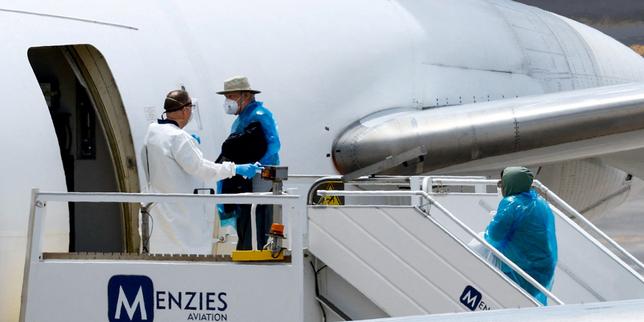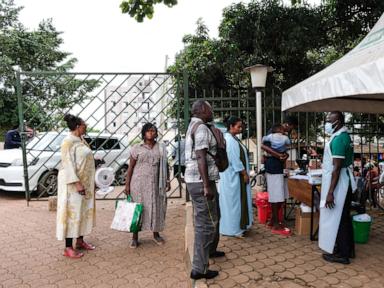
The World Health Organization has officially activated its highest level of alarm, designating the expanding Ebola footprint in the Democratic Republic of Congo and its spillover into Uganda as a Public Health Emergency of International Concern (PHEIC). This isn't just another bureaucratic label or a routine update for the medical journals. It is a desperate signal that the regional containment strategy has fractured. For months, frontline responders have battled not just a lethal virus, but a volatile cocktail of armed conflict, deep-seated community mistrust, and a chronic shortage of funding. Now that the virus has crossed the border into Uganda, the fiction that this could remain a localized internal matter has evaporated.
The reality on the ground is grimmer than the official tallies suggest. We are looking at a pathogen that exploits the seams of broken societies. While the WHO’s declaration unlocks certain legal and financial mechanisms, it arrives at a moment when the international community's attention is fragmented and its pockets are increasingly guarded.
The Myth of Controllable Borders
Public health officials often talk about "containment" as if it were a physical wall. In the Great Lakes region of Africa, that wall is a sieve. Thousands of people cross the border between the DRC and Uganda every day for trade, family visits, and to flee the persistent violence of local militias. These are not monitored transit points with thermal scanners and isolation tents; these are informal footpaths through dense forest and across rivers.
When the virus moved into Uganda, it did so through a family seeking medical care—a basic human instinct that no border patrol can fully suppress. This highlights the fundamental flaw in the global response. We treat these outbreaks as medical puzzles to be solved with vaccines and PPE, yet we consistently ignore the sociological reality of the people living through them. If a mother believes a hospital is a place where people go to die alone, she will take her sick child across a border to a healer she trusts. That single act of love can ignite a new chain of transmission in an entirely different country.
Security as a Medical Obstacle
This is the first time a major Ebola outbreak has occurred in an active war zone. In the North Kivu and Ituri provinces of the DRC, there are over a hundred different armed groups operating with varying degrees of hostility toward the central government and international organizations. This creates a lethal paradox for health workers.
To reach a suspected case in a remote village, doctors often need armed escorts. However, the presence of soldiers often confirms the community’s worst fears—that the Ebola response is merely a front for government surveillance or military intervention. We have seen treatment centers burned to the ground and health workers murdered in their beds. This isn't "misinformation" in the way we talk about it in the West; it is a rational, if tragic, response from populations that have been neglected or abused by authorities for decades.
The "why" behind the resistance is simple. When a community has seen no investment in clean water, schools, or basic safety for twenty years, the sudden arrival of millions of dollars in high-tech medical gear and foreigners in "spacesuits" feels suspicious. The international community is essentially trying to build a skyscraper on a foundation of sand.
The Vaccine Supply Chain Bottleneck
We have a tool now that we didn't have during the West Africa crisis of 2014—an effective vaccine. The rVSV-ZEBOV vaccine has shown incredible efficacy in the field, but its deployment is a logistical nightmare. It requires a "cold chain" that keeps the vials at temperatures between -60°C and -80°C.
Maintaining those temperatures in a tropical climate where the power grid is non-existent requires a constant supply of generators, fuel, and specialized freezers. The "ring vaccination" strategy—where you vaccinate the contacts of a sick person and the contacts of those contacts—is brilliant in theory. In practice, it requires perfect contact tracing. When people are displaced by fighting or are hiding their illness, the ring breaks.
Furthermore, there is the simmering issue of supply. While the manufacturers insist there are enough doses, the reality of a multi-country surge would stretch the existing stockpile to its limits. We are relying on a single-source production model for a security threat that is potentially global.
The Ugandan Front Line
Uganda is better prepared than most. Having dealt with multiple smaller outbreaks of both Ebola and Marburg virus over the years, their surveillance systems are sharp. However, preparation is not immunity. The Ugandan healthcare system is already operating at capacity.
The influx of Congolese refugees—over 10,000 in some months—places an immense burden on border screenings. The Ugandan government has been transparent, a sharp contrast to the early days of the DRC outbreak, but transparency doesn't pay for masks, gloves, or the hazard pay required to keep nurses on the wards. If the international community does not flood the zone with liquid capital now, Uganda’s success in containing the initial cases will be short-lived.
The Cost of the Wait and See Approach
History shows that the cost of responding to an Ebola outbreak increases exponentially for every week of delay. In 2014, the world waited until bodies were in the streets of Monrovia to take the threat seriously. We are seeing a refined version of that hesitation today.
The WHO’s emergency fund for outbreaks is frequently depleted. Donor nations often pledge money that takes months to actually arrive in the field. By the time the check clears, the virus has already moved to the next town. We are fighting a 21st-century biological threat with 19th-century bureaucracy.
The PHEIC declaration must be more than a press release. it must trigger the immediate release of funds for "no-regrets" financing—money that goes to the local level where the decisions are made. We need to stop funding "projects" and start funding the basic infrastructure of human survival in these regions.
Rethinking Community Engagement
The most effective tool in the arsenal isn't a syringe; it's a conversation. In areas where the response has succeeded, it has been because local leaders—the pastors, the imams, the village elders—were given the resources to lead the response themselves.
When a burial is handled by a local team that respects traditional customs while ensuring safety, the "Ebola is a hoax" narrative dies. When the response hiring focuses on local youth rather than bringing in outsiders for every task, the economic incentive shifts toward cooperation. The current model remains too top-down, too bureaucratic, and too focused on the clinical at the expense of the communal.
The Biological Reality
Ebola is a brutal teacher. It reminds us that a fever in a remote village in Ituri is a threat to the security of London, Tokyo, and New York. The virus does not care about sovereignty, and it certainly does not care about the political difficulties of the Congolese government.
As the virus stabilizes its presence in Uganda, the risk of it reaching a major transit hub with an international airport grows every day. Entebbe is only a few hours away from the current cases. From there, the virus is a single plane ride away from any major city on the planet.
This is not alarmism; it is a mathematical certainty if the current trajectory continues. The global health emergency declaration is an admission that the current strategy has failed to contain the fire. Now, the goal is to prevent a regional conflagration. That requires more than just medical teams. It requires a diplomatic surge to stabilize the security situation and a financial surge to ensure the people on the front lines have the tools to finish the job.
Stop watching the numbers and start looking at the gaps in the map. Those gaps are where the next cases are already incubating. The window for a controlled, low-cost intervention has slammed shut. What remains is a high-stakes race against a virus that has already proven it can outrun the world's best intentions.
Immediate action means direct, unrestricted funding to the Ugandan Ministry of Health and the local NGOs in the DRC who are actually doing the work. Anything less is just noise.