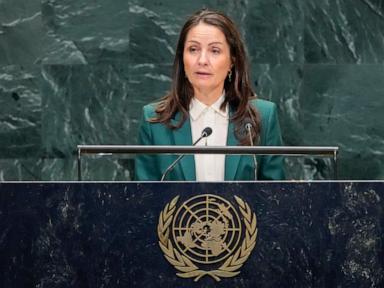
The grand marble halls of Turtle Bay echo every September with the same hollow declarations. At the United Nations General Assembly, leaders from the African continent step up to the podium to denounce a structural design that froze international power dynamics in the ash of 1945. Fifty-four member states, representing roughly one billion and a half people, hold zero permanent seats on the United Nations Security Council. They supply the blue helmets for peacekeeping missions, absorb the immediate shocks of global economic instability, and watch major enforcement decisions get brokered by five capitals that inherited their status through the barrel of twentieth-century conflict.
Yet blaming external obstruction alone tells only half the story. The persistence of this institutional deadlock stems as much from internal continental friction and procedural traps as it does from the guarded privileges of Washington, London, Paris, Moscow, and Beijing. For a different perspective, read: this related article.
The Mathematics of Exclusion
To understand why reform remains paralyzed, one must look past the rhetorical solidarity of the General Assembly and examine Article 108 of the United Nations Charter. Altering the supreme law of the international community requires a two-thirds vote of the General Assembly followed by formal ratification by two-thirds of the member states. Crucially, this threshold demands the explicit consent of all five permanent members, each of whom wields a unilateral veto.
This creates an insurmountable procedural maze. The five incumbents have zero structural incentive to dilute their own authority. While rhetorical support flows freely from Western and Asian capitals, every endorsement arrives wrapped in conditions designed to neutralize execution. Related insight on this matter has been provided by NBC News.
When the United States voiced backing for two permanent African seats, it inserted a poison pill: no veto power for the newcomers. For African diplomats schooled in the Ezulwini Consensus—the foundational 2005 African Union position demanding permanent seats with all the privileges of the existing five, including the veto—a second-class permanent membership is a non-starter. Offering a permanent seat without a veto is equivalent to handing someone the keys to a house while locking them out of the rooms where decisions are made.
The Unspoken Dilemma of Representation
The external blockade is formidable, but the internal paralysis within the African Union is equally crippling. Two decades after the Ezulwini Consensus was adopted, the continental body has steadfastly refused to answer the most sensitive operational question: which specific nations would occupy those seats if they materialized?
Consider the regional power dynamics. If two permanent seats were suddenly unlocked for the continent, a quiet, fierce competition would immediately erupt. Nigeria, South Africa, and Egypt possess the economic weight, diplomatic infrastructure, and historical credentials to stake credible claims. Yet none of these regional heavyweights can secure unanimous endorsement from their neighbors without triggering deep resentment or institutional fracturing elsewhere on the continent.
Smaller states fear a hegemon-dominated continental representation. Regional rivals harbor historic suspicions. By maintaining an insistence that the African Union as a collective must determine the occupants on a rotating or consensus basis, the continent preserves unity on paper while sacrificing tactical agility. External powers use this ambiguity as a convenient shield. As long as Africa cannot name its representatives, capitals like Beijing and Washington can posture as supporters of reform without ever having to face a concrete ratification vote.
The Cost of Perpetual Symbolism
The diplomatic stalemate serves a cynical purpose for the global status quo. It allows the United Nations to stage an annual theater of grievance where the injustices of the post-WWII order are acknowledged, lamented, and promptly shelved for another year.
Meanwhile, the security architecture of the globe degrades further. Conflicts across the Sahel, the Horn of Africa, and Central Africa unfold against a backdrop of Council resolutions drafted by powers far removed from the theater of crisis. When the primary organ responsible for international peace and security lacks any permanent representation from the demographic and geographic center of future global growth, its decisions forfeit moral authority.
Breaking this cycle requires a departure from rigid bargaining positions. If the permanent five refuse to extend the veto, and if the African Union refuses to accept a subordinate tier of membership, the impasse becomes permanent. Pragmatic alternatives, such as an interim model with deferred veto powers or a rotational permanent mechanism tied to the leadership of the African Union, offer potential bridges across the chasm.
Until continental capitals confront the internal friction of who speaks for the map, and until the current nuclear-armed oligarchy realizes that legitimacy is a finite resource, the podium at Turtle Bay will remain a venue for eloquent complaints about a house built on sand.