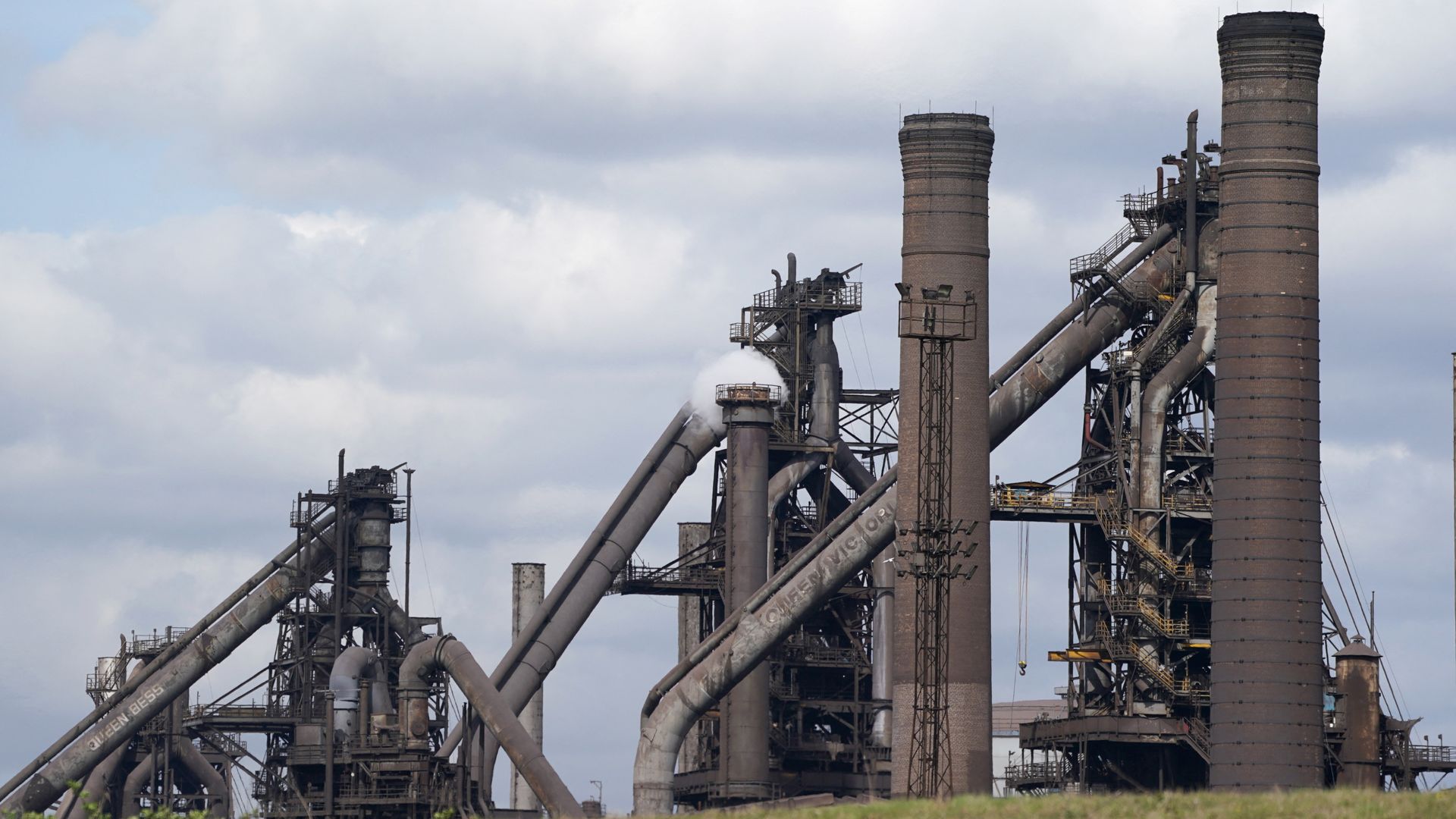
When the government steps in to nationalise a critical industrial asset, people breathe a sigh of relief. Jobs are supposedly saved. National security is protected. But anyone who understands heavy industry knows that changing the nameplate on the door changes nothing about the balance sheet.
Following the government's dramatic takeover of British Steel from Jingye using the Steel Industry (Nationalisation) Act, ministers are scrambling to assemble a team capable of running a massive, capital-hungry manufacturing operation. Enter Andrew McNaughton. Bringing in the former Balfour Beatty chief executive as a non-executive director to sit on the newly formed British Steel board is a calculated move. It signals that Westminster wants hard infrastructure expertise, not just political management.
Let's look at what's actually happening behind closed doors.
The Reality of Running State-Controlled Steel
You can't just nationalise a blast furnace and expect it to run efficiently on bureaucratic goodwill. Steelmaking requires massive amounts of raw materials, precise supply chain coordination, and endless cash injections for green transitions.
Business Secretary Jonathan Reynolds has already signalled that state ownership isn't meant to be permanent. The long-term game plan relies on finding a private-sector partner while keeping a golden share arrangement. That sounds neat on paper. In practice, finding a private investor willing to take on an ageing asset with multi-billion-pound decarbonisation demands is exceptionally difficult.
This is where heavy hitters like McNaughton come into play. Having someone who has run massive construction and engineering firms means the board has practical oversight over capital projects. You need people who understand how to build and maintain heavy assets, because Scunthorpe's infrastructure needs massive modernization. Without it, the state is just subsidizing a slow-motion collapse.
What Most Observers Miss About Supply Chains
People often think steel nationalization is purely a local job-preservation issue for North Lincolnshire. It isn't.
Automotive manufacturers, construction companies, and defense contractors rely on just-in-time material flows. If domestic production hiccups for even a few days, assembly lines across the entire country stall. The Society of Motor Manufacturers and Traders has repeatedly warned about the fragility of these domestic pipelines.
When private owners walk away or threaten shutdowns—as Jingye did before the state intervention—the government is left holding an enormous financial bag. Operating under public control stops the immediate bleeding, but it shifts the bill directly onto taxpayers.
The Road Ahead for British Steel
Appointing seasoned industrial heavyweights to the board is a sensible tactical step. It proves the government realizes it's out of its depth trying to run a steel mill with civil servants alone.
Yet, governance structures won't fix the fundamental economics of UK manufacturing. High energy costs, carbon taxes, and intense global competition from subsidized foreign producers haven't magically disappeared because the state took over the keys.
To make this intervention work, the new board needs to move fast. They must secure private capital commitments, streamline operations, and chart a realistic path toward low-carbon production without bankrupting the public purse. Keep a close eye on how quickly they structure that private partnership, because public ownership was never the finish line. It was merely the starting gun.