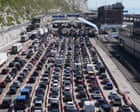
The Great British summer has been rebranded. It is no longer about a desperate scramble for the sun, but a calculated retreat into the familiar. Current data from VisitEngland suggests that nearly 13 million people in the UK are ditching their passports this season, opting instead for domestic shores. This shift is fueling a £4.8 billion injection into the local economy, but the narrative of a simple "boom" masks a far more complex and volatile reality.
Families are not staying home because they have suddenly developed a newfound passion for the rainy peaks of the Lake District or the pebble beaches of the south coast. They are staying because the alternative has become an exercise in geopolitical risk management.
The Death of Spontaneity
For decades, the low-cost flight was the cornerstone of the British middle-class identity. That era has collided with a wall of rising fuel costs and airspace closures. The escalating conflict in the Middle East has sent jet fuel prices soaring, with a 75% spike in wholesale gas prices recorded this spring alone. Airlines are not absorbing these costs; they are passing them directly to the traveler.
This is the "why" that often gets buried. When you look at the 70% of UK adults who now cite travel costs as their primary concern, you aren't looking at a lack of desire. You are looking at a mathematical impossibility. A family of four looking at a Mediterranean getaway is now facing a "conflict premium" on every ticket, added to the lingering sting of domestic inflation.
Safety is the second, more silent driver. Data suggests that 40% of holidaymakers have altered their plans specifically due to international tensions. It is not just the fear of being in a conflict zone; it is the fear of being stranded. When airspaces close, the logistics of getting home from a hub like Dubai or Istanbul become a nightmare. For many, the risk of a two-week delay at a foreign airport outweighs the appeal of a week in the sun.
The Domestic Price Hike
While the domestic tourism sector is celebrating, the "staycation" is becoming anything but a budget option. The surge in demand for coastal rentals and luxury campsites has allowed operators to hike prices to record levels. In popular hubs like Cornwall and the Cotswolds, the cost of a week’s stay now frequently exceeds the price of an all-inclusive package in Spain or Greece, even with the current flight surcharges.
Domestic hospitality is also facing its own internal crisis. The sector is grappling with the implementation of Martyn’s Law, which mandates new security protocols for publicly accessible venues. These requirements, while necessary for safety, add a layer of operational cost and bureaucracy that small B&Bs and independent hotels are struggling to fund.
Staffing remains a persistent wound. The combined impact of post-pandemic labor shifts and the rising National Living Wage has left many seaside resorts understaffed and overpriced. You might be paying five-star prices for a three-star experience, simply because the owner can't find the staff to run the kitchen.
The Regional Divide
The economic "boom" is not being felt equally. While the South West and Scotland are seeing a massive influx of visitors, traditional northern seaside towns are still fighting for a share of the pie.
- South West England: Remains the top choice, capturing over 20% of domestic bookings.
- Scotland and Wales: Seeing a rise in "experience-led" travel, specifically for hiking and wellness retreats.
- The North West Coast: Currently the focus of a VisitEngland pilot campaign to revive interest in areas that have seen an 11% drop in year-on-year visits.
There is a growing trend toward "manageable luxuries." Rather than spending £10,000 on a kitchen renovation or a new car, households are spending £5,000 on shorter, more frequent domestic breaks. It is a psychological pivot. In an era of global instability, the "treat yourself" mentality has shifted from physical goods to immediate experiences.
The Trap of Certainty
The irony of the staycation boom is that it relies on a fragile sense of certainty. We stay in the UK because we believe we can control the variables. We can drive our own cars, speak the language, and if things go wrong, we are only a few hours from home.
However, this certainty is an illusion. The UK’s own infrastructure is creaking under the weight. National rail strikes, road congestion, and the rising cost of petrol—up 14 pence a litre in just one month—mean that even a trip to the Highlands can be derailed.
The domestic tourism industry is currently enjoying a captive audience. But captive audiences are rarely happy ones. If the industry continues to prioritize short-term price gouging over long-term value and infrastructure investment, the "staycation boom" will evaporate the moment the global geopolitical temperature cools.
For now, the British public is hedging its bets. They are trading the turquoise waters of the Mediterranean for the grey-green swells of the Atlantic, not out of love, but out of a pragmatic need to keep their feet on solid ground.
Check your booking policies for "force majeure" clauses before committing to high-priced domestic rentals.