The asphalt on the high street felt soft, like melting chocolate under a child's thumb.
I remember pressing the sole of my sneaker into the road outside the corner shop, watching the rubber leave a shallow, sluggish impression before slowly bouncing back. It was mid-afternoon, the hour when the British summer usually retreats behind a polite, wool-gray cardigan of clouds. Instead, the air sat heavy, thick with the scent of baked tarmac and parched grass that had given up the ghost weeks ago.
We are not built for this.
For generations, our architecture was an apology for the rain. We built thick walls to keep out the damp, slate roofs to shed the drizzle, and small windows to trap whatever meager warmth the Gulf Stream saw fit to toss our way. We romanticized our miserable summers because misery is comfortable. It requires no adjustments. You grab a brolly, you tut at the drizzle, and you carry on.
Then came the record.
History will file it away under neat bureaucratic headings. Meteorologists at the Met Office will point to charts, graphs, and the stark, blood-red anomalies sweeping across their monitors. They will tell you, with the calm precision of scientists watching a slow-moving train wreck, that a series of relentless heatwaves pushed Britain to record its hottest summer on record. They will quote the numbers: the spikes past forty degrees Celsius, the shattered historical benchmarks, the nights where the thermometer refused to drop below twenty-five, leaving millions tossing in sweat-soaked sheets.
Numbers are cowards. They let us look at catastrophe from a safe distance.
Let us talk about Arthur instead. Arthur is a hypothetical composite, but every district nurse, every GP, and every exhausted neighborhood volunteer in southern England recognizes his face. Arthur is eighty-two years old, living alone in a mid-terrace red-brick house in Essex. His house has a west-facing window that acts like a greenhouse lens every afternoon.
By the third week of July, Arthur's house was an oven.
He didn't turn on the television because the television generated heat. He didn't cook because the mere thought of a stove made him dizzy. He sat in his armchair in his undershirt, a damp flannel draped over the back of his neck, watching the dust motes dance in shafts of merciless light. He wasn't crying. Dehydration steals your tears before it steals your breath. He was just waiting for the sun to drop behind the horizon, a mercy that took agonizingly hours to arrive.
When the heatwaves hit Britain like a fist, they didn't just break temperature records. They exposed the fragile plumbing of our daily lives.
Consider what happens next: the electrical grid groans. Refrigerators work overtime, humming in darkened kitchens like dying engines. Trains crawl across the countryside because the steel rails, baking under a sky that had forgotten how to weep, expand and buckle under the strain. Speed limits are imposed on the tracks. Commuters stand on packed platforms that smell like a locker room, fanning themselves with free evening newspapers, staring blankly at departure boards that show delays stretching into infinity.
We learned a bitter truth that summer. Britain is a country designed for a climate that no longer exists.
Our hospitals, many of them Victorian or mid-century relics with windows that only crack open an inch, turned into wards of collective exhaustion. Doctors moved through corridors in scrubs soaked at the collar, handing out electrolyte sachets like lifeboats. Elderly patients, their hearts overworked from pumping blood frantically to cool their skin, filled the emergency departments.
It is terrifying how quickly comfort evaporates.
We like to think of climate change as a distant abstraction—a polar bear on a shrinking ice floe, a forest fire burning on a television screen across an ocean. But climate change has a local accent. It sounds like the drone of a thousand newly purchased box fans whirring simultaneously into the night. It smells like the sickly-sweet odor of dying lawns in public parks that used to be emerald green. It looks like the chalky white ring of sweat salt dried onto the forehead of a postman who has given up wearing his high-visibility jacket because it feels like a furnace.
The grass died first. Then the rivers shrank.
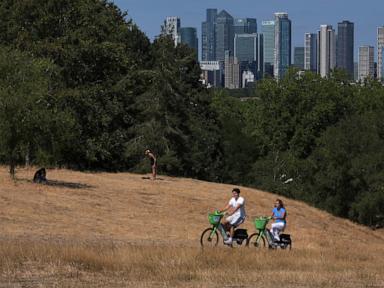
Walking along the Thames near Oxford that August, I watched the riverbed crack open in intricate, jigsaw patterns of baked mud. Where boats used to bob lazily against wooden piers, now there were only stranded hulls resting awkwardly on dry silt. Water authorities issued hosepipe bans. Gardens turned to dust. The iconic British countryside—that rolling, velvety tapestry of green that poets have sung about for centuries—looked like a sunburned photograph left out in the attic.
Yet, amid the scorched earth, something stranger happened.
We looked at each other.
That is the paradox of extreme weather. It isolates us inside our stifling homes, trapped behind drawn curtains, yet it forces an abrupt, uncomfortable intimacy with our neighbors. I watched people who had lived next door to one another for twenty years without exchanging more than a stiff nod suddenly knock on doors with jugs of iced tap water.
Mrs. Higgins, who lives down the lane and whose garden is legendary, stood by her dying hydrangeas and handed out damp washcloths to children walking home from school. We checked on the elderly. We left shallow bowls of water on our doorsteps for hedgehogs and foxes that staggered out of the undergrowth in broad daylight, desperate and disoriented.
The record-breaking summer was not just a weather event. It was an eviction notice from our past.
We cannot pave over our gardens with concrete and wonder why our cities trap heat like baked potatoes. We cannot rely on building codes written for a chilly, damp island off the coast of Europe when the Sahara is slowly migrating north.
The heat broke eventually. A late-August storm rolled in off the Atlantic, violent and dramatic, splitting the sky with purple lightning and dumping a month's worth of rain in twenty minutes. The pavement hissed. Steam rose from the roads like ghosts fleeing a crime scene. The temperature plunged ten degrees in an hour.
We breathed.
We opened our windows wide, letting the cool, damp air rush back into our stale rooms, greedy for the chill we had cursed for most of our lives.
But the memory of that heat lingers in the grain of the wood, in the parched roots of the ancient oaks, and in the quiet realization that our weather has turned feral. The record will be broken again. It is not a question of if, but of when. And the next time the asphalt softens beneath our feet, we will have to decide whether we are going to keep pretending we live in a country that no longer exists, or finally learn how to survive the fire.