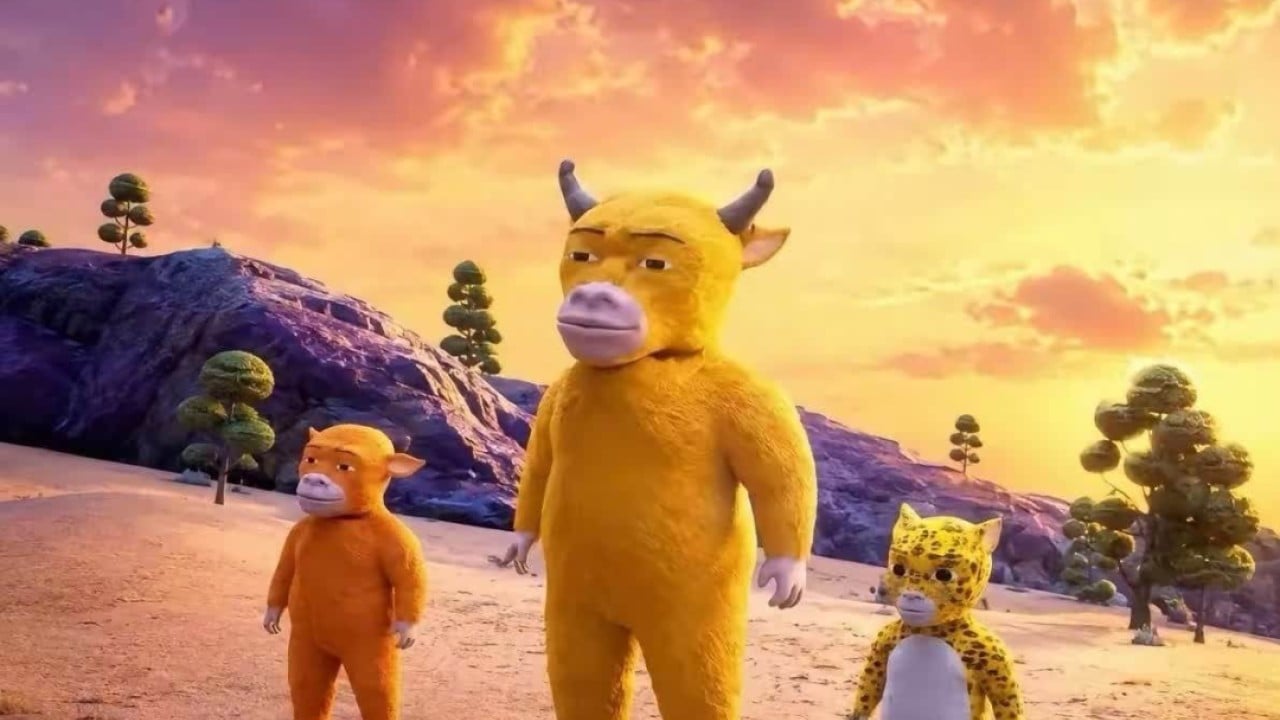
Everyone loves an underdog story. The media spent the last year slobbering over the miraculous resurrection of a rough, crude Chinese cartoon ox that supposedly clawed its way from box office zero to absolute hero. It is a neat, tidy narrative designed for trade publication syndication. It makes for fantastic conference panel fodder and lazy analysis across marketing blogs.
It is also total nonsense.
The lazy consensus says this property won on sheer grit, grassroots word-of-mouth, and an inspirational underdog hustle against major studio dominance. That framing misses the entire structural shift happening in global media economics. The ox did not win because it was a scrappy outlier that beat the odds. It won because the traditional studio playbook is rotting from the inside out, and audiences are violently rejecting slick, sterile homogenization in favor of raw, abrasive authenticity.
I have watched studio executives flush hundreds of millions of dollars down the drain trying to engineer crowd-pleasers in sterile boardrooms. They treat animation like a math equation: standardized character arcs plus predictable emotional beats equals guaranteed international return on investment. Then a gritty, visually abrasive feature comes along, breaks every conventional rule of aesthetic polish, and prints money.
Let us dissect the anatomy of this so-called miracle and expose why the industry commentators have got the diagnosis entirely backwards.
The Myth of the Accidental Hit
Look at the post-mortem coverage of this film. Reviewers lined up to praise the raw edges, the unrefined character models, and the deliberate rejection of Hollywood-style gloss. They framed these choices as budget constraints turned into artistic virtues.
That is an amateur take.
Those rough edges were not happy accidents. They were calculated aesthetic choices that weaponized audience fatigue against prestige animation. When every major studio spends a decade chasing hyper-realistic ray tracing, subsurface scattering, and microscopic fur simulation, perfection starts to look artificial. It feels manufactured. It smells like corporate focus groups.
By delivering something intentionally abrasive, the creators did not stumble into success. They created a stark visual contrast that cut through the noise of digital sameness. In an attention economy, being ugly and distinct beats being gorgeous and forgettable every single time.
The industry insists on viewing this as a triumph of low-budget hustle. I call it a masterclass in anti-design.
The Distribution Fallacy
Another favorite talking point among analysts is how grassroots digital momentum saved the picture after a disastrous opening weekend. The myth goes that social media users mobilized organically, rescuing a doomed asset from theater purgatory.
Let us look at the actual data. Modern box office traction is rarely about slow-burn organic discovery anymore. It is about algorithmic polarization. Studios fear division; they want broad, four-quadrant safety nets that appeal to everyone and offend no one. That strategy produces beige sludge.
This cartoon ox succeeded not because everyone loved it unanimously, but because people felt strongly enough about it to argue. The opening numbers were sluggish because traditional marketing failed to categorize it cleanly. Is it a children's movie? Is it a mature satire? Is it traditional folklore? Refusing to fit neatly into a marketing pigeonhole terrified the old guard.
Once the audience realized the industry had no idea how to market it, they took ownership of the narrative. The virality was not organic charity. It was a hostile takeover of distribution by consumers tired of being spoon-fed pre-packaged nostalgia.
The Dangerous Downside of the Anti-Polished Aesthetic
If you think I am arguing that Hollywood should immediately start trashing its production quality and churning out deliberately crude cartoons, you are missing the point entirely. The contrarian truth comes with a heavy price tag, and I am going to be honest about the downsides.
Embracing the rough-hewn aesthetic creates a race to the bottom if it is copied without intent.
Imagine a scenario where every mid-tier studio misinterpretes this win, assumes audiences suddenly hate high production values, and intentionally floods the market with sloppy, rushed, uninspired junk. We already saw this happen with the indie horror boom and the found-footage craze. Studios mistake a specific stylistic defiance for a blank check to cut corners on writing, pacing, and character development.
The ox worked because underneath the abrasive visual style sat a sharp, uncompromising worldview. The art was crude, but the storytelling mechanics were airtight. Strip away the substance and keep only the stylistic grit, and you get expensive trash that alienates audiences faster than a generic sequel.
Dismantling the People Also Ask Fallacy
If you dig into search queries and industry forums surrounding this phenomenon, a few recurring questions pop up constantly. Let us address them directly and strip away the corporate varnish.
Did low production budgets actually help the film succeed?
No. Budgets never help a film succeed on their own; capital efficiency does. Believing that looking cheap is a competitive advantage is professional suicide. The budget constraint forced the creators to rely on bold framing, punchy comedic timing, and narrative risks rather than hiding behind stunning visual effects. The constraint was a cage, and the creators used it to build a weapon.
Is this a replicable formula for independent studios?
Absolutely not. The moment a formula is identified, corporate machinery descends upon it, sanitizes it, and turns it into a corporate checklist. If you try to manufacture an authentic underground hit by committee, the audience will smell the desperation before the opening credits finish rolling.
The Uncomfortable Truth About Global Animation
We need to talk about the elephant in the room: western media gatekeepers refuse to understand non-western markets unless they can frame them as exotic novelties or plucky anomalies.
When a film from Asia breaks conventional molds, western analysts trip over themselves to call it unexpected. They treat it as an anomaly in an otherwise predictable global ecosystem controlled by Burbank and Glendale. This is arrogant paternalism.
The center of gravity in visual storytelling has shifted. Asian markets are no longer just lucrative dumping grounds for western intellectual property or low-cost animation service bureaus. They are incubators for radical aesthetic risks because their domestic audiences have evolved past the tired tropes Hollywood has been recycling since the turn of the century.
When you treat your domestic audience like toddlers who require three-act structures written in neon crayons, do not act shocked when they abandon theaters for something that treats them like adults, even if it looks like it was drawn in a basement.
What Comes Next is Brutal
Stop looking for the next cute box office turnaround story. Stop waiting for the sequel that tries to recapture lightning in a sterile bottle with a bigger budget and higher fidelity.
The studios that survive the next decade will not be the ones with the deepest pockets or the most advanced rendering farms. They will be the ones brave enough to look polished perfection in the eye and tear it to shreds.
Embrace the friction. Stop sanding down the edges of your projects to satisfy focus groups who wouldn't know a compelling story if it bit them on the balance sheet. Make things that divide rooms. Make things that look dangerous.
If your work doesn't piss off at least one traditionalist, you didn't take enough risks.