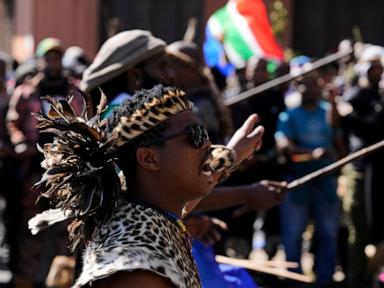
The sirens start before the sun clears the high-rise concrete of Hillbrow. It is a metallic, urgent wail that the residents here have learned to read like a barometer. When the blue lights flash against the cracked windowpanes of the inner city, it means the grid has closed.
For years, the headlines have framed this with the sterile vocabulary of bureaucracy. They speak of deployment figures. They analyze immigration policy. They tally the number of police officers sent to quell anti-immigration protests across South Africa’s Gauteng province. But statistics do not sweat. They do not stand on a street corner with a passport clutched in a damp palm, wondering if the piece of paper in their hand will be recognized as valid, or if it will be torn up by someone wearing a uniform.
To understand why the streets of Johannesburg, Pretoria, and parts of Ekurhuleni are humming with tension, you have to look past the political speeches. You have to look at the shopfronts.
The Boiling Point on the Pavement
Consider a hypothetical shopkeeper named Thabo. He runs a small convenience store, a spaza shop, on a bustling corner in Diepsloot. For a decade, Thabo has watched the neighborhood change. The local economy is brutal. Inflation chips away at his meager profits, and the electricity cuts leave his refrigerators warm for hours at a time.
When Thabo looks down the street, he sees another shop, run by a man who arrived from Zimbabwe five years ago. That shop is cheaper. It stays open later. In Thabo’s mind, the equation becomes dangerously simple: They are taking what is ours.
This is the spark that has ignited across South Africa. It is not an abstract debate about sovereignty. It is a fierce, desperate scramble for survival at the bottom of the economic ladder. When the local anti-immigration groups march through the townships, they are not just protesting policy. They are venting a deep, systemic frustration with a country where the promise of prosperity has stalled for millions of citizens.
The response from the state has been heavy-handed and immediate. Hundreds of public order policing units have been flooded into volatile areas. The government calls it a stabilization effort.
The reality on the ground feels like an occupation.
The Mechanics of Friction
The conflict moves in a predictable, tragic cycle. First comes the rumor on social media—whispers that a local business was targeted or that foreign nationals are operating without permits. Then comes the crowd. They gather on the arterial roads, burning tires, blocking traffic, and demanding that local authorities conduct door-to-door citizenship checks.
Then come the police.
+-----------------------------------------------------------+
|               THE CYCLE OF URBAN TENSION                  |
+-----------------------------------------------------------+
|  Economic Stagnation -> Social Media Rumors -> Protests  |
|                                                           |
|  Police Deployment   -> Temporary Calm     -> Deep Resentment|
+-----------------------------------------------------------+
|          *Result: A fragile peace built on fear* |
The deployment of law enforcement creates a temporary, brittle peace. It treats the symptom while the infection rages underneath. When a police van parks on a street corner, the protesters disperse, and the informal traders pack up their blankets and vanish into the alleys. But the anger does not dissolve. It just moves indoors, waiting for the blue lights to turn the corner.
The complexity of the situation is dizzying. South Africa has historically been a sanctuary for those fleeing political instability and economic collapse in neighboring nations. The country’s constitution is one of the most progressive in the world, explicitly protecting the rights of all who live in it. Yet, the friction between that legal idealism and the harsh realities of a 30% unemployment rate is tearing the social fabric apart at the seams.
The Invisible Borders
The real tragedy is that the panic cuts both ways. Documented immigrants who have lived in South Africa for decades, paying taxes and raising families, now find themselves trapped in a state of perpetual vigilance. They carry their identity documents to the grocery store. They avoid certain transport hubs after dark. The border is no longer a line on a map at Musina or the Limpopo River; it has replicated itself inside every neighborhood, every taxi rank, and every marketplace.
Human rights organizations have raised alarms about the nature of the police sweeps. When the mandate is to "crack down" on undocumented migration amid public anger, the line between profiling and policing blurs. Total security becomes an excuse for total control.
But the real problem lies elsewhere. It rests in the economic stagnation that makes a neighbor look like an adversary. Until the underlying structural failures—the lack of jobs, the failing infrastructure, the collapse of municipal services—are addressed, the police are merely holding back a flood with a broom.
The sun begins to set over Gauteng, casting long shadows across the tarmac where the protesters stood just hours before. The smell of burnt rubber still hangs heavy in the autumn air. A police Casper armored vehicle idles at the intersection, its diesel engine vibrating through the soles of the shoes of everyone walking past.
A young woman steps out of a salon, glances at the armored vehicle, adjusts the strap of her bag, and walks quickly in the opposite direction. The police are there to keep the peace, but nobody on this street feels safe.