The Pahalgam anniversary usually triggers a predictable ritual in the Indian media: a retired general sits in a studio, points a wooden stick at a map of the Line of Control (LoC), and explains why Pakistan is the "eternal aggressor." This narrative is comfortable. It is also intellectually bankrupt.
By obsessing over the "Pakistani Hand," we have ignored the more uncomfortable truth. Terrorism in Kashmir isn't just a product of foreign interference; it is a byproduct of our own obsession with tactical parity. We are playing a game of chess against an opponent who is playing poker, and we keep wondering why we’re losing chips.
The Myth of the Deterrent Fence
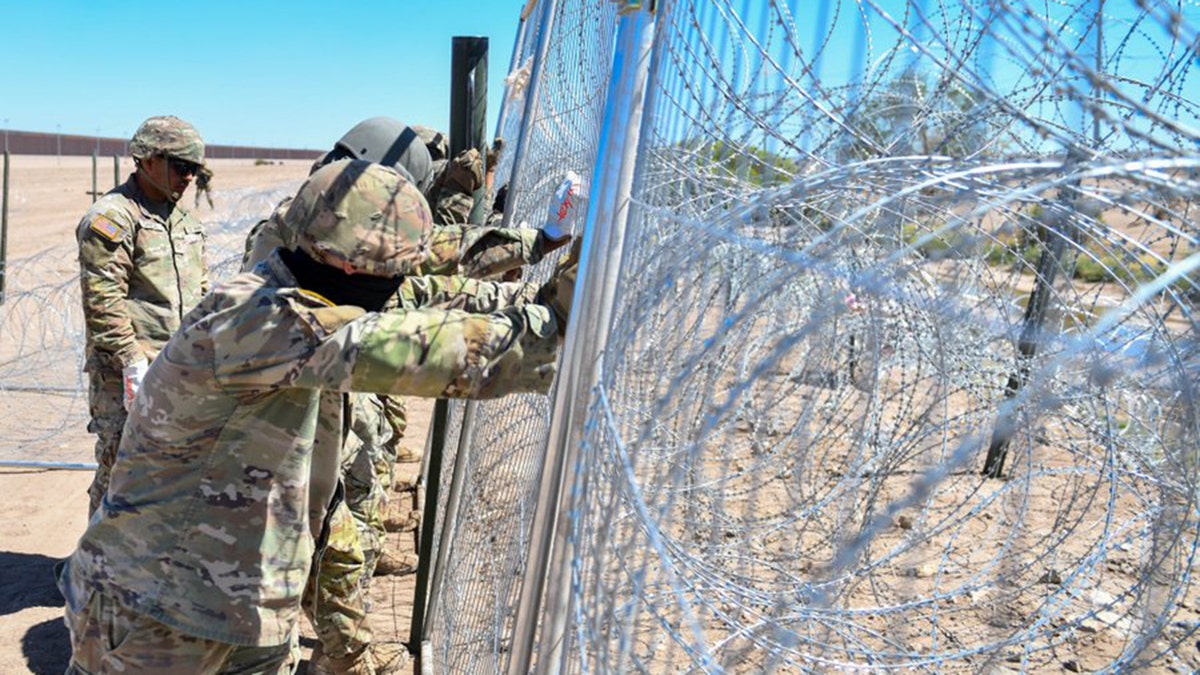
The defense establishment loves to talk about the Anti-Infiltration Obstacle System (AIOS). We spent billions on sensors, thermal imagers, and triple-layered fencing. We were told this would be the "game-over" moment for cross-border movement.
It wasn't.
High-tech fences create a false sense of security that actually encourages institutional laziness. When you rely on a physical barrier, you stop doing the hard, grinding work of human intelligence (HUMINT). The data shows that as the fence grew more sophisticated, the "depth" of attacks increased. Terrorists simply shifted from crossing the line to activating sleeper cells that had been sitting in plain sight for years.
The fence is a monument to tactical vanity. It makes for a great photo-op for visiting dignitaries, but it doesn't stop a motivated operative who has three months to study a patrol pattern. In fact, the more we militarize the border, the more we incentivize the adversary to innovate. We are essentially crowdsourcing the R&D of global terror groups.
Why 'State Sponsorship' is a Distraction
Every expert on the news circuit wants to talk about the ISI. Yes, the ISI sponsors terror. This is not a revelation; it is a baseline reality. The mistake is thinking that by "exposing" this on the global stage, we achieve anything of substance.
Geopolitics doesn't care about your moral high ground.
While we spend our energy lobbying the FATF or the UN to "grey list" our neighbors, the tactical reality on the ground remains unchanged. Foreign policy is not a courtroom; there is no judge coming to bail us out because we proved the other guy is a liar.
The obsession with proving Pakistani involvement has become a crutch for Indian policy failures. It’s easier to blame a foreign actor than to ask why a local youth in South Kashmir is willing to pick up a rifle. We have outsourced our internal security logic to a neighbor’s bad behavior.
The Trap of Symmetrical Response
When an attack like Pahalgam happens, the public demands a "befitting reply." This usually manifests as a surgical strike or heavy artillery shelling across the LoC. This is exactly what the architects of terror want.
Terrorism is an asymmetric tool. You cannot defeat asymmetry with symmetry. When India responds with conventional military force, it validates the extremist narrative of "Indian aggression." It helps their recruitment. It justifies their budget.
We need to stop responding to the stimulus.
The most terrifying thing we could do to a terror-exporting state is to become indifferent to them. Strategic neglect is a far more potent weapon than a BrahMos missile. By reacting to every provocation, we give the planners in Rawalpindi exactly what they crave: relevance. We allow them to set the tempo of our national conversation.
The Intelligence Failure Nobody Admits
If you look at the major attacks over the last decade, from Pulwama to the recent skirmishes in the Rajouri-Poonch sector, a pattern emerges. It’s not a lack of tech. It’s a lack of "ground feel."
We have traded the local informer for the drone.
I’ve seen intelligence wings blow millions on Pegasus-style intercepts while failing to realize that the most dangerous actors aren't using smartphones. They are using runners. They are using coded signals in FM radio broadcasts. They are using the "white noise" of a busy marketplace.
The "Defence Expert" on TV will tell you we need more satellites. I'm telling you we need more tea-shop owners on the payroll. We have digitized our surveillance to the point of blindness. We can see a footprint from space, but we can't tell you the intent of the person who made it.
The Economics of Insurgency
Terrorism is a low-cost, high-yield investment for an adversary. For the price of a few AK-47s and some cheap explosives, they can force a nuclear-armed state to mobilize thousands of troops, shut down internet services, and lose billions in tourism revenue.
We are losing the ROI battle.
Every time we lock down a valley or deploy an extra brigade, the cost-to-kill ratio swings wildly in the favor of the terrorist. To win, we must make terrorism an expensive hobby for the perpetrator and a negligible nuisance for the state. This requires a level of psychological resilience that our current political climate doesn't allow.
We have been conditioned to view any casualty as a national crisis. This is a strategic weakness. In a long-term conflict, casualties are a mathematical certainty. By treating every skirmish as a "turning point," we hand the psychological initiative to the enemy.
Stop Trying to 'Win' the Border
The goal shouldn't be a 100% porous-proof border. That is a physical impossibility in the terrain of the Himalayas. The goal should be the total neutralization of the utility of the border.
This means:
- Decoupling Domestic Policy from Border Incidents: An attack in Pahalgam should not change our internal developmental trajectory or our election cycles.
- Aggressive Human Intelligence: Rebuild the networks that were gutted in favor of electronic signals.
- Economic Sabotage: Move the battlefield from the mountains to the ledgers. If you want to stop a terror group, don't shoot the foot soldier; bankrupt the front company in Dubai or London that pays his salary.
The current "expert" consensus is a loop of reactionary rhetoric and outdated military doctrine. They are preparing for the last war while the next one is being fought in the minds of the disillusioned and the backrooms of global finance.
The Pahalgam anniversary shouldn't be a day of mourning or a day of "vowing to defeat terror." It should be a day of admitting that our current strategy is a hollow shell of bravado and expensive hardware.
We don't need more "resolute action." We need a smarter, colder, and far more cynical approach to our national security. Stop listening to the men in suits who have never spent a night in a listening post. The border isn't the problem. Our reaction to it is.
The next time a "defence expert" tells you that Pakistan is fueled by desperation, ask yourself who is actually being fueled. Our entire security apparatus has become a feedback loop that requires an external enemy to justify its own inefficiencies.
Starve the loop. Ignore the bait. Stop the theater.