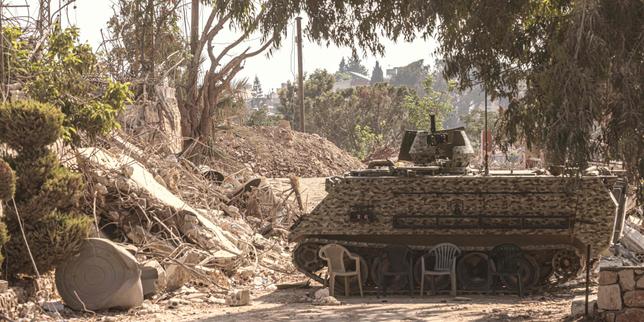
Conventional military analysis operates on a comforting fiction. Headlines scream about troop movements, border incursions, and sovereign lines on a map as if international law functions like a property deed. When reports surface that an external force crossed into a neighboring state despite the presence of local security or peacekeeping forces, the mainstream media reacts with performative shock. They treat the event as a sudden failure of logistics or a localized diplomatic breakdown.
This framing is entirely backwards.
If a force penetrates a zone guarded by nominally sovereign military units, the problem is not a temporary lapse in tactical readiness. The problem is the assumption that static deployments can ever control dynamic environments. I have spent years analyzing operational doctrine and institutional friction, watching analysts commit the exact same error repeatedly: measuring military capability by counting bodies on a ridge rather than evaluating systemic structural capacity.
The Fallacy of the Paper Line
Let us dismantle the core lazy consensus of modern reporting. The standard narrative assumes that sovereign borders act as physical barriers enforced purely by the presence of a uniform.
Imagine a scenario where a shopkeeper locks a glass door with a padlock, but leaves the entire back wall wide open. That is the reality of modern frontier defense.
When an advancing force enters a contested village where state forces are theoretically deployed, observers ask the wrong question entirely. They ask how the breach happened. They look for tactical intelligence failures, communication blackouts, or betrayal.
That is completely missing the mechanics.
The question you should be asking is why anyone expected a static contingent to stop fluid, mission-driven momentum in the first place. Military units deployed as political tripwires do not function as physical walls. They are diplomatic artifacts. When institutional structures lack depth, logistics, and integrated command authority, the physical presence of personnel on the ground is nothing more than expensive scenery.
[Traditional View]  Static Troops = Impenetrable Barrier
[Reality]           Static Troops = Symbolic Speed Bump
Anatomy of an Operational Vacuum
To understand why incursions happen effortlessly in contested borderlands, look at how command and control actually operates under pressure.
Armies do not halt because they hit a geographical coordinate. They halt because they encounter force multiplication that threatens their survival or operational timeline. If an opposing unit faces zero resistance, zero integrated fire support from the host nation, and zero logistical consequence for advancing, pushing forward is not an aggressive gamble. It is basic operational hygiene.
Common misconceptions frame these events as direct confrontations between equal wills. In practice, they are often physics in motion. An object in motion stays in motion unless acted upon by an external force. A token deployment of national troops without a robust mandate or defensive depth is not an external force. It is an obstacle that yields upon impact.
Let us define terms clearly.
A sovereign defense framework requires three non-negotiable pillars:
- Integrated Intelligence: Real-time awareness that feeds direct response loops.
- Decentralized Authority: Local commanders empowered to engage without waiting for political clearance from a distant capital.
- Sustainment Depth: Logistics that allow units to absorb pressure, retreat effectively, and counter-attack.
When these pillars are absent, numbers on a roster mean nothing. You can station ten thousand men in a village, but if their rules of engagement tie their hands and their supply lines depend on political goodwill, they are invisible.
The Cost of Strategic Theater
Governments love deploying token forces because it looks like action on a evening news broadcast. It provides a headline. It satisfies domestic constituencies who demand that sovereignty be defended.
It is institutional theater designed to substitute optics for outcome.
I have seen organizations burn millions of dollars on grand gestures that project strength while eroding actual capability. The same principle applies at the state level. When leadership relies on symbolic deployments, they create a false sense of security. The public assumes the border is held. The international community writes reports based on the deployment map. Then, reality intervenes. The moment pressure arrives, the theater collapses, revealing the structural hollow underneath.
The downside to this blunt, unsparing analysis is that it offers no comfort. It strips away the comforting illusion that international norms alone can stop an armed unit on the march. Acknowledging this reality forces a radical shift in how we evaluate state vulnerability.
Rewriting the Playbook
Stop treating border penetrations as anomalies. They are symptoms of systemic decay in how security is conceptualized and funded.
If you want to understand why a village fell or an incursion succeeded, ignore the press releases from defense ministries. Look entirely at the institutional architecture. Look at whether the forces on the ground possessed the command freedom, the hardware integration, and the logistical backing to impose a cost on the intruder. If they did not, the incursion was not an unexpected tragedy. It was a mathematical certainty.
Reality does not care about your political narrative.


/cdn.vox-cdn.com/uploads/chorus_asset/file/22155007/doc_ock.jpg)