Every time an elite researcher gets pulled into secondary inspection at Dulles or Logan, the academic-media complex runs the exact same script.
Outrage. Panic. Hand-wringing op-eds about a "new McCarthyism" and the self-inflicted collapse of American scientific supremacy.
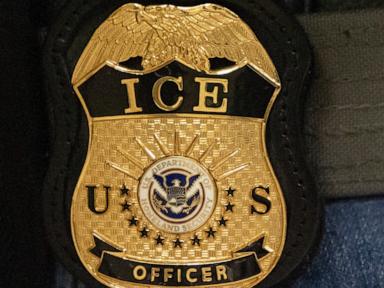
When a Princeton neuroscientist from China gets detained at a Washington airport and transferred to Immigration and Customs Enforcement custody, the lazy consensus kicks into overdrive. Pundits frame it as an ideological assault on open science—a xenophobic blunder where clumsy border agents accidentally arrest the very minds keeping the United States competitive.
That narrative is emotionally satisfying. It is also operationally illiterate.
If you actually understand how federal visa compliance, export control laws, and Automated Targeting Systems function at U.S. ports of entry, you know that these detentions rarely happen out of thin air. They happen because elite research institutions treat immigration compliance like a clerical afterthought while federal agencies treat it as a binary national security tripwire.
The real story isn't that Customs and Border Protection (CBP) has gone rogue. The real story is that universities, principal investigators, and foreign nationals are playing a high-stakes regulatory game using rules from 1998—and acting shocked when a 21st-century enforcement apparatus snaps shut.
The Visa Myth That Keeps Getting Brilliant People Arrested
Ask ten tenured professors what a U.S. visa actually grants a foreign researcher, and nine of them will give you the wrong answer.
They believe a valid visa stamp in a passport is an entry ticket. It isn't. Under the Immigration and Nationality Act (INA), a visa is merely a travel document allowing a foreign national to board a plane and ask permission to enter the United States at a port of entry.
Admission is adjudicated from scratch every single time you step up to the podium at Dulles.
I have watched major research organizations and biotech firms lose millions of dollars in delayed R&D because their leadership assumed a clean academic pedigree overrides administrative discrepancies. It never does. CBP officers operate under Title 8 of the U.S. Code, where the burden of proof rests entirely on the applicant for admission—not the government.
When an officer flags a researcher, they aren't evaluating the elegance of their neural circuit mapping. They are running a rigid compliance audit against three specific triggers:
- Status Mismatches: A researcher leaves the country while a change-of-status petition is pending, or returns with a SEVIS record that wasn't properly updated by the university's international office.
- Section 212(f) and Proclamation 10043: Signed in 2020 and still actively enforced across administrations, this presidential proclamation bars entry for certain graduate and post-graduate researchers tied to entities supporting China's "military-civil fusion" strategy. Even tangentially.
- Undeclared Dual-Use Equipment or Data: Carrying biological samples, proprietary code, or encrypted drives containing federally funded research across an international border without explicit export control clearance.
When any of these wires get tripped, CBP doesn't have the discretion to just wave a Princeton badge through. Once an individual is deemed inadmissible or found to have violated the terms of their previous stay, transfer to ICE Enforcement and Removal Operations (ERO) isn't a theatrical punishment. It is standard statutory procedure while removal or deferred inspection proceedings are sorted out.
The Academic Blind Spot on Dual-Use Research
The loudest critics of airport detentions love to argue that neuroscience, pure mathematics, and foundational biology have nothing to do with national security.
Tell that to the Defense Advanced Research Projects Agency (DARPA). Tell that to the Bureau of Industry and Security (BIS).
Modern neuroscience is no longer just petri dishes and behavioral observations. It sits directly at the intersection of brain-computer interfaces (BCIs), artificial intelligence, cognitive warfare, and neuro-pharmacology. The exact same algorithms used to decode motor cortex signals for a prosthetic limb can be adapted for autonomous drone control or human-machine teaming.
In Washington, this is known as dual-use technology. And the regulatory framework governing it—specifically the Export Administration Regulations (EAR) and International Traffic in Arms Regulations (ITAR)—does not care about academic idealism.
Under U.S. law, sharing controlled technical data with a foreign national inside the United States is legally identical to shipping a crate of hardware overseas. Regulators call this a "deemed export."
For decades, elite universities operated on an honor system, relying on the Fundamental Research Exclusion (FRE). The FRE protects basic and applied research in science and engineering where the resulting information is ordinarily published and shared broadly within the scientific community.
Here is where the wheels fall off: The Fundamental Research Exclusion evaporates the moment a researcher accepts restrictions on publication, handles proprietary third-party data, or travels abroad with non-public technical specifications.
When a neuroscientist travels back and forth between a top U.S. lab and institutions in China—whether to visit family, give lectures, or collaborate on side projects—federal databases cross-reference their travel history against funding disclosures. Since the rollout of National Security Presidential Memorandum 33 (NSPM-33) and Section 117 enforcement by the Department of Education, federal agencies have aggressively audited undisclosed foreign affiliations.
If an applicant omitted a past institutional tie, a visiting professorship, or a foreign grant on their DS-160 visa application—even an unpaid one they considered trivial—CBP views that omission through the lens of INA Section 212(a)(6)(C)(i): willful misrepresentation of a material fact.
That single statutory code triggers a lifetime bar from the United States. No trial. No jury. Just an administrative finding at an airport desk, followed by an ICE transport van.
Why Universities Are Quietly Complicit in These Detentions
It is easy to point fingers at federal agents in tactical vests. It is much harder—and far more accurate—to look at the institutional negligence happening inside Ivy League compliance offices.
Universities aggressively recruit top international talent because their graduate programs, wet labs, and federal grant overhead depend on it. Yet those same institutions chronically underfund their international student offices and export control teams.
Consider the standard workflow before a researcher flies internationally:
- The researcher books a flight for a conference or family visit.
- They get a quick travel signature on their I-20 or DS-2019 from an overworked junior advisor.
- Nobody audits their laptop for export-controlled datasets.
- Nobody reviews their original visa application against their current CV to spot discrepancies in past institutional affiliations.
- Nobody briefs them on their rights—or lack thereof—during a border device search.
Imagine a scenario where a corporate General Counsel allowed a VP of Engineering to fly to Beijing with unencrypted source code, an outdated work permit, and an incomplete disclosure form, and then blamed the government when the VP got stopped at customs. That General Counsel would be fired before lunch.
In academia, they write a press release condemning federal overreach.
The Brutal Truth About Border Searches and Fourth Amendment Rights
Another massive misconception fueling public outrage is the idea that CBP violates constitutional rights by confiscating phones and laptops during these detentions.
Legally, the Fourth Amendment does not operate at the border the way it does in your living room.
Under the border search exception, reaffirmed repeatedly by federal appellate courts, CBP officers do not need a warrant, probable cause, or even reasonable suspicion to conduct a routine search of your luggage, your wallet, or your electronic devices.
For forensic searches—where agents connect your phone or laptop to external hardware like Cellebrite to extract deleted files and raw data—courts in circuits like the Fourth and Ninth have required "reasonable suspicion" of unlawful activity. At an airport like Washington Dulles (located within the Fourth Circuit's jurisdiction), a database hit regarding undisclosed foreign funding or export control flags easily clears that low legal bar.
If a researcher refuses to unlock their phone or laptop at the border:
- U.S. Citizens cannot be denied entry, though their devices can be seized for weeks or months.
- Visa Holders and Green Card Applicants can be denied admission on the spot for failing to establish admissibility, placed in expedited removal, or transferred to ICE custody.
Once you are in secondary inspection, arguing about academic freedom is like arguing about maritime law during a hurricane. The officers in that room are executing administrative checklists governed by the Department of Homeland Security. They have zero authority to weigh your citation index against a red flag in TECS (the primary database used by CBP to screen travelers).
The Hidden Downside of the Security-First Approach
Taking a hard-nosed look at compliance mechanics doesn't mean the current enforcement regime is flawless. Far from it.
The blunt-force application of immigration law at ports of entry creates massive collateral damage. Because CBP officers are generalists—not PhDs in computational neuroscience or quantum mechanics—they frequently misinterpret standard academic practices as espionage indicators.
A routine peer-review manuscript stored on a hard drive gets mistaken for stolen intellectual property. A standard post-doc fellowship at a Chinese university that happens to share a campus with a defense institute triggers an automatic ban under Proclamation 10043, even if the researcher studied fruit fly genetics.
Worse, the opacity of the system destroys predictability. When an innocent researcher gets caught in an administrative dragnet and held in ICE detention for days before an attorney can even locate them in the Online Detainee Locator System, the reputational shockwave hits every lab in the country. Top international post-docs look at the risk-reward ratio, decide they don't want to spend a weekend in a detention facility over a paperwork typo, and take offers in Zurich, Munich, or Singapore instead.
The United States ends up burning down the barn to catch a few mice.
How Research Institutions and Scientists Actually Stop This
If you are a principal investigator, a university administrator, or an international researcher working in the U.S., waiting for Congress to reform the Immigration and Nationality Act is a losing strategy. You have to operate within the enforcement reality that exists right now.
Stop treating international travel as routine. Treat every border crossing like a regulatory audit.
1. Run a Pre-Travel Compliance Audit
Thirty days before any international trip, pull the researcher's original DS-160 visa application and compare it line-by-line against their current CV, Google Scholar profile, and university bio. Every past affiliation, grant, and co-authorship must match. If there is a discrepancy, address it with immigration counsel before leaving U.S. soil—not across a metal table at Dulles.
2. Travel With Clean Devices
Never carry primary research laptops, personal phones loaded with decades of messaging history, or raw datasets across an international border. Issue sterile loaner laptops and burner phones containing only the specific files needed for the trip. Access institutional servers securely via approved VPNs only after arriving at the destination, provided the destination isn't under strict export sanctions.
3. Map Out Foreign Collaborations Against Federal Watchlists
Before accepting any joint appointment, visiting lecture, or foreign grant, screen the partner institution against the Department of Commerce's Entity List and the Department of Defense's Section 1260H list. If a partner institution is flagged, assume any formal tie will trigger an automatic admissibility review at a U.S. port of entry.
4. Establish an Immediate Legal Rapid-Response Protocol
When a researcher goes dark after landing at a U.S. airport, universities often waste critical hours trying to figure out who to call. Every international researcher should carry a signed Form G-28 (Notice of Entry of Appearance as Attorney) in their carry-on bag, along with the 24/7 emergency number of outside immigration counsel. Once a traveler is transferred from CBP to ICE custody, getting a G-28 on file immediately is the only way to prevent an expedited removal order from being executed before a judge ever hears the case.
The narrative that elite scientists are helpless victims of random border hostility lets everyone off the hook. It excuses universities from fixing their broken compliance pipelines, and it blinds researchers to the legal tripwires sitting right beneath their feet.
Border enforcement isn't a debate club. Know the statutory rules, audit your digital and paper trail before you pack your bags, or expect the system to treat a paperwork discrepancy like a national security threat.